


Arla Foods Ingredients: Why eating less is only half the story

GLP-1 medications are changing far more than appetite. Peter Poulsen, Head of Global Marketing at Arla Foods Ingredients, explains why protein quality, nutrient density and clinical evidence are becoming the next frontier in nutrition
A smaller appetite sounds like a simple nutritional problem. It isn’t. As GLP-1 medications become more widely available, food manufacturers are discovering that eating less changes far more than portion size. Smaller appetites make it harder to consume enough protein, vitamins and minerals, placing far greater emphasis on nutrient density than calorie reduction alone. Weight loss may be the headline, but preserving muscle, maintaining nutritional balance and supporting long-term health are becoming just as important.
Peter Poulsen, Head of Global Marketing at Arla Foods Ingredients, believes the industry’s response is still in its early stages. “In 2025, 11% of global consumers trying to lose weight and 18% of those in the USA were using GLP-1 anti-obesity medications,” he says. “These numbers are expected to rise dramatically from this year onwards as availability increases, prices fall, and GLP-1s are launched in tablet form.”
Those figures point to a rapidly expanding group of consumers whose nutritional needs differ markedly from those addressed by conventional weight-management products. Appetite can now be suppressed pharmacologically. The challenge is ensuring nutrition doesn’t become an unintended casualty of eating less.
It's no longer simply about calorie reduction, because for GLP-1 users, eating less doesn't necessarily mean eating better
“It’s no longer simply about calorie reduction, because for GLP-1 users, eating less doesn’t necessarily mean eating better,” Poulsen says. “Smaller appetites, early satiety, and gastrointestinal side effects such as nausea, stomach pains, constipation, and diarrhea can make it challenging to meet basic nutritional requirements.”
Traditional meal replacements were designed to fill people up while limiting calorie intake, often through relatively large servings. That approach sits awkwardly alongside consumers who struggle to finish even a modest meal.
“Our research highlights a gap in the market, where traditional meal-replacement products are based on large volumes and calorie control - characteristics which simply don't align with GLP-1 user needs.”
Weight loss itself is only part of the story. Losing lean muscle alongside fat can reduce strength and physical function, making protein intake a far more important consideration than the number on the scales alone.
“Adequate protein intake is a particular concern,” says Poulsen. “While lean muscle typically accounts for 25% of the total mass loss during a weight-management diet or following bariatric surgery, GLP-1 use may push this percentage up to 40%. Such high levels of muscle loss can have significant implications for physical strength and functionality.”
An entirely new category is beginning to emerge: companion nutrition designed specifically for GLP-1 users, where nutrient density takes precedence over serving size.
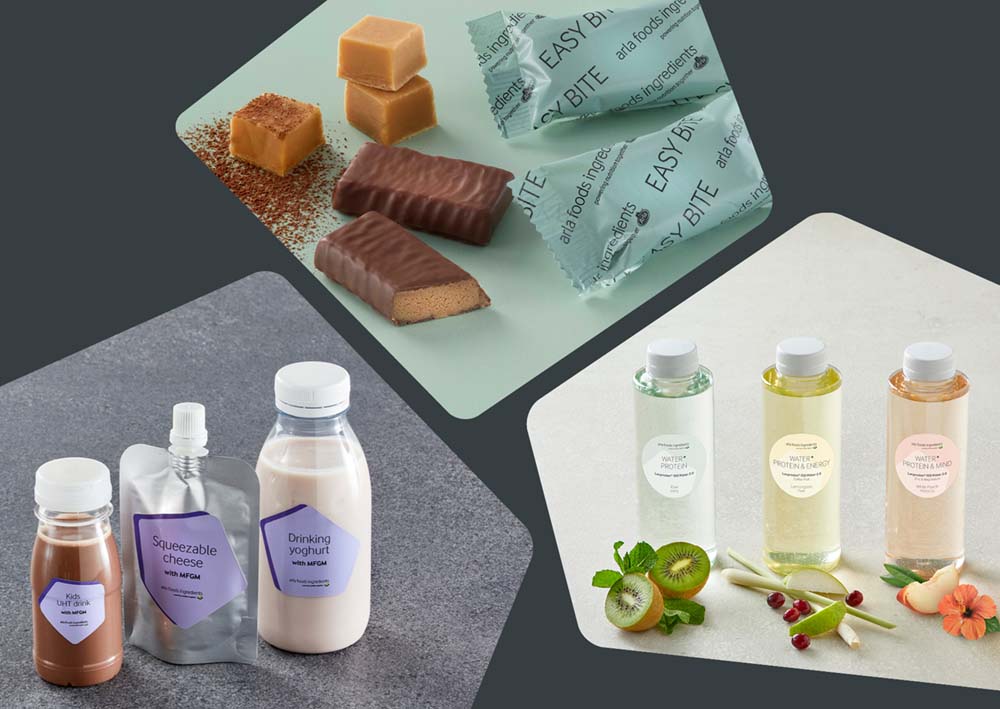
“These nutrient-dense products are available in smaller servings appropriate for reduced appetites, delivering optimized levels of protein, essential amino acids, and key micronutrients while supporting digestive health,” Poulsen explains. “It’s a rapidly growing market, with significant untapped opportunities for innovation across the dairy, health and protein bar, medical food, and nutritional supplement categories.”
Companion nutrition is still an emerging category, but its rapid growth illustrates how quickly product development is evolving. Success is no longer defined simply by helping consumers eat less. It increasingly depends on helping them get more from every mouthful.
The quality question
Protein has become one of the food industry’s most valuable marketing tools. Breakfast cereals, yogurts, beverages, snacks and even confectionery now compete for attention with prominent protein claims. Yet as the category has matured, the question for many consumers is no longer simply how much protein a product contains, but what kind of protein they’re actually buying.
Poulsen believes consumer expectations are becoming more sophisticated. “While protein is a global mega-trend that shows no signs of slowing down, it’s definitely evolving,” he says. “It began with increased consumer awareness of the importance of protein quantity, but we're now seeing a shift toward an appreciation of protein quality.”
Those changing expectations are influencing purchasing decisions across the category. “Two-thirds of consumers interested in protein say they are particular about its source, with a complete protein source being the most significant factor when choosing between products.”
Few consumers will discuss amino acid profiles or protein digestibility in technical terms, but many are becoming more discerning about protein sources. That growing awareness is shifting attention from protein quantity to protein quality.
“So it’s no longer enough to simply pack as much protein as possible into a product – it’s about focusing more on the types of proteins being used.”
Formulating a successful protein product is considerably more demanding than simply hitting a protein target. Nutrition, taste, texture, functionality and cost all have to work together if a product is going to succeed.
Much of that renewed focus on protein quality comes back to one question: what constitutes a complete protein?
“Whey and dairy proteins tick all the boxes for many consumers as familiar, complete protein sources that score highly on measures of nutritional quality such as essential amino acid content. They also boast science-backed benefits for promoting muscle growth and recovery, and endurance performance.”
That doesn’t mean manufacturers have to choose one protein source over another. Hybrid formulations are attracting growing interest because they combine the nutritional strengths of dairy with the sustainability and formulation advantages that plant proteins can offer.
“Hybrid solutions that combine dairy proteins and alternative proteins are becoming increasingly relevant, too,” he says. “With current strong demand for whey, they can help manufacturers manage formulation costs while providing consumers with the high-quality protein products they demand.”
The attraction of hybrid formulations lies in combining complementary strengths. Dairy proteins can improve nutritional quality, while plant proteins can contribute functionality, sustainability and cost advantages.
“Plant proteins tend to be incomplete – not providing all the essential amino acids for health in the required amounts – and can present taste challenges,” Poulsen explains. “By contrast, whey protein delivers a complete amino acid profile, is rapidly absorbed, and has a pleasant taste that most consumers find appealing, allowing the creation of products that offer a more nutritionally complete protein solution.”
Muscle health is moving into the mainstream. As populations age, preserving strength and mobility is becoming a priority not only for athletes, but for anyone hoping to remain active and independent later in life.
We're currently experiencing two profound societal shifts. One is the global rise in GLP-1 use... The other fundamental change is population aging, where the focus is no longer simply on longevity but healthspan – the number of years lived in good health
“We’re currently experiencing two profound societal shifts,” says Poulsen. “One is the global rise in GLP-1 use... The other fundamental change is population aging, where the focus is no longer simply on longevity but healthspan – the number of years lived in good health.”
Healthspan is rapidly becoming one of the food industry’s defining themes. The focus is shifting toward products that help people stay stronger, more mobile and more independent throughout later life.
“In the 40-60 age group, 65% of consumers believe that food or beverages can reduce the need for medical products, and 60% will choose products offering preventative or protective health benefits.”
The emphasis on healthspan is also changing the way products are formulated. Rather than addressing nutritional deficiencies alone, manufacturers are increasingly developing foods that help people maintain strength, mobility and metabolic health throughout adult life. It reflects a broader move toward nutrition that supports healthy living, not simply healthy aging.
Putting nutrition to the test
Health claims are becoming harder to make and easier to challenge. As foods target increasingly specific outcomes, from blood sugar control to muscle health and healthy aging, evidence is becoming just as important as the claim itself.
For ingredient manufacturers, clinical evidence is becoming a competitive advantage as much as a scientific one.
“Savvy consumers want to see the evidence for health benefits, and clinical research plays a vital role in building their trust,” he says. “We invest heavily in clinical research into our specialized protein ingredients, working with leading universities such as Copenhagen and Aarhus to understand and realize the potential of our milk and whey proteins. This helps give consumers and manufacturers alike confidence in the efficacy of our products.”
Blood glucose management is another area where Arla Foods Ingredients is investing in clinical research.
“We recently conducted a study with Aarhus University and the Steno Diabetes Center in Aarhus investigating the effects of whey protein on blood sugar control in gestational diabetes mellitus,” Poulsen says.

Results from the randomized, placebo-controlled crossover study showed that consuming whey protein before meals reduced post-meal blood glucose peaks in women with gestational diabetes. Similar, though smaller, effects were also seen in participants with normal glucose tolerance, while follow-up studies carried out in participants' homes produced consistent reductions in post-meal blood glucose levels.
The study builds on previous research into type 2 diabetes, but it also reflects a broader shift across the food industry. As nutrition becomes more targeted, manufacturers are under growing pressure to demonstrate that health claims are supported by robust evidence rather than marketing alone. Clinical validation is becoming part of the value proposition.
It is also redefining what manufacturers expect from ingredient suppliers. Ingredients alone are no longer enough. Companies are looking for formulation expertise, application support and scientific guidance that can accelerate development and reduce technical risk.
“Manufacturers that use scientifically validated ingredients will be best placed to meet the next generation of consumer expectations for personalized products,” says Poulsen. “Ingredient suppliers can help by partnering with their customers to work on solutions together. We call this ‘open innovation’, and it’s very much part of the Arla Foods Ingredients ethos.”
That collaborative approach extends to Arla Foods Ingredients’ application centers in Denmark, China and Argentina, where manufacturers can refine formulations and carry out application trials before commercial production, shortening development times while reducing technical risk.
Over the coming decade, nutrition is likely to be seen not just as a means of avoiding illness but as a tool for optimizing health
GLP-1, healthy aging, personalized nutrition and food as medicine are often presented as separate trends. They are, in many ways, different expressions of the same idea: consumers increasingly expect food to support specific health goals, not simply satisfy hunger. That expectation is raising the bar for everyone involved in product development.
For Poulsen, the implications extend well beyond today’s product pipeline. “Nutrition used to be largely viewed through the lens of preventing deficiencies or managing existing conditions,” he says. “In recent years, it has increasingly been recognized as central to proactive health management – a holistic approach that seeks to reduce the risk of chronic diseases and extend healthspan.
“Over the coming decade, this positioning is likely to evolve further, with nutrition being seen not just as a means of avoiding illness but as a tool for optimizing health. This will create huge opportunities for innovative foods and beverages that support long-term goals such as healthy aging, better physical and cognitive performance, muscle maintenance, metabolic health, immune support, weight management, and more.”
This is an extended version of an exclusive interview conducted for the nutrition edition of Protein Production Technology International. To receive the magazine free of charge, along with weekly news, exclusive interviews and technical analysis from across the future protein industry, subscribe here

Join Us At One Of Our Upcoming Events

If you have any questions or would like to get in touch with us, please email info@futureofproteinproduction.com


%20-%20Photo%20Credit%20Matt%20Qu%C3%A9r%C3%A9e.jpg)

