


Talking Heads: Long and Winding Roads
As global approval pathways grow more complex, Lisa M. Keefe speaks with regulatory leaders navigating the evolving route from novel protein innovation to market
If managing the patchwork of global regulatory approvals for novel proteins has always been difficult, in the past few years the challenge has only grown significantly, according to regulatory executives and consultants in the space.
The science is hurtling forward, financing has never been harder to secure, and shifting politics in some countries are increasingly gumming up regulatory processes. Meanwhile, the global inflation picture – which can change by the day – is further dampening market interest in paying more for novel foods or ingredients.
Navigating growing complexity
But if conditions are zigging, then the alternative protein industry is zagging in response. Entrepreneurs and consultants are adopting – and recommending – an evolving set of strategies to navigate regulatory pathways for novel protein products and, subsequently, customer interest.
“We can see how things are evolving, going from ‘very easy’ in the early 2000s to, I would say, manageable, and now to quite complex and challenging,” reports David Selesko, Senior Regulatory Affairs Specialist at Arla Foods Ingredients. “Across all markets, I think the perspective has moved away from predominantly food safety to more, let’s say, innovation-related consumer protection. What it takes to get approval has really become almost completely different in terms of what you need to put in.”
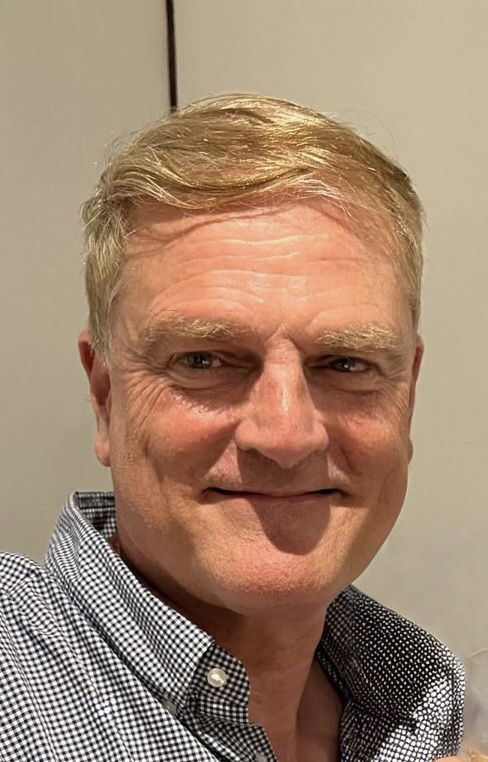
Depending on the country, regulators have become either more communicative and responsive to companies (UK FSA, FSANZ) or less so (EFSA). In the USA, the political strength behind the ‘Make America Healthy Again’ (MAHA) movement has introduced uncertainty into nearly all aspects of food regulation in a highly coveted market.
Strategies shift toward agility
Of course, companies’ experiences vary widely with any given regulator. But every executive – from start-ups to multinational corporations – described how their strategies have shifted significantly over time, and every adviser predicted the need for greater agility in the future, not only in securing approvals but also in building a profitable market long term.
“Regulators, by and large, are focused on safety, but in some jurisdictions they are keen on seeing application data that shows a need for a new molecule, ingredient or version,” suggests Vince Sewalt, a veteran of IFF and DuPont, now a consultant. “It behooves industry to take a very, very proactive approach these days.”

Forward Food Law
Entrepreneurial scientists who have had their heads down developing new technologies for years are prone to seeing regulators as a hurdle in their quest to bring healthier and more sustainable elements to the food supply chain. But in Mathilde Do Chi’s experience, companies set themselves up for a tough time with the regulatory process when they begin with a defensive mindset. In fact, approval processes across markets are evolving as both sides – regulatory and corporate – learn more about the science behind novel protein production. “The level of expertise in food safety may be higher on the applicant’s side rather than on the authorities’ side, as the innovation is first handled by the former,” Do Chi begins. Still, she insists, “Regulators are open to establishing a fruitful exchange if applicants are willing to collaborate.”
Beginning that exchange as early as possible can only benefit the company. “Teams most often leave things too late when they assume they will not get any support from regulators. However, there are avenues, depending on the jurisdiction, to get proper and extensive advice from [them].”
Regulation begins to open up
Even in seeking approval from the European Food Safety Authority – widely seen as having the most rigorous process, sometimes to a fault – more pre-submission discussion may be coming. The proposed EU Biotech Act, introduced in December 2025, aims to streamline risk assessments and expand EFSA’s advisory role. Early indications suggest a strong chance of the proposal passing, despite differing approaches to food safety among member countries. The EU is under pressure to catch up to the USA and China in biotech investment and innovation.

In any particular case, a company may feel that its data is too premature to share or may be cautious about submitting proprietary information for governmental review, Do Chi acknowledges. However, most applicants will find that overcoming these misgivings has a payoff, she says. Most importantly, companies must do whatever is necessary to avoid the impression that they are hiding uncertainties about the safety of the product.
Relations with regulators “tend to be most productive when the company has sufficient food safety data, leaving room for discussion and negotiation on safety parameters”, she says.
To be sure, the agencies’ job is to act as stewards of food safety for consumers, and some gatekeeping is to be expected – even necessary. But Do Chi notes new initiatives being pursued in some markets, such as pre-submission advice from regulators in South Korea, Australia and New Zealand, as well as existing options from EFSA. Some markets also see value in cross-border alignment of regulatory requirements for novel foods, in Oceania (Australia, New Zealand, Singapore) and the Gulf states, for example.
Many companies “haven’t studied the market specifics of these regions and tend to assume the requirements there are too different to those in the markets they already operate in”, Do Chi observes. That’s a potential missed opportunity.
Regulatory sandboxes, like that established for cultivated meat in the UK in 2024, are designed to accelerate assessments and reduce approval times, encouraging further innovation.
Do Chi also regularly joins regulators on the dais at conferences and other events designed to familiarize start-ups with the approval process. The agencies themselves often plan such educational opportunities.
She is particularly buoyed by the growing number of sandboxes, not only in the UK but also in Singapore, South Korea and, soon, Denmark. Within that framework, regulators can work directly with companies to navigate requirements, rather than relying on a back-and-forth Q&A process that may leave regulators frustrated with the information provided and companies believing the agency is asking the wrong questions.
Regulators are open to establishing a fruitful exchange if they believe applicants are willing to collaborate
“It shows a willingness on the part of regulators to learn with the applicants,” she notes. “Sandboxes allow some flexibility regarding which parameters should be given priority.”
On the other hand, regulatory sandboxes are predominantly established to address only certain types of novel foods, most often cell-cultivated proteins. Denmark’s program – which is now open for applications – has a broader reach, covering fermented ingredients and other forms of alternative proteins.
“It’s not just the cultivated-meat industry that needs regulatory sandbox options,” Do Chi observes. “Biosolutions, from precision fermentation to bio-based materials, face the same challenge: existing regulations are not always built for future-proof solutions.” But, she says, “innovation is not meant to be fixed”.
Arla Foods Ingredients
Arla’s David Selesko recalls a period in the food business when regulators globally became more conservative in their approach to food safety and ingredient approvals. This spanned from about 1996, when a form of bovine spongiform encephalopathy (BSE) affecting humans was identified, through the horse meat scandal in Europe in 2013, to the deadly outbreak of listeria in South Africa in 2017/2018.
Soon thereafter, the wave of novel food development began to swell, and “authorities really started to realize how many new products were coming onto the market”, Selesko says. In the EU alone, the number of novel food dossier submissions rose from fewer than 10 a year in 2015 to 40-50 a year by 2025, according to the journal Nature.
“Regulations and standards in place at the time were not equipped to address these developments,” he said, noting that “regulators at the time couldn’t really keep pace with everything converging at once: more applications, evolving science, accumulated learnings, and entirely new product categories.” In the drafting of new regulations, with damaging food scandals still fresh in consumers’ minds, “the level of substantiation required has significantly increased.”

For example, Selesko references the 2021 Transparency Regulation in the EU, which mandates proactive notification of most studies and analyses relevant to novel food applications. While the existence of these studies is made public, contents are not necessarily disclosed. The rule is intended to prevent applicants withholding unfavorable data.
In practice, however, the requirement adds significant time to the process: first, applicants have to find the studies, then any deviation from previous studies “has to be very, very clearly and well-argued for, and you’re still risking a penalty”, he says.
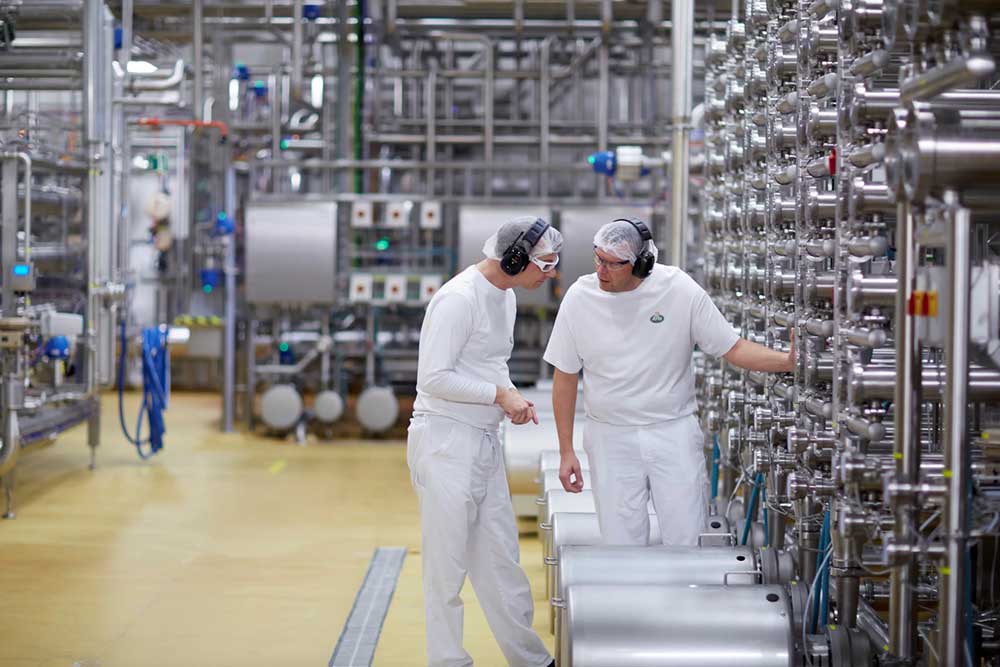
The effect on novel food approvals isn’t theoretical, even for Arla Foods Ingredients, which uses membrane technology to produce whey proteins and minerals from dairy sidestreams for a wide range of foods, from medical nutrition to bakery.
“Even though we are submitting an application for a component of milk, and milk has a millennia-long history of consumption – and that component is already part of products that are consumed – we will still face these various challenges,” Selesko says.
Raising the bar on approval
In response, Selesko says Arla Foods Ingredients has fine-tuned its go-to-market strategy to put its resources behind the products and countries where regulatory approval and commercial demand are most likely, and where the time to approval is shorter.
“Compared to how we did it before, when it was all sort of similar and the timelines were shorter, it didn’t make such a big difference,” he continues.
For example, Arla’s beta-lactoglobulin (BLG) line is derived from whey and contains a higher content of essential amino acids, supporting its use in targeted nutritional applications. Arla markets the ingredient for health and sports nutrition, including RTD drinks and protein shakes formulated to support muscle maintenance and recovery, as well as in medical nutrition. The company received EU approval for BLG products in 2022 and self-affirmed GRAS status in the US in 2024, enabling broader use across these categories.
The application to EFSA came first, Selesko notes, because the FDA application required the studies to be published, whereas the EU did not. The company was able to secure revenue from product sales in the EU while applying in other markets.
The level of substantiation you need to provide has significantly increased
However, Arla Foods Ingredients has not filed dossiers in many additional markets for BLG, Selesko says, although “the scope of countries we would like to sell to has expanded.” As an example, he notes that since the company received GRAS status in the USA, the FDA has added a requirement for an exposure assessment for these proteins. “That’s a time and cost factor, and also a complexity increase, and we’ve seen this in a short period of time,” he says.
In response, one of Arla Foods Ingredients’ strategies is to focus on improving existing products rather than starting from scratch on something new. “That hinders innovation, but certainty is also important for companies,” he stresses.
On Selesko’s regulatory wish list would be agency teams with more specialized knowledge, in dairy proteins or plant-extracted components, for example. Industry experience among regulators would also be helpful, although that background can prompt concerns about authorities being too close to commerce – a criticism leveled at the FDA.
“It’s important they have this practical experience, not just theoretical experience of how components are altered or how processes affect outcomes,” he says. “Some questions needn’t be asked, because whey protein, for example, is already consumed in high amounts today – these things should not be a concern.
“At least in the markets where we really have good experiences, the authorities actually tell us they’re here to protect consumers, but they’re also here, importantly, to enable businesses.”

Cargill
Cargill has undeniable advantages in seeking approvals in just about any market, given its longevity, global reach and the variety of grains and proteins it produces. But, Marta Baffigo cautions, “Reputation can open the door to dialogue, it does not lower the bar.”
As one of the largest meatpackers in the world, Cargill is also one of the largest producers of plant-based and fermented protein products. Among the corporation’s newest non-meat protein offerings are ABUNDA mycoprotein, made in partnership with ENOUGH; EpiCore postbiotic, produced through fermentation; RadiPure pea protein, developed especially for the Asian market; and PlantEver, also sold primarily in Asia.
“Novel proteins are not a departure from our traditional business,” Baffigo says. “They are a natural extension of our role in building a future-ready food system grounded in science and responsible innovation.”
Cargill’s strategy for regulatory approval and commercial success is what Baffigo calls ‘compliance by design’. “When we begin developing a new ingredient or technology, we often define a regulatory roadmap early, identifying which jurisdictions we may target first and what data requirements those markets will expect,” she says. “Regulatory considerations are integrated into the earliest stages of product development, alongside R&D, formulation and planning for commercialization.”
An integrated approach is increasingly important to success, Baffigo says. Plotting a path through various markets for approvals depends not only on regulatory requirements but also on customer interes, supply chain capability and whether Cargill can produce and deliver the product at the necessary scale.
“There is little value in securing regulatory approval if customers are not ready to launch or if supply chains are not aligned to support production,” she says. At the same time, “we understand how to design studies that meet in various geographies and how to build comprehensive safety dossiers”.
Technology supports compliance
At Cargill, artificial intelligence plays an increasingly important role in the process. The company uses AI and other advanced data tools at the outset of regulatory preparations, Baffigo reveals. The goal is to gather and analyze information already available in an accelerated timeframe, evaluate ingredient structures, identify potential mechanisms of action, and find and assess relevant studies in publicly available scientific literature more efficiently and with greater accuracy.
For example, with a chemical structure for a potential new ingredient, AI tools can help compare it to similar molecules that have already been subjected to safety studies.
Reputation can open the door to dialogue, it does not lower the bar
“This approach helps us focus our research efforts and potentially reduce unnecessary testing, which can shorten development timelines while maintaining rigorous scientific standards,” she says.
In fact, Cargill was named a ‘Top 10 Innovator’ in the 2026 BIG Innovation Awards, offered by the Business Intelligence Group, in recognition of its AI- and data-driven systems used to advance food security, operational standards and build resilient food systems. The company has a formal governance infrastructure to ensure AI supports human researchers’ and executives’ strategic decisions.
“In practice, AI raises the bar internally. It helps us approach regulators with stronger evidence and better-prepared submissions, while scientific accountability remains firmly with our regulatory specialists,” Baffigo contends.
Sewalt Bioconsulting
To Vince Sewalt, the path to regulatory approval – and therefore financial success – for any company is becoming murkier, regardless of jurisdiction. Politics play a role, he notes.
“The FDA used to exercise more regulatory discretion, and the requirements were a bit more negotiable,” he says. “However, over the course of the past year, we are seeing the FDA being driven by the MAHA agenda, with its objectives becoming stricter – maybe not necessarily across the board, but definitely with regard to preservatives, other additives and the GRAS framework as a whole.”
Of particular stateside concern, Sewalt explains, is the current discussion in the USA about moving away from the country’s ‘self-affirmed GRAS’ designation toward a system that requires companies to submit safety data on any new substance for agency review before it can be introduced to the market. The goal is to end a system in which the FDA is unaware of many changes in food formulations or new ingredients entering the US market.
A new GRAS framework could also require companies to retroactively notify the FDA of any existing self-affirmed GRAS substances already on the market, potentially affecting thousands of products currently in use every day – especially microbial strains used in food cultures, probiotics, enzymes and other novel ingredients.
Politics reshapes regulation
A change to the GRAS system remains under discussion and reflects the intended policy shift. Sewalt sees echoes of the ongoing program to remove petroleum-based synthetic colors from all foodstuffs on the US market. That campaign will not directly smother food ingredient innovation, he acknowledges, but neither are the objections grounded in science.
Furthermore, while still nascent, Sewalt observes that the idea of mandating only ‘natural’ colors in food is gaining traction in other markets. “A change in policy has an impact outside the USA, as everything does,” he says. Other regulators look to the USA or the EU for guidance, he adds, and so “now FDA is actually triggering more conservatism outside of the USA, as well”.
Brazil and other Latin American countries are looking to follow suit, he notes. As many changes in the USA are still under discussion, Sewalt sees an opportunity for food and ingredient companies to lobby for reasonable limitations – for example, not requiring that minor tweaks to microbes be reviewed as if they were entirely new ingredients.
It is an example where policy preceeds scientific consideration
“The next three years are going to be important for stakeholders to work with the administration on developing a framework that is meaningfully informative for consumers while workable and doable for both industry and the FDA,” he says.
“To the extent that industry or academic experts can help FDA wrap its brain around this issue, now’s the time to do it. Once legislation that is likely to pass comes out, FDA will not necessarily have a lot of leeway to tinker with it.”
In some cases, politics can be a useful lever in getting new products into new markets. Sewalt points to trade negotiations between the USA and China during the first Trump administration, at a time when China had blocked imports of ag biotech products. Collectively, he says, the microbial biotech industry persuaded the USDA to include novel foods made with genetically modified microbes in the negotiation package. Easier access to the Chinese market became part of the Phase One agreement, signed in 2020.
Subsequently, US companies have pressed for further easing of biotech and foodtech restrictions by the Chinese government. While these efforts have not resulted in concrete policy changes, he says, at least there is now a pathway to approval.
Sewalt contends, “They would not be open to any negotiations or scientific considerations if it weren’t for the trade negotiation outcome. It is an example where policy preceeds scientific consideration.”
Companies that see similar opportunities in target markets should begin by establishing relationships with domestic diplomatic and political agencies – in the USA, for example, with the USDA and the Office of the US Trade Representative. Emphasizing the need to remain competitive with innovations in other regions is an approach that has already seen success, Sewalt says. The EU, for example, last year reached a provisional agreement that, under certain circumstances, gene-edited plants will no longer be considered GMOs, which are banned across the region. The goal is to encourage climate-resilient agricultural innovation.
“If there’s unwillingness politically, then no matter what your scientific arguments are, the limits that exist within the laws won’t allow agencies to move forward,” he says.
Japan Association for Cellular Agriculture
The Japan Association for Cellular Agriculture (JACA) was born out of a university study group and continues to operate as a think tank with ties to Osaka University, the University of Tokyo and Tokyo Women’s Medical University, among others, to advance cultured meat research.
The distinction is important, Megumi Yoshitomi suggests, because JACA connects companies, regulators and researchers, rather than promoting industry as an end in itself. “We are supposed to advise the government and the industry on rulemaking for emerging technology, advancing the positive aspects of the technology and mitigating risk,” she explains.

Japan’s novel foods system is relatively contained compared to the sprawling systems in the USA and the EU, where gaining consensus among member states can seem impossible. However, Japan has its own regulatory tangles, Yoshitomi believes.
For example, four years into JACA’s efforts to create a pathway for cell-cultivated proteins, a 2024 reorganization of the Ministry of Health, Labor and Welfare moved oversight of food safety to the Consumer Affairs Agency (CAA). The shift placed oversight under the prime minister but temporarily slowed progress.
Fortunately for Japan’s budding cell ag industry, while the Ministry of Health had been reluctant to create new regulations without certainty around demand, the CAA has been more willing to move quickly.
Serious discussion began later that year, Yoshitomi reveals, with a review of rules in Singapore and reports from the UN’s FAO. A second step was developing a list of required information for approval in Japan, along with a playbook for regulators – a step JACA is still waiting for completion.
“Hopefully, they will open up a consultation system or the like as soon as possible, and let companies decide the granularity of information they should submit or the testing methods they should use,” she says.
At the same time, she acknowledges the agency is resource-constrained, with only a handful of officials managing cell ag, GMOs and other food-related issues.She expects the regulatory framework for cell-cultivated foods will mirror that for GMOs. Japan strictly segregates foods with GM content, requiring labeling for nine crops – including soy, corn and sugar beets – and many processed foods if they contain detectable GM proteins or DNA.
She anticipates that the Japanese government will focus first on cell-cultivated meat and seafood. Meanwhile, Japanese companies – including IntegriCulture, Ajinomoto and Meiji – have established partnerships with cell-cultivated companies abroad across multiple regions. JACA has 40 Japanese members, mostly major corporations such as Sumitomo and Mitsubishi, alongside a handful of foreign companies including Aleph Farms, Gourmey and Upside Foods. JACA has also partnered with the Asia-Pacific Society of Cellular Agriculture to advance regulatory harmonization, knowledge-sharing and coordinated messaging to build broader acceptance of cell-cultivated proteins.
Yoshitomi explains that while foreign companies are interested in Japan, Japanese firms are also looking outward. However, a lack of regulatory clarity at home makes Japan a difficult market to pitch to venture capitalists.
A different consumer dynamic
Bringing prospective customers and consumers on board is also a different proposition in Japan than in North America or Europe.
Cultivated food can be an ingredient in processed foods to control the volatility of retail prices
She knows this from personal experience, acknowledging that JACA’s early communications efforts drew heavily on messaging that had succeeded elsewhere. “We translated what’s been discussed outside of Japan,” she says. “But the narrative didn’t match with consumers’ needs. The environment and animal welfare are not priority interests for most consumers here.”
JACA’s use of imagery closely resembling conventional meat or seafood also raised concerns among established food industry players, who saw cell ag as a potential competitor. In response, the organization is developing new communications guidelines to help reduce concern and establish appropriate nomenclature that better supports the industry’s goals. Yoshitomi considers those early efforts among JACA’s mistakes.
On the other hand, price presents a more compelling opportunity in Japan. “We are heavily dependent on imported meat and feed. Cultivated food can be an ingredient in processed foods to control the volatility of retail prices,” she says.
And that, she adds, would be a compelling value proposition in almost any market.

Vireo Advisors
“Regulatory science is a weird thing,” Jo Anne Shatkin suggests. “It’s very different from biomedical science or food science: the words are different, the concepts are different, and understanding how to use that terminology and frame things so that it becomes a safety argument that can be accepted – and what data are needed to support that – is different.”
Working with regulatory agencies is only the first challenge, she notes, although it is a significant one. “We have worked with several companies to help them make decisions about cost, time to market and likelihood of success in different regions. There are lots of considerations, including market size, consumers’ willingness to try products, and the availability of suitable commercial partners,” she explains.
Mapping the path to approval
Every company and every jurisdiction is its own journey; the goal is to map out a path that aligns with what a company can offer and what it needs from a prospective customer base. One example of how the process can run smoothly is Vow Foods, Shatkin says.

Operating out of Sydney, Vow initially focused on its home market. “What they found was an entrepreneurial agency with a novel food law that was willing to look at [the company’s dossier] and was very collaborative and interactive,” she says. That was fortunate, as both Vow and FSANZ were new to the process. The program required two public consultations and took an additional year to complete, Shatkin says.
“But now Australia and New Zealand have guidance. They have a legal framework that is ready for cultured meat,” she says. So far, Vow is the only company to have received FSANZ approval.
Vow’s cultured Japanese quail product, branded as ‘Forged’, is now sold in high-end restaurants and other venues in Singapore and Australia, as well as online to consumers in the Sydney area.
In contrast, another of Vireo Advisors’ clients found its initial application dossier received a chilly reception from authorities in its target market. In addition to rewriting the package to make it more regulator-friendly, Shatkin reached out to a range of emerging markets in Asia-Pacific, where the company was interested in selling its products, to gauge regulators’ willingness to engage.
“We did some outreach to regulators in about a dozen markets. In some cases, it was a fairly bureaucratic response. In other cases, there was no response,”
she says. “That helped prioritize our efforts to draw up a regulatory roadmap.”
The regulatory approval process for novel foods is evolving worldwide, Shatkin observes, for better and for worse. “There was a time when I would have felt confident about the direction, the time and the cost in certain places. What we’re seeing now, as more sophisticated products come through, is that agencies are having to re-evaluate the way they’ve been doing things.”
More countries, such as South Korea and Japan, are developing approval pathways, and more jurisdictions are forging transnational cooperative agreements on food safety standards, easing the path to approval across regions in a shorter timeframe.
These are interesting times for the field because we’re not really grounded in a science-based conversation
At the same time, “These are interesting times for the field because the public dialogue about alternative proteins is not really grounded in a science-based conversation,” Shatkin says. “And this is always true with new technologies, but especially so in the food space – food is so personal.
“I think there is a need for the industry to do a better job of helping people better understand the opportunity for a cleaner, safer, more reliable food supply globally,” she adds.
“If we haven’t done our job communicating those benefits, then people only see the risks, and they’re not willing to take them with their families and with their health.
“I feel there’s a mandate for alternative proteins in our diets. But the consumer standing in the grocery aisle isn’t thinking about it that way.”

Vow Foods
Naya McCartney is the first to acknowledge that she initially approached the cultivated meat industry with a “chip on my shoulder… thinking that science alone was all we needed to show [consumers] that this product was safe and filled a gap. It was humbling to see how quickly I was proven wrong”.
This is despite the fact that Australia’s Vow Foods has established a more far-reaching sales network than any other cultivated meat company.
“I’m now a big fan of the marketing teams, and we work very closely together, which is something I had not experienced before,” she says.
In fact, the company’s scientists have applied that communications expertise to the technological dossiers they submit for regulatory approval.

“If I were to say that Vow does have a strategic advantage, it would be that we’ve learned that science and dossiers alone are not approachable, and that if you can make them approachable, people will better understand the lengths that we go to to prove our product is safe, to show how normal it is.”
Winning over the consumer
McCartney is also acutely aware of how unfamiliar cultivated meat appears to most consumers. She fields most of the questions about the technology that come into the company. She finds in some markets, the message that cultivated meat is ‘not safe’ arrives before Vow’s science-based assurances, presenting the company with a “higher hill to climb”.
“We have to undo quite a bit of false knowledge before we can start presenting our facts,” she explains. “And I find the questions I still receive are, you know, ‘Are you feeding us bug meat?’ Or, ‘Is this a waste product?’
“I will say that the USA has been particularly aggressive with misinformation,” McCartney adds, herself a US citizen. “When I tell people in the USA what I do, they almost get defensive, as if I’m going to force them to eat the product, when really the goal is the opposite. We’re not trying to replace meat; we’re trying to offer an alternative,” a message that has gained limited buy-in even in Vow’s ag-centric home country, she notes.
In the EU, on the other hand, consumers tend to conflate cultivated proteins with GMOs, which presents its own hurdle.McCartney believes that consumers who are already set against the idea of cultivated meat are unlikely to be convinced by data, science or marketing.
“They don’t believe the product should exist, and I think they are looking for evidence to prove that it’s unsafe. They’re asking us those questions, but they aren’t looking for an answer.”
We’ve learned that science and dossiers alone are not approachable
Even though the science may not convince the layperson, McCartney is proud of the level of scientific rigor included in Vow’s dossiers. “When we talk about different jurisdictions and acceptance, we’ve encountered no low bars. The burden of proof in every jurisdiction we’ve worked with has been above and beyond what I thought it would be coming in,” she says.
Looking ahead, McCartney sees promise in the growing harmonization of novel foods approval standards across jurisdictions globally and over time.
“I hope that we do see more agencies that can look at [cooperation between FSANZ] and Singapore and say, wow, the bar is very high and still there are routes to approval that are shorter and easier,” she says. “It takes a lot of time for regulators to review data, and even more time for them to review new data. Maybe that’s something that we can start to harmonize globally.”
_new.jpg)
MicroHarvest
MicroHarvest has ridden choppy regulatory waves by pursuing dual market paths. One is selling its biomass-fermented protein ingredients into aquafeed and pet food markets, where regulations can be easier to navigate, generating revenue; the other is working on dossiers for approval for use in human foods across various markets, where sustainable proteins can create greater environmental and nutritional impact. The company sees both sectors as complementary: pet food and aquafeed drive early adoption and scaling, while human food offers broader consumer impact and long-term growth.
“I like its incredible sustainability potential and that the product is quite innovative from the regulatory side,” Anna Radawska says. “It’s very exciting to work on this type of product that, from a regulatory perspective, is considered novel for food, but not so novel on the feed side.” That is not to say standards don’t exist; there is a robust framework to ensure feed quality and animal safety.

“We believe Europe sets the gold standard for food and feed safety,” Tijn van Vugt adds. “The regulatory framework is stringent, and rightly so.
“For food, the picture is somewhat different, as EFSA approval procedures can still be lengthy and subject to delays. We are seeing encouraging progress, but these timelines remain a challenge for early-stage innovative companies bringing new solutions to market.”
Radawska believes regulatory processes in the EU have been evolving. “I feel like EFSA is engaging with applicants and is supportive during the dossier review process,” she says. She points to updated guidance and a growing willingness to discuss topics with applicants as examples. However, she adds, “We hope that in the future we will have the chance to discuss scientific topics before submission. What is now available in the USA and Singapore would be a significant improvement in the EU.”
Van Vugt agrees. “We believe that it’s important to have clarity, support and an efficient process – or at least one that is not unnecessarily lengthy. For startups and scale-ups, the risk lies in prolonged waiting times,” he says.
Scaling across two markets
Still, MicroHarvest is betting on a bright future, recently announcing that it is building a factory in Germany with a yearly production capacity of 15 million kilograms. “One of the core strengths of our company is scaling”, van Vugt suggests, noting that MicroHarvest ensures its products “truly solve real agri-food system problems”.
The production facility, for instance, will add a “year-round, weather-independent, resilient source” of protein that is not reliant on long global supply chains that can easily break. In fact, its feedstock
is regional agri-food side-streams.
“I think it’s very exciting that we can already market ingredients for pet food and aquafeed while also thinking about the next steps in the food channel,” Radawska says.
We can already sell pet food and aquafeed while also thinking about the next steps in the food channel
Van Vugt also does not see the divisions in the market that some alternative protein companies have highlighted. Even in the fast-moving arena of novel protein approval and production, he emphasizes the camaraderie among competing firms.
“When you read the newspaper or watch the news, it feels like a polarized debate between conventional and novel protein sources, right?” he says. “But in leading the commercial side at MicroHarvest, I’ve found the reality much more constructive. I’ve had many conversations about how we can support one another, such as through Food Fermentation Europe, and make the debate around our food system less polarized. My biggest learning since joining the company in August 2025 is that the reality is much more constructive.”
If you have any questions or would like to get in touch with us, please email info@futureofproteinproduction.com

More Features

Protein Pioneer: Justin Kolbeck

Deep Dive: Breakout bets

Feeding change

Protein Pioneer: Kesha Stickland


