


Protein Pioneer: Justin Kolbeck
As Wildtype’s cultivated salmon reaches restaurants across the USA, Justin Kolbeck is proving that the next chapter of seafood doesn’t have to come from the sea
The three-year march to regulatory clearance was supposed to be the hard part. Hundreds of pages of safety data, multiple rounds of FDA questions, third-party analyses, and repeated batch testing created a process that resembled aerospace certification more than culinary innovation. But when the landmark ‘no questions’ letter from the FDA finally arrived in May 2025, it marked only the beginning of Wildtype’s real challenge. A new category of seafood had been declared safe for sale in the USA. Now the company had to show the world what it tasted like…
It was a milestone that resonated beyond regulatory and industry circles. Later in 2025, Time magazine named Wildtype’s salmon saku to its annual ‘Best Inventions’ list, marking the first time a cultivated seafood product received the designation. The recognition placed Wildtype alongside consumer-facing breakthroughs, signaling that cultivated seafood was beginning to register not just as a scientific achievement, but as a product entering public life.
For Justin Kolbeck, Co-founder & CEO of the San Francisco-based startup, the FDA approval was not the end of a regulatory marathon but the point at which the company’s purpose became tangible. “We are on a mission to defend Earth’s wild places by inspiring a transition to clean and accessible seafood,” he suggests. Cultivated salmon, in his view, is not a substitute for the ocean, but a pressure valve for ecosystems already stretched beyond their limits.
Kolbeck is careful not to cast cultivated seafood as a replacement for existing systems. “We’re not looking to put fishermen out of business, we are not looking to eliminate the need for fish farming,” Kolbeck insists. “The amount of seafood that is currently in demand – and where it’s projected to go – is so high that we actually need all of the production we’re doing from those other tools, plus ours, plus maybe some help from the plant-based world, to meet that demand.”
From approval to acceleration
Even before the regulatory clearance arrived, Wildtype had made a strategic choice: cultivated salmon would debut in restaurants, not grocery freezers. Kitchens, not shelves, would be the proving ground for this entirely new category.
Kann in Portland was the first. But Wildtype salmon did not arrive as a novelty or scientific demonstration. It arrived as an ingredient. Chefs turned it into crudos, nigiri, and composed plates that emphasized clean flavor, consistency, and freedom from the variability of wild fish. As Wildtype expanded to Robin in San Francisco, The Walrus and the Carpenter in Seattle, OTOKO in Austin, and Kingfisher in Tucson, each chef interpretation helped define how cultivated seafood might exist in US dining culture.
The selection of partners was intentional. Restaurants offered context, conversation, and controlled introduction. They also aligned with a practical constraint: retail requires scale. Food service allowed Wildtype to meet demand without overshooting production capacity.
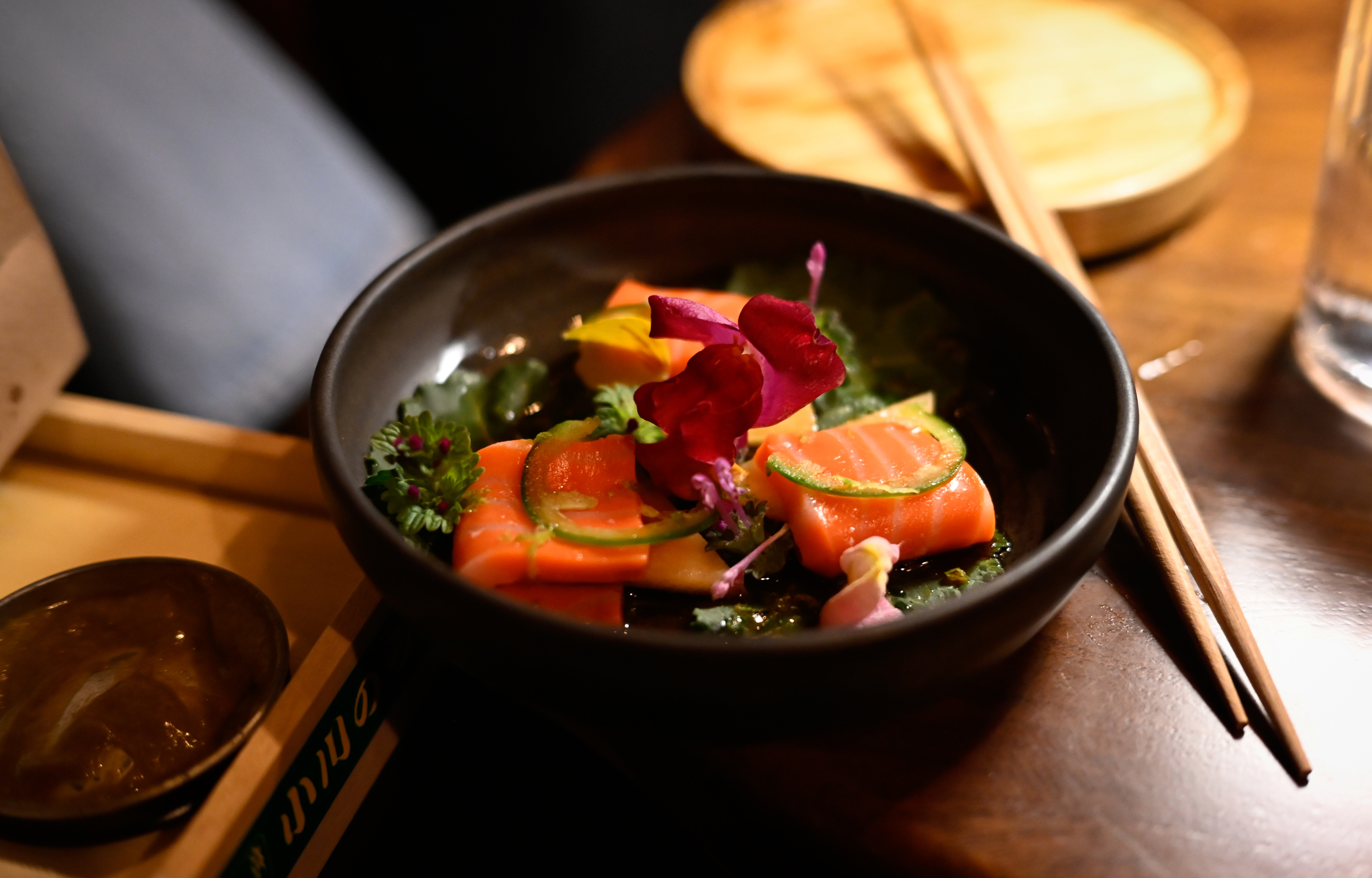
Early feedback revealed something unexpected. Diners were less interested in origin stories than in experience. Cultivated seafood did not need spectacle. It simply needed to behave like conventional salmon.
Delivering that experience required solving one of cultivated seafood’s most fundamental challenges: growing marine cells at scale. Behind every piece of Wildtype salmon lies years of work rethinking assumptions about fish cell biology.
“Seafood cells, compared to other animals humans have traditionally cultured, are relatively unknown,” Kolbeck suggests. Early experiments made that clear. When salmon cells were placed in standard 37°C incubators designed for mammalian lines, they did not adapt. They died. Salmon cells retained the environmental memory of cold rivers and oceans, and ignoring that reality proved fatal.
From there, Wildtype had to design its bioprocess from first principles. Media composition, oxygenation, impeller speeds, suspension dynamics, and growth parameters all required extensive experimentation. When the company became the first to scale a marine cell line in suspension at thousands of liters using fully animal-component-free media, it marked more than technical progress. It demonstrated that cold-water species could be translated into commercially viable systems.
The implications extend beyond biology into time itself. The entire process takes about two weeks to produce a 220g, uniformly cut block of fish. By comparison, it can take at least two years for a living salmon to reach maturity.
Kolbeck is quick to emphasize that today’s product is not the endpoint, too. “The salmon people are eating today is something we developed quite a while ago,” he says. “Meanwhile we’re already working on the next generation, which is much better.” Continuous improvement, rather than a single breakthrough, defines the company’s trajectory.
What chefs see that diners don’t
While diners evaluate cultivated salmon through taste and texture, chefs apply a different lens: workflow, consistency, and reliability. Their feedback has shaped Wildtype’s evolution in practical, often unglamorous ways.
Early challenges were mechanical. Packaging cracked under ultra-low temperatures. Portioning needed refinement to improve knife feel. Cuts had to be standardized so prep stations could integrate them seamlessly. Wildtype treated each issue as data rather than defect, effectively turning kitchens into an extension of its R&D environment.
Fast-forward 10 years. You walk into a grocery store and see a pack of Wildtype smoked salmon next to the conventional version. Ours is a little less expensive, free from mercury, guaranteed never to have contained parasites, and tastes just as good. Who wouldn’t choose that?
That stability does not replace craftsmanship; it supports it. Chefs have become co-developers, helping Wildtype fine-tune firmness, flavor, and structure in ways that
resonate on the plate.
That flexibility is also built into the process itself. “As we’re making the product literally from the cell up, we can tune a lot of things based on feedback, like shape, strength of the flavor, even the color,” Kolbeck says. “Texture is a little bit harder, but it’s also something that we could work on. All of those things are things that we can actually change.”
Wildtype uses two naturally occurring pigments, beta-carotene and lycopene, to achieve salmon’s characteristic red-orange hue. Both are carotenoids – the same class of molecules responsible for wild salmon’s color – and are recognized for their antioxidant properties. The choice reflects the company’s broader approach: replicating
nature’s outcomes without inheriting the ocean’s risks.
Beyond culinary impressions, Wildtype’s early customer surveys revealed motivations that extended beyond novelty. Many diners saw cultivated salmon as a safer choice.
Some were immunocompromised and avoided raw fish due to listeria risk. Others avoided sushi during pregnancy because of mercury concerns. Cultivated salmon allowed them to return to foods they had long excluded. Such concerns reflect a broader shift in how safety is defined. It now encompasses not just pathogens, but heavy metals, parasites, antibiotic residues, and microplastics – risks embedded in global seafood supply chains. By bypassing the ocean entirely, cultivated salmon removes exposure to those variables. What reaches the plate is defined by process control rather than environmental unpredictability.
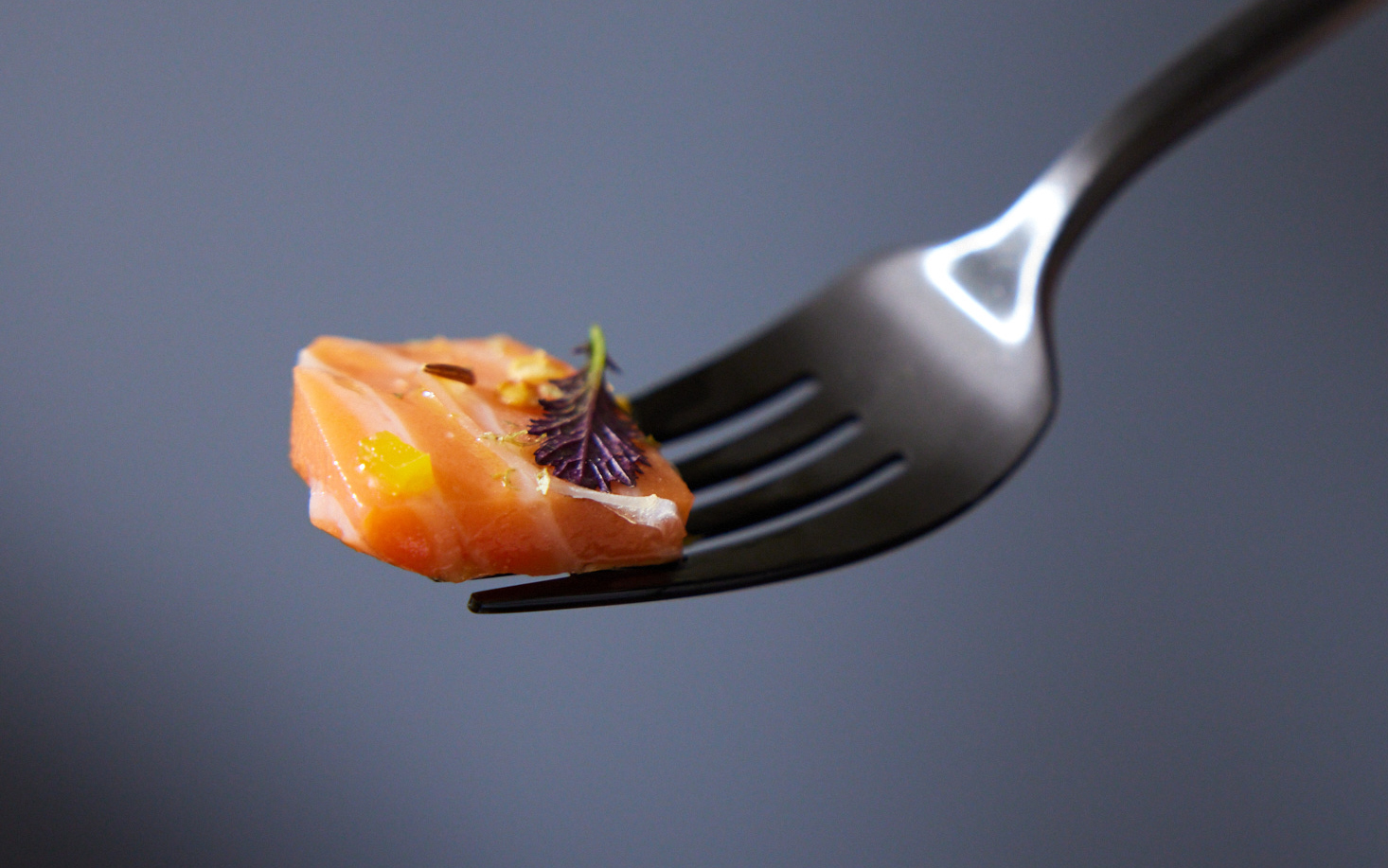
Mastering biology is one challenge. Mastering logistics is another. Restaurants depend on consistency, and a single missed delivery can erode trust faster than any technical setback. Wildtype invested early in operational resilience. Safety stock buffers against disruption. Supplier relationships are designed with redundancy. Quality controls are built to catch issues before they reach customers. The goal is to treat chefs not as experimental collaborators, but as customers who expect dependable service.
If a restaurant commits to serving cultivated salmon multiple nights a week, Wildtype expects itself to deliver, each and every time.
Capital, confidence, and category risk
Even with regulatory clearance and early traction, scaling cultivated seafood has not been insulated from broader market pressures. Investor sentiment has shifted.
“A lot of potential investors, I think, are trepidatious,” Kolbeck feels. “Specifically those who maybe have had some investments in the plant-based space that haven’t panned out well. They look at this and ask, is this the same thing?
“Objectively, capital is a lot harder to find today than it was four years ago,” he adds.
Wildtype’s response has been pragmatism rather than retreat, viewing partnerships with larger food companies as a way to accelerate impact through scale, capital efficiency, and operational experience.
That shift from innovation to infrastructure has not gone unnoticed. As cultivated foods gained visibility, they also became political flashpoints. Several US states introduced bans or restrictions on cultivated meat and seafood, even as federal regulators affirmed their safety. Wildtype’s legal challenge to Texas’ statewide ban raises a fundamental question: who decides what Americans are allowed to eat?
Wildtype argues that once a product has passed rigorous federal review, state-level prohibitions undermine consumer choice and domestic food innovation. For Kolbeck, the stakes extend beyond Wildtype. Cultivated seafood is meant to increase supply in a world where demand is outpacing ecosystems’ capacity to regenerate. Restricting access weakens resilience rather than protecting tradition.
A realistic vision of 2030
With that broader context in mind, Kolbeck focuses less on speed than credibility. What he envisions by 2030 is legitimacy. “Four years isn’t a lot of time,” he says, and he does not imagine cultivated seafood dominating supermarket shelves by then. That means cultivated salmon becoming a familiar option chosen for flavor, safety, or values. It means proving supply can scale reliably. And it means partnering with companies capable of expanding manufacturing far beyond what venture funding alone can support.
In Kolbeck’s view, the turning point arrives when cultivated salmon sits beside conventional products without explanation. “If ours is a little less expensive, free from mercury, guaranteed never to have contained parasites, and tastes just as good,” he says, “who wouldn’t choose that?”
If Wildtype succeeds, cultivated seafood will not feel futuristic. It will feel ordinary – a subtle addition to the food system that eases pressure on oceans while giving consumers a safer, more predictable way to enjoy the seafood they already love.
If you have any questions or would like to get in touch with us, please email info@futureofproteinproduction.com

More Features

Deep Dive: Breakout bets

Feeding change

Protein Pioneer: Kesha Stickland


