

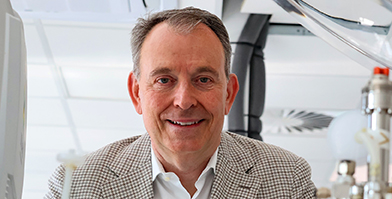
Talking Heads: Cost Decides
The science works. The molecules exist. The real challenge is everything that comes after. Benjamin Reygate talks with Thomas G. Schmidt, CEO of 21st.BIO, about why scale, cost, and execution will decide the future of precision fermentation
Sometimes, the question is not whether a technology works, but whether it can survive the journey to relevance. “We saw a lot of innovation happen, but not actually get to market,” begins Thomas G. Schmidt, Founder & CEO of 21st.BIO.
For all the progress in biotech, that gap has proved persistent. Breakthroughs emerge with increasing frequency, yet only a fraction translate into products that matter at scale. That is not a failure of science, but of systems. “What we’re doing right now is breaking the glass ceiling on the production cost side,” adds Schmidt – but only if the industry can solve the problem that has held it back for decades.
The problem nobody solves
“The Valley of Death is really about being able to produce at attractive cost and quality, and having a process that is approvable from a regulatory point of view,” Schmidt
says. That phrase is familiar, but its implications are often underestimated. Moving from molecule discovery to industrial production is not a single leap but a series of compounding challenges, where biology, engineering, regulation, and economics all collide. It is here, more than anywhere else, that progress slows. “It’s often access to technology that can make the production of their molecule cost-effective,” Schmidt believes.
Without that access, even the most promising innovations struggle to move beyond niche applications. “Most of them don’t have access to technologies that can actually produce at low cost,” Schmidt notes, describing a realization that arrives at different stages for different companies.
Some encounter it early and adjust course. Others discover it later, when the path forward may have already narrowed. The pattern is familiar – and it usually begins with the same misconceptions. “One of these [misconceptions] is the belief that mediocre systems can be improved over time and therefore become competitive,” Schmidt says.
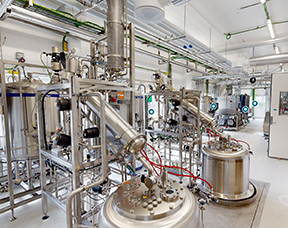
In practice, incremental gains rarely close the gap between a merely workable system and a truly world-class one. Scale, in other words, does not reward approximation.
“The other is the idea that you can make a business work with contract manufacturing,” Schmidt continues.Contract manufacturing may accelerate early development, but it rarely delivers the economics required for long-term success. “At least in the cases I know, they all need to move to their own dedicated facilities to be cost-effective enough,” Schmidt believes.
Even market strategy has been shaped by overly optimistic assumptions. “There’s also a misconception that you can build a business in top-end or high-priced segments of the market, where customers are willing to pay for being green or for specific functionality,” he says.
Those segments exist, but they are limited, and they do not sustain entire industries. “They need to compete in a broader market, with an attractive cost base,” he stresses.
Those patterns show up not just in how companies build, but also in how they are ultimately funded and supported.
Looking beyond the molecule
“A lot of investors get excited about the molecule and what it can offer, but don’t spend enough time thinking about where and how it will be produced,” Schmidt suggests.
The challenge is not simply identifying a promising molecule, but understanding the system required to bring it to market. “You have to be conscious and thoughtful about whether there is a credible path to large-scale production,” he explains.
That means thinking early about infrastructure, partners, geography, and timelines, rather than treating them as downstream concerns. “You need to understand whether there is a path to beating the alternative in the market,” Schmidt adds. Without that, everything else remains theoretical – including the technology itself.
A technological head start
That makes the starting point critical. “We offer the very best production systems in the world, with +40 years of development behind them,” Schmidt says, referencing the legacy of large-scale industrial fermentation built within Novo Nordisk and Novonesis.
Those systems have already been validated at scale. “They are IP-protected, have been through the regulatory system a number of times, and have already been scaled to large volumes,” he notes, highlighting a level of industrial maturity that most alternative protein platforms are still working to reach.
That experience reduces uncertainty where it matters most. “I call the people we have here the ‘Navy SEALs’ of biology, because they not only have what we think are the best tools in the world, but they can also crack almost any problem,” Schmidt says. Capability alone, however, has never been the limiting factor.
The moment the economics changed
The constraint has always been cost – specifically, reaching price parity with animal-derived BLG (beta-lactoglobulin, the main protein in whey) – and that is where the story changes. “We have passed that point now,” Schmidt confirms.
For years, precision fermentation has been defined by promise rather than performance. That is beginning to shift. “We are at price parity with the technology we have and that we license to our customers. So it’s there.” So, the immediate challenge is no longer feasibility, but scale. “What we now need to do is build out capacity globally,” he says. For BLG, the implications are significant. “This technology is not only hitting cost parity, but it also opens up the ability to produce something that hasn’t been available in great quantities so far.”
Breaking the cost equation
Hitting parity is of course one thing. Understanding how it was achieved is another. “One is that it can be produced at low cost. That’s typically referred to as the titer in fermentation,” Schmidt explains.
Higher titers allow more protein to be produced within the same fermentation volume and existing infrastructure. But yield alone is not enough. “It’s also about the carbon conversion rate – how much sugar the microorganism consumes to produce a kilo of protein,” he continues.
Efficiency at that level determines whether production can compete in large-volume markets, particularly when feedstock costs remain a major input.
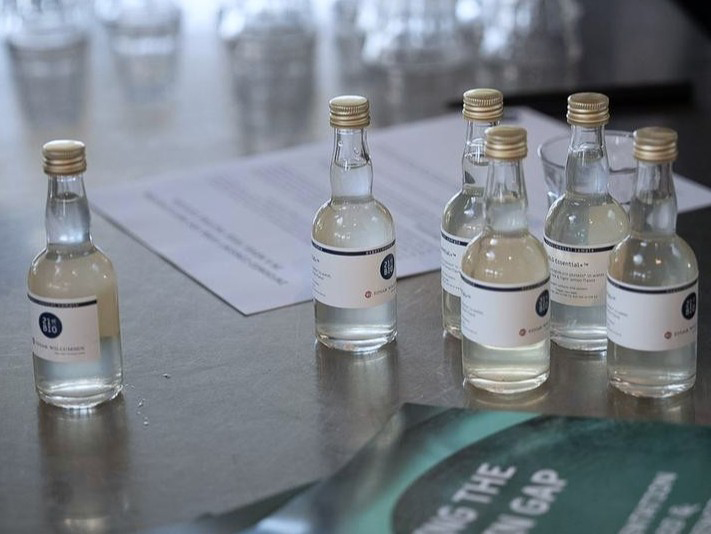
Functionality completes the picture. “It’s fully soluble in water. It has no color and fits easily into most product matrices,” Schmidt says.
That combination counts as much as cost. Ingredients that integrate easily into existing formulations reduce friction for manufacturers, accelerating adoption without requiring extensive or costly reformulation efforts. But matching existing systems is only the first step. “I call it the insulin journey for nutrition,” Schmidt states.
The first phase is replication. “We start by copying and producing the very best in nature, and from there, we improve it.” The second phase moves beyond that. “We can add things and combine them in ways that conventional production cannot.” If replication is only the starting point, the question becomes where else the technology can go.
A platform far beyond food
Nutrition may be the most visible application of precision fermentation, but it represents only a fraction of its potential. “There’s a huge opportunity in materials that we’ve only just begun to scratch the surface of,” he adds.
“We’re also at the brink of replacing a number of chemical solutions in the agricultural sector.”
Other applications are emerging at the edges of the field, pointing to entirely new industrial possibilities. “We’ll be able to extract rare earth metals using biological solutions.” The opportunity is clearly vast – but realizing it at scale is far from straightforward.
“This industry requires a lot of capital,” Schmidt notes.Industrial fermentation operates at a scale that demands significant investment. “To achieve truly low-cost production, you need scale,” he adds.
That requirement shapes both the pace of progress and the structure of the market. “A number of investors in this field have been burned over the past few years,” Schmidt admits. “There is some hesitancy now about sticking their necks out again.”
That caution may ultimately improve the sector. “It may lead to more disciplined and healthier business cases.”
Capital alone, however, does not build an industry.
Infrastructure and partnership
“What we need to do as an industry is continue to de-risk those investment cases,” Schmidt says.
That process extends beyond technology itself and into the broader ecosystem required to support it at scale. “We need a number of partners to come in and make these opportunities work,” he explains.
Technology providers, processors, investors, and customers all have roles to play. “I could see FMCG customers becoming very closely involved in building out capacity,” he adds.
Existing infrastructure remains a critical asset. “If you already have capacity, you can gain a few valuable years in terms of time to market.”
Where and how that infrastructure is built increasingly depends on geography, shaped by local policy environments, access to capital, industrial capabilities, and the willingness of governments to support emerging biotech sectors.
A global race
“Right now, the USA is, in many ways, charting the path when it comes to being open to innovation in this space,” Schmidt says, pointing to a regulatory environment that has shown a greater willingness to engage with emerging technologies and bring them through approval.
Regulatory timelines vary widely across regions. “We had beta-lactoglobulin approved in the USA within about a year, whereas we believe it may take up to five years in Europe,” he adds, highlighting a gap that has real implications for commercialization and investment decisions.
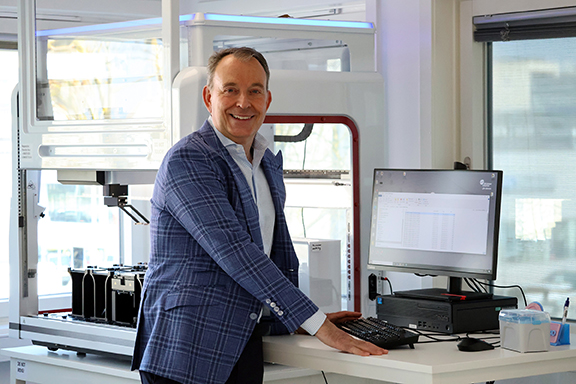
The implications are strategic. “If we don’t have a home market in Europe, then over time – as we’ve seen with other technologies – they will move out of Europe.”
Other regions are moving decisively. “Regions such as China, the USA, and Japan see biotech as a core part of their multi-year growth plans,” he continues, reflecting a broader alignment between policy, capital, and industrial ambition.
Those regional differences also shape expectations about how quickly the industry will move, and where the next wave of scale is most likely to emerge.
The long view
“I think the timelines were overhyped,” Schmidt admits, reflecting on the early optimism that surrounded the sector’s first wave of breakthroughs and the expectations that followed.
In many ways, that reset has brought greater realism. “In the short term it may have been overestimated, but in the long term, it’s actually underestimated,” he says, suggesting that the recalibration may ultimately strengthen the industry’s foundations and sharpen its focus on what truly matters for scale. The long-term trajectory remains clear. “It’s going to be a core technology in the world.”
Demand is rising rapidly. “Most industry observers believe we need to produce something like 50% more protein by 2035,” he adds, pointing to structural pressures on global food systems becoming increasingly difficult to ignore.
Traditional systems alone are unlikely to meet that need. “We’re heading for a protein supply gap.”
Even with more realistic timelines, the underlying trajectory has not changed, and the direction of travel remains firmly toward scalable biological production, driven by necessity as much as innovation.
Redefining what is possible
“I’m very excited to be part of unlocking how we produce nutrition and materials for the world,” Schmidt says.
At its core, the process converts carbon into something more valuable. “I’m excited about being able to convert carbon, in this case sugar, into something that is much healthier for people.”
The implications extend beyond efficiency. “I can see a future where we are able to produce and deliver the nutrition the world needs without having to scale the current conventional production systems in the same way.”
And beyond replication lies improvement. “To actually improve on it, both in nutrition and materials.
“Success is that we see a number of products reach scale and become real successes at multiple thousands of tons,” Schmidt says. “Success is also seeing people build new products around these molecules.”

The impact extends into product development. “Existing companies find ways to thrive using it.”
Over time, the economics continue to improve. “The economic case not only proves attractive today, but becomes more attractive over time.”
Thinking bigger
“Sometimes, when I’m driving home from work, I ask myself whether we’re thinking big enough,” Schmidt says. “Are we moving fast enough?”
It is not a question of capability, but ambition. “What would Elon Musk do if he were in this space? I really feel a strong sense of purpose and opportunity in this space,”
he continues, reflecting on the pace of progress and the mindset required.
The challenge, he suggests, is not building the system – but thinking at the scale it demands, and aligning resources, talent, and infrastructure to match that vision.
If you have any questions or would like to get in touch with us, please email info@futureofproteinproduction.com

More Features

Protein Pioneer: Justin Kolbeck

Deep Dive: Breakout bets

Feeding change

Protein Pioneer: Kesha Stickland


