
Ones to Watch: Separation perfected
26 FOOD TECHS TO WATCH IN 2026
BlueTree CEO, Michael Gordon, outlines how removing only the unnecessary sugars could redefine low-sugar juice and dairy worldwide
Michael Gordon still remembers scanning the label on a bottle of orange juice and realizing the sugar content rivaled that of soda. As a parent, the moment underscored how even foods widely considered ‘healthy’ can carry hidden nutritional downsides. It sharpened his focus on a broader issue: sugar overconsumption embedded in everyday eating habits, particularly for children whose diets often combine juices, cereals, and dairy products.
BlueTree Technologies was created to address that problem where it begins. “Our patented plug-and-play technology, validated under FDA and EU regulatory framework uses physical separation to selectively remove sugar molecules from drinks like juices and milk, reducing sugar while preserving nutrients, sweetness, texture, and taste,” Gordon explains. For dairy producers, the process offers an added advantage. “It allows the proteins to remain intact in terms of functionality and structure, which is a tremendous benefit.”
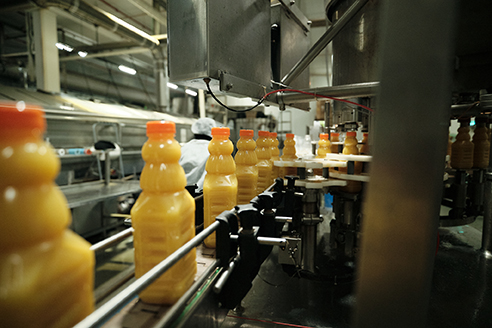
The company’s objective is both health-driven and practical: helping manufacturers offer lower-sugar beverages without compromising flavor or clean-label credentials. “Sugar overconsumption is leading to rising rates of obesity and related diseases,” Gordon stresses. BlueTree’s model therefore centers on industrial integration, enabling reduced-sugar products to be produced within existing manufacturing lines.
A clean-label solution built on physics
Rather than reformulating products or adding ingredients, BlueTree’s technology selectively removes a portion of naturally occurring sugars while maintaining sweetness perception. “We do not add anything to the product,” Gordon emphasizes. The result is a clean-label solution that leaves ingredient lists unchanged at a time when transparency is increasingly non-negotiable for consumers.
Progress in 2025 accelerated adoption. BlueTree received EU regulatory approval, lowering barriers for manufacturers serving European markets. The company also integrated PCI Membranes into its system, strengthening performance in dairy applications. These milestones built on early backing from Fresh Start, the Israeli Innovation Authority, OurCrowd, and Priniv, which supported both development and industrial-scale testing.
BlueTree closed its most recent funding round in early 2025 despite a challenging investment environment. The company is now between rounds and expects to raise again in early 2026 to support continued expansion across global juice and dairy sectors.
The current technology reflects a deliberate pivot from an earlier approach. Founder Didier Toubia initially developed a sugar-absorbing mineral, Zeolite, but cost, scalability, and clean-label limitations led the team to abandon it, despite holding the patent. Working with CTO, Yossi Sefi, BlueTree ultimately developed the physics-based separation process now in use.
One persistent misconception, Gordon notes, is that the technology involves additives. “Many people assume we are adding something during processing,” he says. Lab analyses before and after treatment consistently show otherwise, and the method has been validated under both FDA and EU standards.
If BlueTree can help reduce global sugar overconsumption even slightly, it can play a meaningful role in lowering the rates of overweight, obesity, and related diseases
Looking ahead, BlueTree plans to deepen partnerships with global beverage brands and accelerate commercial adoption in dairy. Gordon believes 2026 will favor technologies that deliver clean-label outcomes at scale, particularly as Gen Z consumers demand healthier products without artificial inputs. “What’s missing today is scalable, clean-label innovation that works within existing production lines,” he says. “BlueTree provides exactly that.”
For Gordon, the motivation remains long-term impact. “If BlueTree can help reduce global sugar overconsumption even slightly, it can play a meaningful role,” he says. Five years from now, he hopes reduced-sugar, clean-label beverages will be the norm rather than the exception.
If you have any questions or would like to get in touch with us, please email info@futureofproteinproduction.com

More Features

Protein Pioneer: Justin Kolbeck

Deep Dive: Breakout bets

Feeding change

Protein Pioneer: Kesha Stickland


