

Ones to Watch: Moments of Truth
As precision fermentation moves into commercial reality, Lisa M. Keefe examines what separates fact from fiction in scaling the technology
Amid upheaval across the alternative proteins sector, precision fermentation has been on one of the most dynamic journeys – evolving from an ancient technology into a platform for highly targeted production. It is now emerging as a rapidly expanding toolbox of techniques capable of delivering a wide range of refined and genetically engineered ingredients for food and beverage formulations.
The post-pandemic years have certainly been challenging for animal-free proteins. While markets for plant-based dairy and egg substitutes continue to grow, they are doing so more slowly as food inflation has risen and consumer budgets have tightened across multiple global markets. For example, the global plant-based milk market is expected to grow 34% over the next five years, according to Grand View Research – solid growth, but down from the 41.3% increase in global sales recorded between 2018 and 2025.
Meanwhile, the global plant-based meat and seafood market is growing in the mid-single digits, according to Euromonitor. In the highly prized US market, retail volumes for both refrigerated and frozen alternatives have now fallen below 2019 levels.
Cultivated protein innovation continues to hold promise for improving global nutrition, but the sector has struggled over the past 24 months as companies’ upfront CapEx requirements have outpaced available funding in an increasingly tight global credit market, as seen with the closures of Believer Meats, Meatable and SciFi Foods.
Precision fermentation (PF), by contrast, is forecast to achieve a compound annual growth rate of more than 44% over the next eight years, reaching a value of US$113.9 billion by 2034, according to Fortune Business Insights.
From hype to execution
Many modern PF applications face a complex regulatory gauntlet, often across multiple jurisdictions. However, several companies have now secured approvals and moved into a new phase of growth: once the technology is approved, the question becomes how to scale and commercialize effectively.
Fengru Lin, Co-founder & CEO of TurtleTree, a producer of precision-fermented lactoferrin, says regulatory progress has already shifted the landscape. “Regulatory acceptance removed uncertainty for larger customers and allowed conversations to move forward more decisively. For consumers, it reinforced trust in a production technology that is still relatively new to the market.”
Even so, the post-approval pathway is still being defined. Companies now entering or expanding in the commercial market range from newer entrants such as Vivici to major agri-food players like Cargill. The timing is notable: PF aligns closely with a broader shift across the alternative protein sector toward B2B supply chain integration rather than consumer-facing brand building, which is where many companies are now focusing their investment.
To better understand this transition, we spoke with leaders from several precision fermentation companies about their commercial and industrial journeys. Their insights – and advice – range from the importance of starting with the end application in mind to the ongoing need to educate consumers, many of whom remain unaware that PF has been part of the food system for decades.

TurtleTree
TurtleTree exemplifies a path many alt-protein companies are now taking: shifting from an original ambition of producing cell-cultivated milk to a more targeted approach centered on precision fermentation of dairy-identical, animal-free lactoferrin. As a specialty ingredient with a market price of around US$1,000/kg, lactoferrin presents a far more viable commercial proposition than commodity products.
The company received a ‘no questions’ letter from the US Food and Drug Administration (FDA) in May 2024. The letter confirmed that the agency had reviewed TurtleTree’s dossier, submitted in 2023 in support of its self-affirmed Generally Recognized As Safe (GRAS) designation for LF+, and identified no safety concerns. This clearance opened the US market for TurtleTree’s lactoferrin in human food applications, particularly infant formula, where its role in iron absorption, immune function and gut health is well established.

Beyond ingredients, TurtleTree has also incorporated lactoferrin into its consumer-facing iron supplement and prebiotic, IronKind. The tablet, sold online, is designed to deliver the benefits of iron without some of the side effects associated with traditional supplements.
From approval to commercialization
FDA clearance of LF+ was a “powerful moment”, Lin suggests, but it did not mark a single turning point. Instead, she emphasizes that TurtleTree’s progression from regulatory applicant to commercial-ready manufacturer has been continuous rather than segmented.
“Regulatory competence is a meaningful advantage in precision fermentation because it is what allows science to translate into commercial adoption,” Lin says. “Many companies can produce a protein in the lab, but far fewer can build the data package and operating systems that customers and regulators are comfortable with.”
From the outset, regulatory expectations were treated as a core design input rather than an afterthought. “That approach shaped how we designed the product, generated data, and planned timelines,” Lin says.
As with many product launches, execution has not always been predictable. For example, athlete-targeted espresso shots from Cadence Performance Coffee, which include LF+, were delayed by several months in 2024 due to supply chain and formulation challenges. TurtleTree has also faced funding constraints at various points.
However, Lin stresses that while regulatory approval processes are demanding, companies should avoid treating them as a simple “box-ticking exercise”. Taking a broader strategic view is essential.
While compiling data and documenting processes is rigorous, softer skills also play a role. Regulators are ultimately individuals, and maintaining open communication can help companies anticipate questions and align expectations more effectively.
“Knowing what regulators will expect influences how experiments are designed and how rigor is embedded into daily operations,” Lin continues.
At the same time, TurtleTree has designed its testing programs to operate without animal involvement, enabling the company to certify its products as vegan.
Regulatory competence is a meaningful advantage in precision fermentation because it is what allows science to translate into commercial adoption
Lin also points to a less recognized benefit of the regulatory process: enforced discipline. Meeting regulatory timelines requires close coordination between scientific, manufacturing and commercial teams. While this alignment can initially feel complex, it ultimately reduces inefficiencies and supports scale-up, she notes. TurtleTree, for example, has increased production volumes to the point where LF+ can compete on price with traditional bovine-derived lactoferrin.
TurtleTree is one of several companies working to establish a global market for animal-free lactoferrin. Australia-based All G and South Africa’s De Novo Foodlabs are among the firms Lin identifies as peers. However, with All G also securing an FDA ‘no questions’ letter, the regulatory landscape is becoming more competitive, narrowing what had been an early lead in commercialization.
The global lactoferrin market is estimated at around US$300 million, with the majority still derived from dairy sources. Even so, PF companies see significant opportunity. Demand remains strong in infant formula, immune supplements and broader food applications, particularly across Asia Pacific. Some forecasts suggest a compound annual growth rate of up to 8.7% through 2034.
“The real differentiation now is execution,” Lin says. “This year, our focus is on manufacturing scale, supporting customer launches, and expanding the market through clinical work and broader applications.”
While headquartered in Singapore, TurtleTree operates production facilities in California and maintains an office presence in Boston, supporting its global operations. Looking ahead, Lin expects regulatory processes to become more efficient as familiarity with PF increases across jurisdictions. “Overall, the pathway is becoming more predictable, even if it is not necessarily becoming ‘fast’. For companies that invest early in regulatory rigor, that predictability is a real advantage,” Lin says.
Verley
Verley has taken a targeted approach to precision fermentation, focusing on high-value, animal-free whey proteins from the outset. Unlike many early entrants, the company – which produces functional, lactose-free whey proteins identical to those derived from cow’s milk, but without the animal – was built with a B2B strategy in mind. Its FermWhey products are designed for use in RTD beverages, shots and hybrid formulations, with applications aligned in part to demand driven by GLP-1-related consumer trends.
Beyond their nutritional profile, Verley’s proteins are engineered for specific performance characteristics, including solubility, thermal stability, texture and clarity. The company received a ‘no questions’ letter for its FermWhey products from the US FDA in November 2024 and is now working toward approvals in the EU, Asia and the Middle East.

As Verley expanded into global commercial markets, it also undertook a rebrand. Originally known as Bon Vivant, the company adopted the name Verley in March 2025, partly because it evokes a town in the Lyon region, where the company is based – although no such town exists.
Ahead of regulatory approval, Verley also conducted a peer-reviewed life cycle analysis under ISO standards. With validation from experts at the Technical University of Denmark, DTU Biosustain and Colorado State University, the company reported that its process generates 72% fewer greenhouse gas emissions than conventional dairy protein production, while requiring 81% less water and 99% less arable land.
Regulation as a design input
As a result, the data-gathering required for regulatory submissions presented a limited learning curve. “Early engagement with agencies is key for Verley, especially when it comes to process development and product design,” says Géssica Silveira, Head of Analytics & Regulatory Affairs. “It anticipates safety aspects of the final product and allows for more comprehensive data generation.”
As with most novel food systems, timelines have occasionally acted as a bottleneck, she notes. However, Verley was able to complete the US process in a relatively short timeframe.
The cumulative effect of these data-driven initiatives has been to embed a strong culture of food safety and quality across the organization, from R&D through to manufacturing, Silveira says.
“The result is not only a readiness for market entry, but a scalable platform for sustainable growth,” she says, noting that this provides a competitive advantage in the whey protein market, which is larger but operates on lower per-unit margins than lactoferrin.
“Regulatory competence is often a deciding factor in whether a company can scale, commercialize, and compete globally,” Silveira says. “Companies that understand the regulatory framework complexity of certain regions and can navigate these distinct systems effectively can launch earlier, capture shelf space and secure partnerships.”
While experience can streamline future submissions, PF companies recognize regulatory processes are not directly transferable between jurisdictions. The US system is widely regarded as one of the fastest globally – although this could change, following indications in January 2025 that the Trump administration was reviewing the GRAS pathway.
Elsewhere, regulatory approaches continue to evolve. Singapore is updating its food framework and investing in the Centre for Precision Fermentation, while Food Standards Australia New Zealand (FSANZ) has revisited its approval process and eased requirements.
Regulatory competence is often a deciding factor in whether a company can scale, commercialize, and compete globally
In contrast, the EU has in some respects tightened its approval framework, increasing both the time and cost associated with market entry.
Silveira expects these regional differences to narrow over time. As more companies engage with multiple jurisdictions, knowledge is shared across agencies and stakeholders, improving familiarity with PF processes, microorganisms and ingredient safety.
“The more familiar the authorities become with the PF process, the safety of its microorganisms and the ingredients, the more confident and assertive the food safety committees will become,” she says.
Silveira also highlights regulatory ‘sandbox’ initiatives in the UK and Israel as important drivers of progress, noting that they encourage engagement and build confidence among regulators and food manufacturers. “I also believe that, as precedents accumulate, fast-track timelines could become more common, and the market could become more attractive,” she says. Shorter approval timelines would be particularly beneficial in regions such as Europe, where processes can take several years.
Even so, Silveira emphasizes that repeated regulatory engagement delivers value beyond approvals alone. “Having multiple regions evaluating the safety aspects of our product empowers our technology and reassures consumers, clients and investors,” she says.
Standing Ovation
Standing Ovation has moved beyond one of the most difficult hurdles in the novel protein journey – scaling toward industrial production.
The precision fermentation company – which specializes in animal-free casein – is already operating at industrial scale in France, working with partners including Groupe Bel, Ajinomoto Foods Europe, and Tetra Pak. An expansion into Asia is also underway.
Casein plays a central role in the sensory properties of milk and cheese, contributing significantly to stretch, melting behavior and overall taste profile.

Standing Ovation has developed its production capacity ahead of securing regulatory approvals, although it is actively working with authorities in the USA and EU. China, meanwhile, has established a defined regulatory framework for precision fermentation that the company may also leverage.
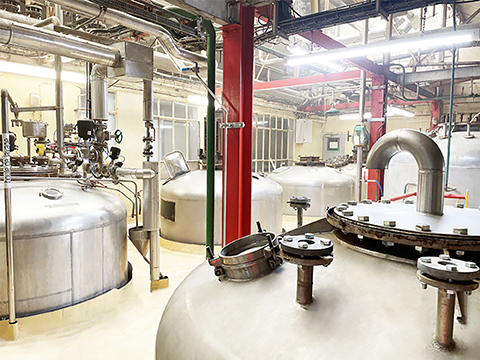
A key element of Standing Ovation’s strategy is its reliance on CDMO partners, rather than building its own large-scale infrastructure. While constructing facilities in-house is capital-intensive and has proven challenging for many novel protein companies, this partnership-led model allows for a more flexible and asset-light approach to scale-up.
“While the technology [for precision fermented casein] itself is unique, the equipment and facilities employed are standard, relying largely on mainstream systems commonly used in traditional casein extraction,” says CEO, Yvan Chardonnens. “As a result, scale-up has proven to be unexpectedly straightforward, despite the technological complexity.”
That simplicity has enabled the company to integrate its PF processes directly into the existing operations of partners such as Ajinomoto and Groupe Bel.
Partnerships as a scale strategy
This strategy reflects a broader trend among consumer packaged goods manufacturers toward collaboration. Partnerships allow companies to access new technologies while distributing financial and operational risk across a wider base. In its 2026 Horizons Report on Operational Readiness, released in February 2026, US design-build firm CRB reported that 51% of CPG companies use co-manufacturing operations at least occasionally, with 70% planning to do so within three years. Similarly, 58% use co-packaging partners, and 66% expect to expand their use of co-packers over the same period.
Grand View Research also estimates that co-manufacturing in the global food and beverage sector will grow at a compound annual growth rate of nearly 10% through 2030.
One factor driving this growth is the rapid development of AI. Partnerships make advanced tools more accessible to start-ups without requiring significant in-house expertise. Groupe Bel, for example, has partnered with Dassault Systèmes to apply AI in reducing R&D timelines, improving manufacturing efficiency and increasing operational transparency.
Standing Ovation has extended its collaboration with Groupe Bel by incorporating circularity into its production model. The company uses acid whey – a byproduct of Bel’s cheese-making process – as feedstock to produce casein, which is then reintegrated into Bel’s production lines, creating a closed-loop system.
This approach is attracting investor attention in an otherwise constrained funding environment for novel food technologies. Standing Ovation’s ability to utilize a previously low-value waste stream provides a cost advantage and strengthens its sustainability credentials.
The circular economy isn’t coming – it’s here!
An independent life cycle assessment found that the company’s process reduces CO2 emissions by 74%, land use by 99% and water consumption by 68% compared with conventional animal-derived casein.
Partnering with CDMOs “highlights the versatility of the precision fermentation platform, particularly in its ability to accommodate diverse feedstocks and to produce a broad range of proteins through a single production process”, Chardonnens says. “The circular economy isn’t coming – it’s here!”
Chardonnens views precision fermentation as central to the future of food production: a pathway to cost parity for commodities such as casein and whey, an evolution of long-established fermentation techniques, and a means for food companies to continue progressing toward environmental, social and governance targets.
In September 2025, Standing Ovation was selected for the latest cohort of the Unreasonable Food initiative, a program supported by Mars Snacking and Unreasonable Group. Other fermentation-focused companies in the cohort include Pow.bio, Hydrosome Labs and Octarine Bio.
“Precision fermentation represents the next evolution of traditional fermentation,” Chardonnens says. “It has emerged as a technology of choice for the development of bioactive ingredients and formulations in health, beauty and nutraceuticals. These sectors are experiencing strong growth amid the rising prevalence of non-communicable diseases, such as high blood pressure, diabetes and obesity.
“As food increasingly becomes a pillar of preventive health, precision fermentation offers a powerful and scalable solution.”
The EVERY Company
The EVERY Company has moved well beyond the start-up phase, with its precision-fermented egg proteins now firmly established in the commercial market.
Founded in 2014, the company is operating at scale, and CEO Arturo Elizondo is clear about how expectations shift as companies transition from development to commercialization.
“When you are operating at pilot scale and doing R&D trials, customers can be quite forgiving. Once you make the switch from R&D to procurement, there is no room for error,” he says.
As a result, the company’s focus has shifted toward ensuring reliability and consistency, as well as strengthening customer relationships. As Elizondo puts it, this means “building that customer-first muscle and developing the organizational capabilities to do that”.

EVERY’s portfolio includes OvoPro (formerly EVERY EggWhite), an ovalbumin produced via precision fermentation that delivers the binding, foaming and texturizing properties of traditional egg whites in applications such as baked goods, confections and sauces. A second ingredient, OvoBoost (previously EVERY Protein), is a highly soluble, neutral-tasting protein designed to fortify beverages, syrups and other foods without affecting flavor or texture.
The company has already achieved commercial traction. With multiple ‘no questions’ letters from the US Food and Drug Administration (FDA), its ingredients are used in products such as Fermy coffee enhancer and matcha latte mix, Pulp Culture’s hard kombucha, Chantal Guillon’s macarons and Pressed smoothies.
Reliability at scale
“Stabilizing our process to deliver the same product batch-over-batch is an achievement we’re proud of, and continuing to do so will stay top of mind,” Elizondo continues.
External market dynamics have also worked in the company’s favor. The outbreak of highly pathogenic avian influenza over the past year disrupted global egg supply chains, highlighting the value of alternative production methods.
EVERY’s proposition centers on reliability: a consistent and predictable supply of ingredients that is insulated from the volatility of conventional egg markets, where pricing and availability can fluctuate significantly.
“Because our supply chain is entirely isolated from the traditional egg market, we can offer consistency of supply and cost that are unheard of in the egg market. Supply chain continuity has definitely been a major driver of adoption,” Elizondo says.
While precision fermentation is still often described as a novel technology, Elizondo notes that customer perceptions are shifting. Increasingly, PF is viewed less as ‘science fiction’ and more as an inevitable addition to the food manufacturing toolkit. Biomanufacturing is already an established part of the global food system, even if it remains a relatively small share.
“A lot of work has been done – by PF companies, non-profits and the customers themselves – to evaluate consumer acceptance and to educate on the technology,” Elizondo says.
Much of that effort has been coordinated through the Precision Fermentation Alliance, a nonprofit founded three years ago, of which EVERY is a charter member.
Once you make the switch from R&D to procurement, there is no room for error
“Many people don’t know it, but PF products are already commonplace in our food system,” Elizondo says, noting that more than 90% of cheese is produced using precision-fermented rennet. “And some larger companies have also been willing to be early adopters of these ingredients, which has created momentum for the industry as a whole.”
Like many companies in the sector, EVERY has faced capacity constraints as it scaled. More recently, however, the challenge has shifted: matching growing customer demand with expanding production capacity.
In October 2025, EVERY and PF manufacturer Vivici announced a strategic partnership with the Abu Dhabi Investment Office to build an industrial-scale facility producing egg white alternatives and whey proteins for food manufacturers across the Middle East, Asia, Africa and Europe.
The following month, the company secured an additional US$55 million in funding to support capacity expansion and target new customer segments, particularly the high-volume bakery sector.
Meanwhile, expectations around ingredient performance remain uncompromising. “In terms of evaluating the ingredients themselves from a functionality and performance standpoint, expectations remain as high as ever: Customers are not willing to compromise on product quality, taste, texture or other attributes,” Elizondo says. “The bar is and has always been that for large-scale adoption, the PF ingredient needs to deliver the same or better performance and sensory quality, and we don’t see that shifting any time soon.”
Vivici
Vivici is targeting one of precision fermentation’s biggest opportunities – scaling the production of commodity proteins for mass-market applications.
Founded in 2023, the company is focused on producing whey proteins for use in food, protein drinks and sports nutrition. It has already secured a ‘no questions’ letter from the US Food and Drug Administration (FDA) for its recombinant beta-lactoglobulin.
As part of its scale-up efforts, Vivici became the first company to test the 75,000-liter fermenter at Bio Base Europe Pilot Plant, having previously successfully validated its technology on the facility’s 15,000-liter system.
The next step is clear: translating that technical validation into commercially viable production at scale.

“We’re trying to ferment macronutrients like proteins or fats and oils that are consumed in large volumes, and those have specific cost structures, volumes and price points to hit,” says CEO Stephan van Sint Fiet.
“Precision fermentation of food ingredients has been extremely successful, and now the market is mature enough to move into large-volume products – the big proteins, the macronutrients. That is the exciting transition.”
From technical success to commercial reality
That transition, however, presents a fundamental challenge: adapting a production system historically optimized for high-value ingredients to operate competitively at commodity scale.
“It’s not about reinventing fermentation protocols, it’s not about reinventing strain engineering, it’s not about reinventing downstream processing or packaging technologies,” van Sint Fiet says. “It’s about getting the entire system to operate at two or three times lower cost than it typically does.”
For van Sint Fiet, this is as much a business challenge as a technical one.
“You can’t just be a science company; you have to be a food ingredient or food and beverage company. You have to build that muscle from day one,” he says.
Precision fermentation also offers a level of flexibility that many companies are only beginning to fully exploit. In addition to producing proteins identical to those derived from livestock, PF enables manufacturers to tailor end products to deliver specific sensory or nutritional outcomes for targeted markets.
“I think this is where a lot of very technology-focused companies realized there’s more to this,” Van Sint Fiet notes. “You have to make it food grade, secure regulatory approval and then actually bring it to market. That requires commercial execution.”
Vivici’s CEO brings decades of experience in the food ingredient sector, with previous roles at Novozymes, DuPont and IFF. From his perspective, companies that focus solely on disruption risk overlooking the operational realities of the industry.
“They don’t need to be disruptive in every part of their business. It’s perfectly acceptable to adopt best practices from established ingredient companies. I’m not sure the balance is always right,” he says.
You can’t just be a science company; you have to be a food ingredient or food and beverage company
Companies that apply proven operational approaches, he argues, are better positioned to allocate resources toward genuine innovation rather than reinventing established processes.
“I think those companies that do that – and there are quite a few already – are doing well. Others don’t fully understand the industry they’re operating in and are struggling as a result,” he says.
This shift toward operational discipline is also reflected in investor behavior. “They’ve become much more operationally focused, much more attuned to the fact that, ultimately, this is an ingredient that needs to perform in a food and beverage product,” van Sint Fiet says. “They’re less focused on technology and IP alone than they were in the early days.”
Overall, he sees the sector as stronger now than it was several years ago, despite ongoing challenges.
“A few years ago, we were in a hype cycle where capital was relatively easy to access and some companies were funded without the strongest foundations. What we’re seeing now is a necessary course correction,” he says.
Van Sint Fiet summarizes the shift succinctly: “You’re not in the gee-whiz technology business; you’re in the grind-it-out-at-a-profit food ingredient business.”
Cargill
Cargill brings a different perspective to precision fermentation – one shaped by scale, operational complexity and decades of experience managing industrial risk.
One of its key advantages is familiarity with failure modes and how to mitigate them. “There is often an urgency to accelerate commercialization, but longevity depends on designing for adverse scenarios, not ideal ones,” says Ruben Jolie, Cargill’s Brussels-based R&D Manager – Fermentation.
Cargill produces proteins from a wide range of sources, including animal-based inputs across its global portfolio. Precision fermentation, however, is seen as a route to expanding protein functionality and availability – particularly for plant-based and alternative applications – as the sector continues to develop and mature at scale.
As pilot production scales, small inefficiencies can quickly become structural challenges, Jolie notes. In industrial systems, incremental deviations in energy consumption, mixing and aeration efficiency, sterilization cycles, cleaning downtime, water treatment or downstream recovery compound into significant cost pressures.
“‘Industry-ready’ is not a pilot milestone,” Jolie continues. “It is sustained, repeatable performance across biology, operations and market demand. It is the point at which variability has been anticipated, stress-tested and managed – not simply observed under ideal conditions.”
Designing for real-world variability
While Cargill is best known for its global grain operations, the company is also active in developing precision-fermented ingredients, including sweeteners, mycoprotein, and animal-free dairy and egg proteins. However, Jolie emphasizes that technical performance alone is not enough.
“Commercial bioreactors are inherently dynamic systems,” he says. “Feedstocks vary. Organisms respond to stress. Equipment performance drifts. Utilities fluctuate. Upsets and contamination events occur. A scalable platform is designed with that variability in mind – not optimized only for peak lab performance.”
The objective, he adds, is to deliver consistency at scale, regardless of upstream variability. “From a systems perspective, that means predictable supply, repeatable quality, strong regulatory compliance confidence and sustained cost competitiveness across regions,” Jolie says.
Scientific novelty, meanwhile, is not sufficient to drive adoption. “Scientific elegance does not drive adoption. Defined value does – whether that is functional performance, cost stability, nutritional enhancement or improved resource efficiency,” he says.
One example is EverSweet, a precision-fermented stevia sweetener produced by Avansya, a joint venture between Cargill and dsm-firmenich. As demand grows for reduced-sugar products – driven in part by public health initiatives and the rise of GLP-1 therapies – stevia offers several advantages. It has been recognized as GRAS by the FDA since 2008 and approved by regulators in markets including Mexico, Canada, the EU and the UK. It is also marketed as a ‘natural’ sweetener and is 250-300 times sweeter than sugar.
Cargill’s research suggests that consumers are willing to pay up to 10% more for beverages carrying such claims. The company also reports that an EverSweet life cycle assessment shows the product uses 96% less land, 97% less water and emits 81% fewer greenhouse gas emissions than conventional sugar production.
“Feedstock access is foundational,” Jolie says. “Precision fermentation can provide more efficient routes to rare or specialized proteins, but sustainability and cost claims only hold when inputs and co-products are balanced and fully utilized. That requires thoughtful integration into existing food production environments.”
Cargill’s partnership with ENOUGH provides an example of this approach. The two companies have collaborated for four years to produce Abunda mycoprotein in the Netherlands, with fermentation facilities co-located alongside existing Cargill infrastructure that supplies glucose syrup and utilities.
Adoption – not novelty – is the benchmark
Despite progress, Jolie notes that protein applications of precision fermentation remain in the early stages of commercialization. While technical capabilities are advancing, production volumes are still scaling and consumer awareness remains limited.
“That is not a mature or static space,” he says. “The harder phase – scaling economically, building regulatory pathways and establishing resilient supply chains – is now underway. That work is complex and consequential.”
Cargill’s investments in precision fermentation have received industry recognition, including an Edison Award in 2023 for EverSweet, two 2025 BIG Innovation Awards, and finalist status in the 2025 Global Good Awards.
Ultimately, however, Jolie emphasizes that market adoption is the defining metric for long-term success. “Adoption – not novelty – is the benchmark. When an ingredient is chosen repeatedly because it solves a defined problem better than alternatives, it has succeeded.”
If you have any questions or would like to get in touch with us, please email info@futureofproteinproduction.com

More Features

Protein Pioneer: Justin Kolbeck

Deep Dive: Breakout bets

Feeding change

Protein Pioneer: Kesha Stickland


