Pacifico Biolabs raises €7 million to turn Germany’s idle breweries into alternative protein factories

Pacifico Biolabs has raised €7 million (US$7.9 million) in Series A funding to scale a manufacturing model that repurposed underutilized German brewery infrastructure for mycelium protein production, as the company targeted commercial launches across DACH and Nordic Europe by late 2026.
• Pacifico Biolabs raised €7 million (US$7.9 million) in Series A funding to expand production capacity to 200 tonnes per month using existing brewery infrastructure in Germany.
• The company developed a fermentation process that operated directly in standard brewery tanks, avoiding the need for purpose-built fermentation factories and reducing capital expenditure.
• Pacifico planned to supply private-label and mass-market food manufacturers with mycelium-based protein products produced through brewery partnerships across Europe.
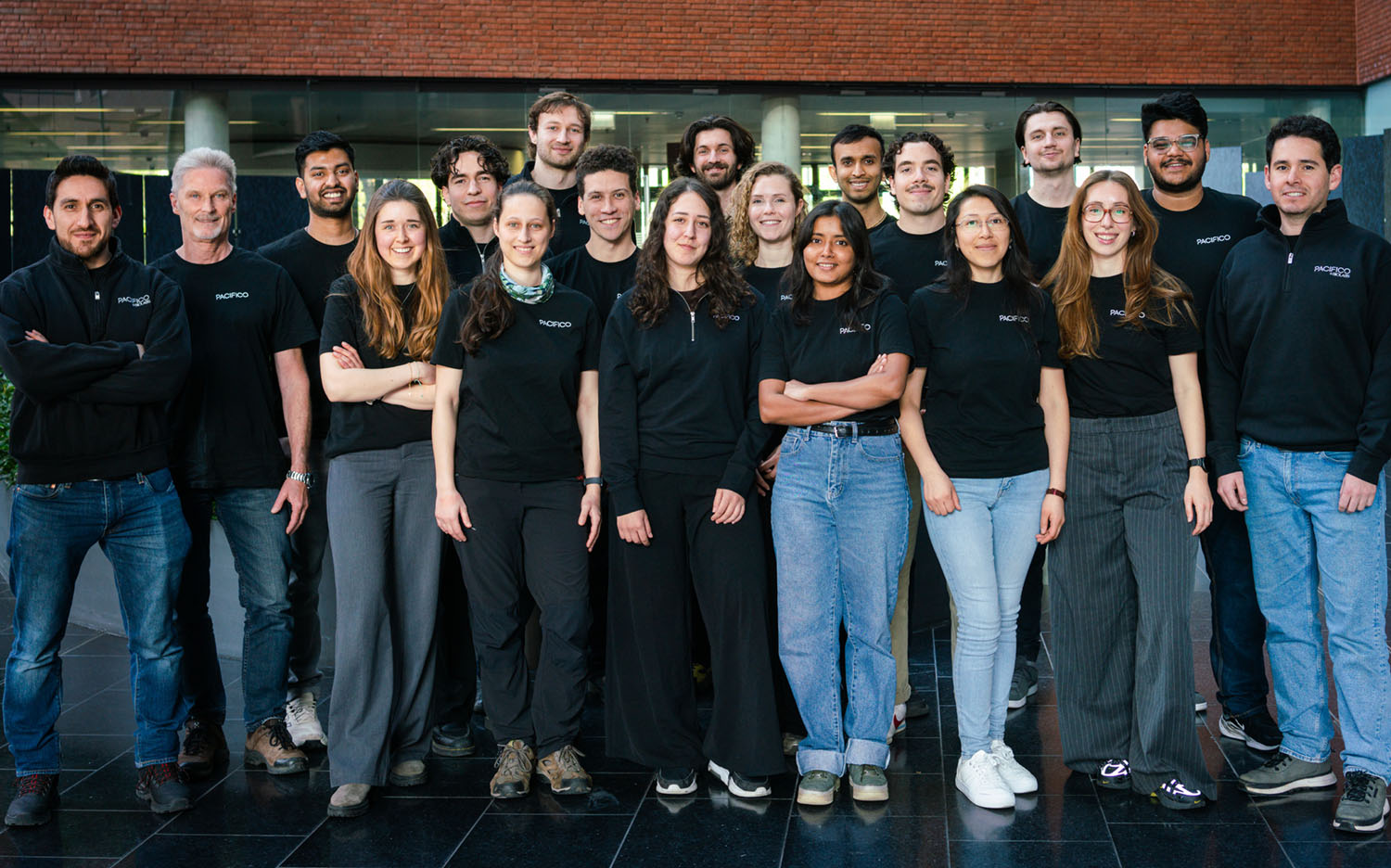
The Leipzig-based company confirmed the round had been backed by Stray Dog Capital, TGFS, Sprout & About Ventures, Simon Capital, FoodLabs, and a regional brewery partner. The funding will support expansion of Pacifico’s production platform in Saxony, Germany, alongside commercial partnerships and team growth.
At the center of Pacifico’s strategy was a decision that Co-Founder & CEO Zac Austin said the company had made from the beginning: avoid the costly path of building dedicated fermentation megafactories.
“From day one, we knew that as an industry we need to move beyond building new, ultra-expensive fermentation factories if we want to produce food that can actually compete with meat on price,” Austin said. “We doubled down on breweries early in our journey and built our process specifically to plug into that existing infrastructure.”
Brewing a new manufacturing model
Pacifico’s fermentation process operated inside conventional beer brewery tanks, allowing the company to use existing industrial capacity rather than constructing bespoke biomanufacturing facilities. The approach came as parts of Europe’s brewing sector faced declining beer consumption and growing volumes of idle fermentation infrastructure.
The company described the model as an 'infrastructure hack' that could bypass one of the alternative protein sector’s biggest barriers: the enormous capital requirements associated with scale-up.
Austin said the economics differed dramatically from many fermentation-focused alternative protein businesses.
“Significantly,” he said, when asked how brewery infrastructure changed the cost profile. “At least 95% cheaper than many of the approaches we have seen across alternative proteins. We do not need to build a site from scratch, and right now we are operating via partnerships with working breweries, so we do not need to purchase the sites we operate in either. This fundamentally changes the capital requirement to manufacture at scale.”
The approach also reflected a wider shift underway across Europe’s industrial landscape, where underutilized infrastructure from legacy sectors increasingly attracted interest from food-tech and biotech companies seeking cheaper paths to production capacity.
Austin said Pacifico saw itself as both a food-tech company and part of a broader industrial revitalization story.
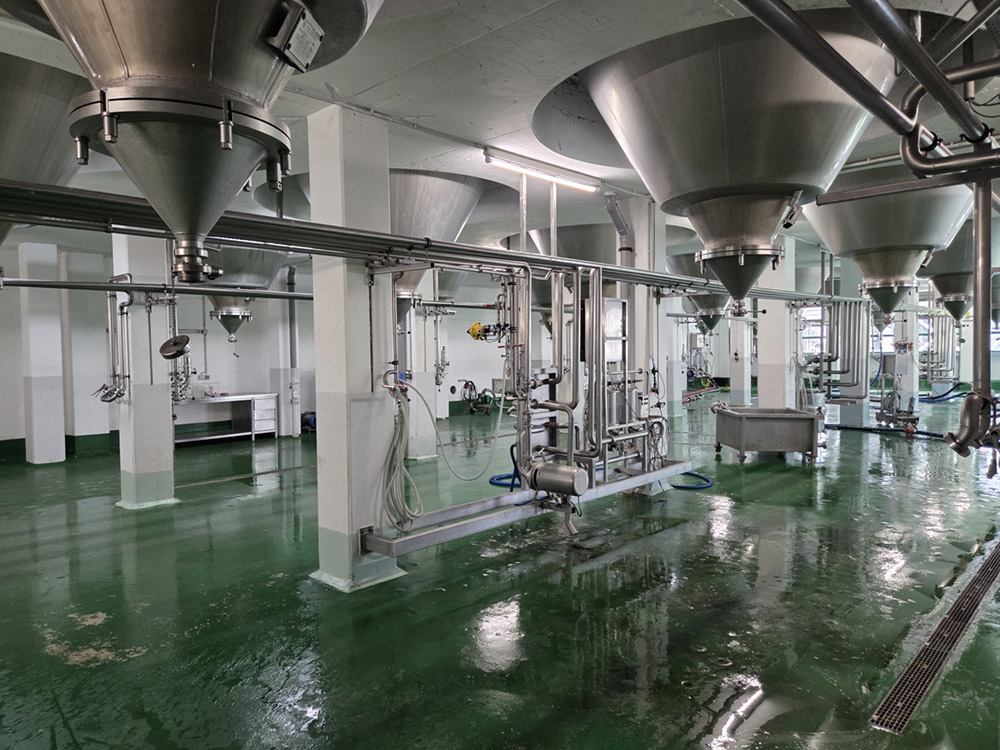
“The elegance of our technology is that it blends both,” he said. “We are certainly a food-tech company, but we are laser-focused on pragmatism. Europe already has much of the infrastructure we need, and repurposing underutilized brewing and fermentation capacity is a genuine shortcut to scale. But it requires a genuinely novel technical approach to actually work.”
Turning idle breweries into protein plants
While brewery tanks and food fermentation shared some similarities, Austin acknowledged the transition had not been straightforward. Brewing systems were originally designed for beer production, not fungal biomass cultivation.
“There are some similarities but also a lot of differences,” he said. “The fermentation itself works pretty differently, and there are serious technical hurdles we have had to overcome to optimise mycelium growth in a brewery setting.”
Pacifico also needed to retrofit brewery sites with additional downstream processing systems.
“Our downstream process is also completely different from beer,” Austin said. “We are not selling our mycelium in bottles, so we need to install additional processing equipment on site for harvesting and packaging.”
The company’s first large-scale production partnerships were anchored in Germany, where Pacifico believed the country’s brewing heritage and industrial biotechnology expertise created a natural fit for the model.
“That is one of the really exciting aspects of this model,” Austin said. “Germany is both an alternative protein and biotech powerhouse and has a huge brewing heritage, so it is a natural fit.”
He added that the proposition had resonated strongly with brewery operators.
“It is also a really compelling offer to a brewery, and we have a fantastic partnership with our main production site,” Austin said. “That partnership is built on a shared passion for innovation and pushing the boundaries of what German industry can do.”
Building protein sovereignty in Europe
Pacifico’s production platform formed part of a wider push across Europe to strengthen regional protein supply chains and reduce reliance on imported agricultural inputs. Europe remained heavily dependent on imported feed protein from environmentally vulnerable regions, despite producing most of its domestic meat supply.
Austin said geopolitical instability and repeated supply chain shocks had intensified interest from both investors and policymakers in technologies linked to “protein sovereignty.”
“It has certainly further highlighted the vulnerability of supply chains, and unfortunately this is not the first reminder we have had of that in recent years,” he said. “But the key barrier around solving protein sovereignty through novel production technology has always been viability, from both a cost and market application perspective.”
“Pacifico is positioned to solve exactly that, and investors have definitely recognised this.”
Sören Schuster of TGFS said Pacifico’s capital-light approach addressed one of the industry’s biggest unresolved challenges.

“Pacifico solves the industry's scaling problem with an elegant, asset-light model,” Schuster said. “The combination of European sovereignty and high capital efficiency makes them a key player in the emerging bio-economy. Saxony provides the perfect ecosystem of skilled labor and industrial backbone to anchor this transition.”
Targeting the mass market, not the niche
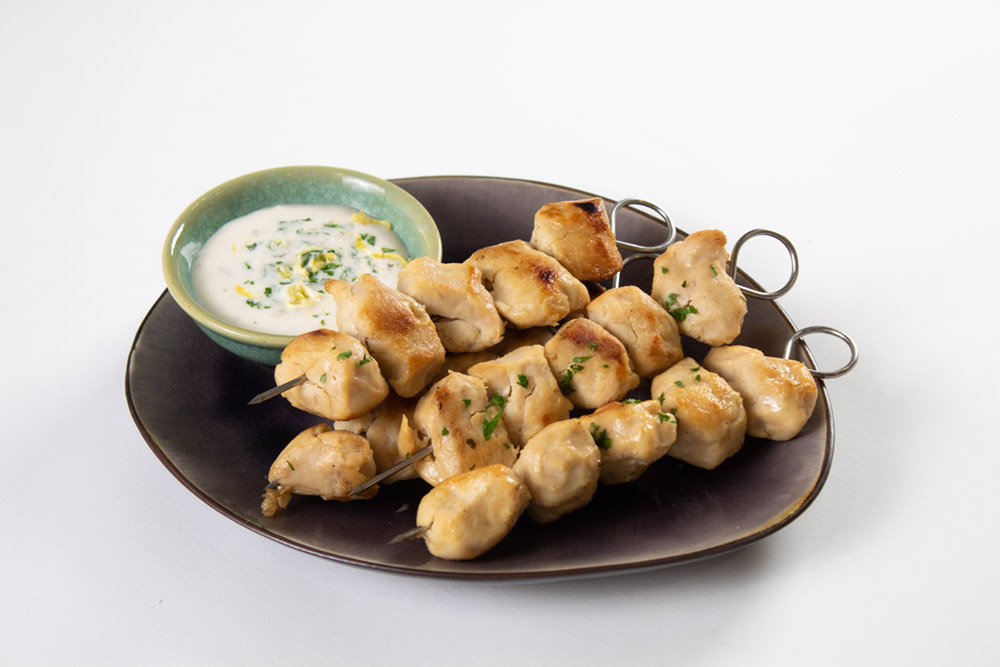
Pacifico’s protein ingredient was based on fermented mycelium, which the company said offered advantages across texture, nutrition, and formulation. The company claimed its product’s naturally fibrous structure and neutral flavor profile reduced the need for additives while making it suitable for private-label applications.
Austin argued that much of the alternative protein sector had focused too heavily on marketing rather than product fundamentals.
“Ultimately, new technology is what is allowing us to find this sweet spot and create new opportunities,” he said. “Consumer demand can’t be bought by hype, it needs to be built with products that don’t ask consumers to compromise, but give them something genuinely better in terms of taste, nutrition, and price.”
Pacifico’s commercial strategy differed from some earlier alternative protein startups that initially concentrated on premium retail launches and niche consumer segments. Instead, the company targeted mainstream manufacturing and private-label production from the outset.
“We have explored many possible commercial models, but we see one of our key advantages as being able to provide a great product to everyday consumers,” Austin said.
“While it might have made sense to initially focus on the high-end of the market, reaching the mass-market requires a production process that enables costs and products this market will actually accept. That is a fundamentally different challenge to updating marketing strategies.”
Scaling without building megafactories
The broader fermentation sector continued to face scrutiny over whether production infrastructure would become a defining bottleneck as more companies entered the market. Across Europe and North America, several precision fermentation and biomass startups had either delayed scale-up plans or struggled to secure financing for commercial-scale facilities.
Austin believed access to infrastructure would become increasingly important as the industry matured.
“To operate as a large-scale food manufacturer, production infrastructure is vital and this will become increasingly important as the industry matures,” he said. “Tech approaches like ours enable fast and cheap access to large-scale production, which in-turn brings down costs, and that’s key to our strategy.”
“Ultimately though, scalability and volumes aren’t about advantage over competitors, but increasing the supply of high quality products for consumers.”
Stray Dog Capital also pointed to infrastructure as Pacifico’s key differentiator.
“After a decade backing alternative protein companies, we see Pacifico as a clear leader in overcoming the bottlenecks that have held back the category,” Andres Manzanares, Principal at Stray Dog Capital, said. “By using existing infrastructure to produce clean-label, nutritious, and affordable meat alternatives that are indistinguishable from their animal counterparts, Pacifico offers a credible solution to a broken protein supply chain.”
Pacifico planned to scale production to 200 tonnes per month as part of the next phase of expansion. Products produced through retailer and brand partnerships were expected to reach shelves by late 2026.
For Austin, success over the next five years was less about becoming a branded consumer company and more about building a decentralized manufacturing platform capable of supplying low-cost protein at industrial scale.
“Success for us is about the provision of low-cost, high-quality protein at scale, bypassing animal agriculture and other vulnerable supply chain inputs,” he said. “This means building out our brewery manufacturing platform to enable large-scale protein production across Europe.”

Join Us At One Of Our Upcoming Events

If you have any questions or would like to get in touch with us, please email info@futureofproteinproduction.com