FermBase by CREMER and Differential Bio deepen AI partnership after successful fermentation trials

FermBase by CREMER and Munich-based biotechnology startup Differential Bio have expanded their existing collaboration into a strategic partnership, bringing together AI-driven laboratory automation, fermentation media development and raw material supply to support biotechnology companies from early-stage research through to industrial production.
• The agreement combines Differential Bio's AI and robotic screening capabilities with CREMER's raw material and supply-chain expertise.
• Their first joint product, Y-Base Blend, was developed from more than 50,000 possible trace element combinations.
• Customer trials showed comparable or improved fermentation performance, with the blend designed for use from laboratory to industrial scale.
Hamburg-based CREMER has formalized its partnership with Differential Bio as it expands FermBase's activities from fermentation ingredient supply into technology-supported product and process development.
The agreement builds on work already undertaken by the two companies, including the development of Y-Base Blend, a standardized trace element formulation for yeast fermentation launched in September.
Differential Bio, a Munich biotechnology startup that emerged from the environment of the Technical University of Munich, specializes in robotic laboratory automation, experimental data generation and machine-learning applications. CREMER contributes its experience in raw material sourcing, processing and international logistics.

“Throughout CREMER’s history, we have grown whenever we were willing to rethink our existing business and identify new opportunities at an early stage. With Differential Bio, we have found a partner that is taking entirely new approaches to raw material development with the help of artificial intelligence and robotics and brings outstanding expertise in this field,” said Dr Christian Flach, CEO of CREMER.
The partnership will see the companies develop further technology-based services for fermentation businesses, combining automated experimentation and data analysis with access to commercially available ingredients and scalable supply chains.
Their work on Y-Base Blend offers an example of how that combination operates in practice.
Working together, the companies explored more than 50,000 possible combinations of 10 trace elements. Machine learning narrowed these to 3,300 experiments involving different yeast strains, conducted using Differential Bio's automated laboratory platform.
Nine high-performing formulations emerged from the microliter-scale work before the final blend was validated in customer processes using bioreactors.
Speaking previously to Protein Production Technology International, Gerlis von Haugwitz, Product Manager Fermentation at FermBase by CREMER, explained that one formulation performed consistently well across the customer trials, including biomass production, precision fermentation and processes targeting secondary metabolites.
“I guess also a bit to our surprise, there was one blend that – from those nine blends – performed the best in all of the customer trials that we did, independently of whether they did biomass or precision fermentation, or maybe were looking for a secondary metabolite or something like that.”
According to CREMER, the blend delivered comparable performance in all customer trials and outperformed the respective in-house formulation in more than half of the cases.
The development also addressed a practical issue encountered by fermentation companies preparing individual trace element solutions. Some customers had spent hours dissolving ingredients, while others had undertaken little optimization of their existing formulations.
“Most companies need up to a day to prepare the trace-element solution, and our blend takes 10 minutes to dissolve,” said von Haugwitz.
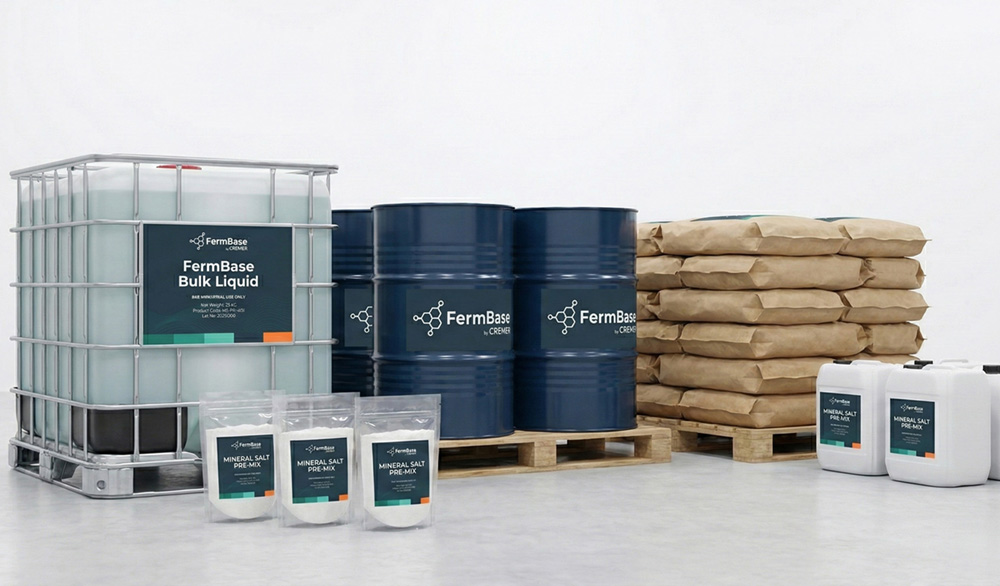
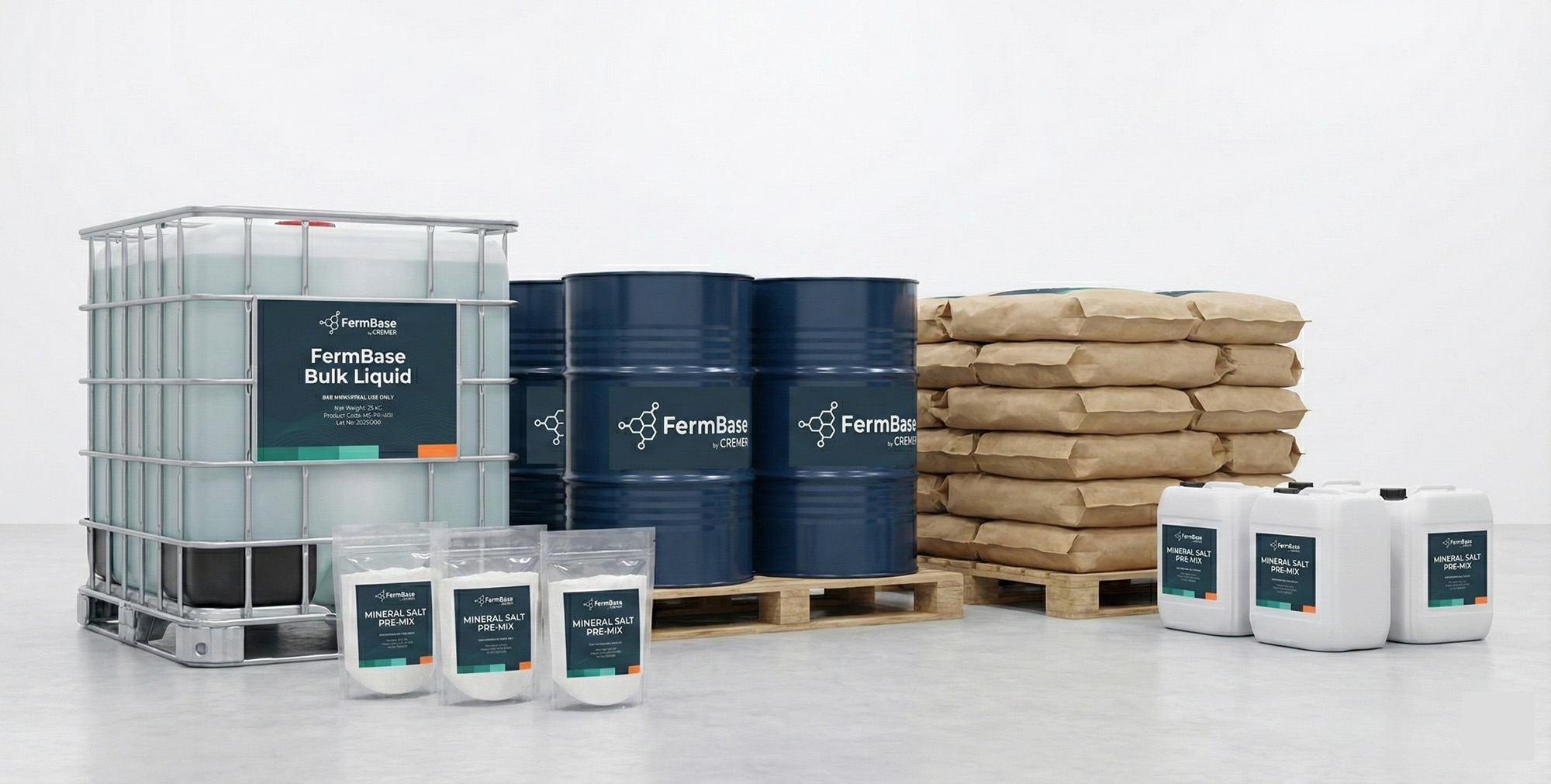
The formulation is available from 1kg for laboratory trials, in 25kg units for pilot and scale-up work, and in industrial quantities of several tons, with its composition and specification remaining unchanged.
That consistency is particularly relevant when fermentation companies move from laboratory-grade materials to industrial supply, where variations in raw material specifications and impurities can affect process performance.
“You get the same blend no matter if you buy 1kg or if you purchase multiple tons a year from us. You get the same materials, the same specification, the same impurities, and you can really control your trace elements there,” von Haugwitz explained.
The partners are not suggesting that standardized formulations can replace all media development. Different microorganisms and production processes continue to require individual optimization, particularly where strain performance, productivity and product quality are concerned.
“You cannot standardize the entire medium of your fermentation process,” von Haugwitz said. “The Y-Base Blend is only the trace elements.”
For CREMER, the expanded partnership reflects a wider strategy of allowing fermentation companies to access specialist capabilities without necessarily developing every supporting function internally.
Nils Rupp, Head of Business Unit at CREMER Sustainable Nutrition, previously told PPTI that companies increasingly have opportunities to separate their core intellectual property from activities such as sourcing, media development and supply-chain management. “I would make a difference between core IP that you develop as a fermentation company and enabling capabilities,” he said.
FermBase brings together CREMER's fermentation media portfolio, raw material expertise and supply-chain infrastructure, while Differential Bio contributes automated screening, experimental analysis and AI-supported process optimization.

“With Differential Bio, we are advancing the transition towards bio-based production: our robotic laboratory automation generates targeted data for AI applications, while our software and AI solutions enable data-driven process development,” said Christian Spier, CEO of Differential Bio. “Together with CREMER, we can develop faster and support the fermentation industry in making processes more efficient and scaling them more successfully.”
The companies intend to build on their initial product development work with further technology-based offerings for fermentation customers. Financial terms of the strategic partnership and details of the next joint products have not been disclosed.
If you liked this, check these out...
• FermBase launches standardized trace element blend after 3,300 yeast fermentation trials
• CREMER launches FermBase to address feedstock and supply chain constraints in fermentation scale-up
• Alternative protein scale-up problems often start in the lab, NIZO expert warns

Join Us At One Of Our Upcoming Events

If you have any questions or would like to get in touch with us, please email info@futureofproteinproduction.com