App State’s Rootsii lands US$1.82 million grant to turn surplus sweet potatoes into plant-based milk

Appalachian State University professor Dr Brett Taubman and his research team have secured a preliminary US$1.82 million grant from NCInnovation to scale Rootsii, a startup producing plant-based milk from surplus North Carolina sweet potatoes.
• Rootsii received preliminary US$1.82 million backing from NCInnovation to commercialize sweet potato-based milk and fermented foods.
• The project aimed to convert surplus North Carolina sweet potatoes into dairy alternatives while reducing agricultural waste.
• Researchers planned to bring the product line to market within two years through facilities in Eastern North Carolina and Boone.
The project aimed to create a new market for North Carolina farmers while addressing the millions of pounds of sweet potatoes lost each year between harvest and retail distribution.
Rootsii, founded by Taubman alongside Fermentation Sciences Lab manager Daniel Parker, has been in development since June 2024. The startup planned to produce milk, creamers, yogurt, ice cream and fermented products including sweet potato-based miso and hot sauce.
The production model included a bulk processing facility in Eastern North Carolina, where most of the state’s sweet potatoes are grown, alongside a second production site in Boone.
According to the university, around 63 million pounds of sweet potatoes are left to rot in North Carolina fields annually, representing an estimated US$13.2 million in losses for farmers.

“The Rootsii project brings home the value of public impact research at App State,” said Dr Christine Ogilvie Hendren, vice chancellor of research and innovation at App State. “NCInnovation’s funding lends critical support to this novel approach of converting the unused material of a key North Carolina crop into a viable and nutritious product line.”
The sweet potato milk has already been developed, while refinement of the broader product portfolio remained ongoing. Taubman said the company aimed to become market-ready within two years.
He also highlighted the commercial opportunity in dairy alternatives, with the plant-based milk sector projected to grow significantly over the next decade.
“The larger plant-based milk industry is already a multibillion-dollar industry, and in the next 10 years, it is expected to almost double. So it’s a huge growth industry,” Taubman said.
Four undergraduate researchers have worked on developing the milk and related products, helping test formulations and production processes for yield, flavor, texture and nutritional content. The NCInnovation funding will support four student researchers for a combined 1,800 hours annually over two years.
The next phase of development included consumer testing, shelf-life validation, production scale-up and commercialization planning.
NCInnovation, a nonprofit public-private partnership, supports commercially focused research at North Carolina’s public universities through funding, mentorship and partnership development. The organization said Rootsii’s grant amount remained preliminary until contracts were finalized.
“North Carolina is the country’s top sweet potato producer, and Dr. Taubman’s work could open an entire new market for those farmers while reducing agricultural waste,” said NCInnovation CEO Michelle Bolas. “NCInnovation finds promising university technologies and gets them ready to be businesses in North Carolina.”
Rootsii’s patent-pending production process used enzymes to break down the root’s long-chain starches. According to the researchers, the resulting milk has a naturally mild sweetness without added sugars, alongside a smooth texture compared with other plant-based milks.
Taubman said the product also contained vitamins A and C, potassium and magnesium.
North Carolina produces roughly 60% of sweet potatoes grown in the US, giving the project access to a substantial local supply chain. Researchers said as much as 40% of the crop can be lost between the field and store shelves.
Taubman also noted that the product required significantly less water than almond milk.
“This product is made out of only sweet potatoes, chia seeds as the emulsifier, a yeast-derived protein and coconut oil,” Taubman said. “That’s cheap and easy to source as well.”
He added that the coconut oil would eventually be replaced with muscadine grape seed oil, another agricultural byproduct sourced from North Carolina’s wine industry.
Taubman said the state’s sweet potato sector had struggled in recent years due to pandemic-related distribution disruption and changing consumer habits, creating a need for new product innovation.
“We have our sweet potato casserole, our sweet potato pies, but we don’t necessarily eat sweet potatoes on a regular basis, even though they are nutritious and delicious,” he said. “So that industry is desperately in need of innovation, and we have an innovation that should seriously help to promote it.”
The project also assembled a network of collaborators and supporters, including the North Carolina Sweetpotato Commission, Caldwell Community College and Technical Institute’s Culinary Arts program, the Boone Area Chamber of Commerce, the Watauga Economic Development Commission, the High Country Workforce Development Board and the High Country Impact Fund.
Talks were also underway with beverage companies and merchant distributors as the team explored commercial partnerships.
“Rootsii offers a new pathway to revitalize demand for sweet potatoes and stabilize the regional agricultural economy,” Taubman said. “This is 100% a North Carolina product.”
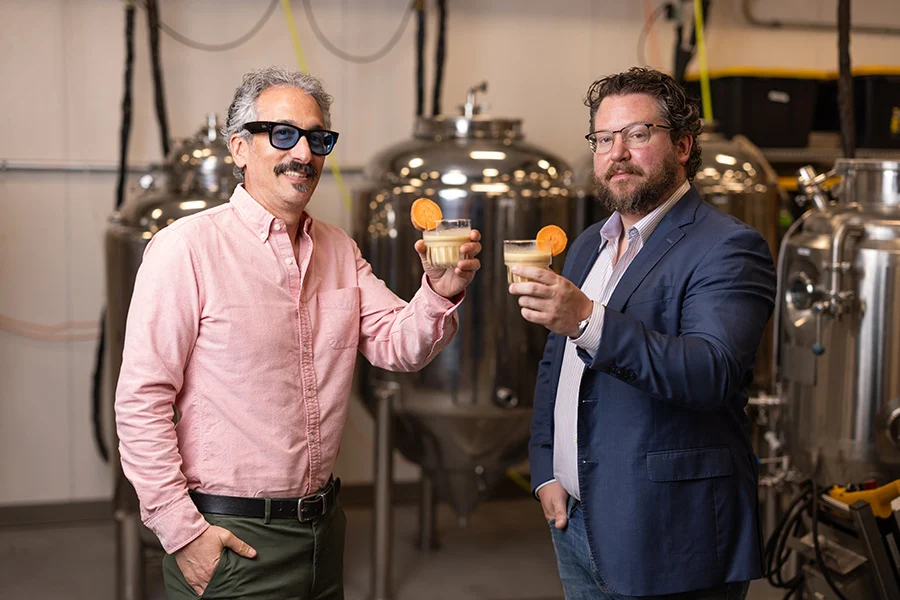
Main photo shows App State professor Dr Brett Taubman, left, and Fermentation Sciences Lab manager Daniel Parker, who have developed the sweet potato milk Rootsii in fermentation lab facilities at App State. The locally sourced, sustainable and allergy-friendly product received $1.82 million in funding from NCInnovation, with a goal of bringing the milk from proof of concept to store shelves over the next two years. (Photo by Chase Reynolds)

Join Us At One Of Our Upcoming Events

If you have any questions or would like to get in touch with us, please email info@futureofproteinproduction.com