

Ones to Watch: Tradition, rewritten
26 FOOD TECHS TO WATCH IN 2026
Hille van der Kaa, CEO & Co-founder of Those Vegan Cowboys, reveals how the company is using precision fermentation to reimagine the dairy protein system, one molecule of casein at a time
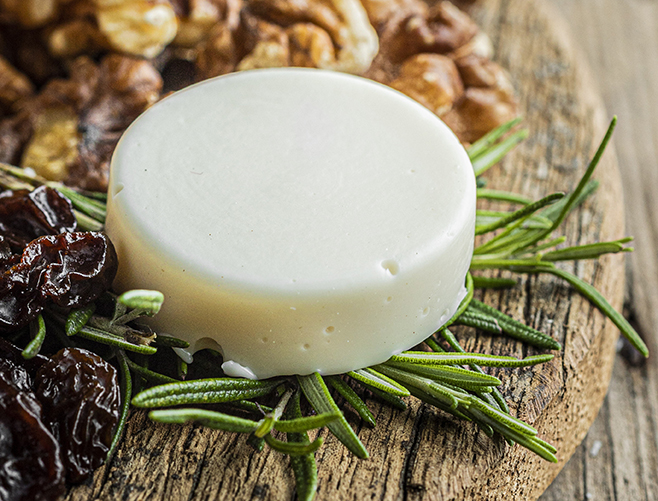
There are industries so old their assumptions disappear into the background. Dairy happens to be one of them. But Hille van der Kaa sees something different when she looks at it: an opportunity to separate tradition from biology. “Those Vegan Cowboys produces real cheese, without the cow,” says the CEO of the Belgium-based company. “We make casein, the key milk protein, through precision fermentation for use in cheese, chocolate, and sports nutrition. Our mission is simple: to take animals out of the food chain.”
Casein is not a flavor cue or a branding shortcut. It is the molecular framework that gives dairy its structure, functionality, and behavior. Replicating it with precision does not produce a substitute – it reconstructs dairy at the protein level. For van der Kaa, that shift is not cosmetic; it addresses a weakness in how dairy has been produced for decades.
The molecular advantage
The casein molecule carries the physics of cheese: the melt, the stretch, the structure that holds a pizza together or gives chocolate its snap. Van der Kaa therefore views it as the key to redesigning dairy at scale. “We address the urgent issues of animal welfare, sustainability, and food security,” she continues. “Our process requires just one fifth of the land and water used in conventional dairy and cuts methane emissions to zero.”
The environmental contrast is stark, but the company’s pitch goes deeper than impact metrics. Those Vegan Cowboys focuses on functionality as the bridge to mass adoption. “Our casein is more functional and efficient than traditional dairy proteins, which means it can ultimately be produced at a lower cost – a true win-win for both the planet and the market,” van der Kaa explains.
Better functionality is not a theoretical claim though. It is a commercial accelerant. When proteins perform more consistently, manufacturers gain predictability in texture, meltability, solubility, and formulation. It is the kind of advantage that reframes precision fermentation from a novel ingredient source into a competitive industrial tool. That is why the company’s strategy is built around integration rather than isolation. “We collaborate closely with major players in the dairy industry, tailoring our products to their needs to enable large-scale adoption,” she says. That philosophy traces back to the founders’ earlier venture. The Vegetarian Butcher grew rapidly through open collaboration and became a global brand before being acquired by Unilever. Those Vegan Cowboys is leaning into that same structural openness.
“Collaboration is in our DNA, we’re not afraid to share knowledge, even with others in the industry, to increase the chances of achieving our mission,” van der Kaa says. The alignment she describes is unusual: commercial and ethical incentives pulling in the same direction. “What’s beautiful is that societal and financial goals go hand in hand here: what’s good for the company is good for the mission, and vice versa. But that does require a different way of thinking.”
2025: from concept to momentum
The past year marked a turning point. After years of technical refinement, the company began laying the groundwork for real-world deployment. “We signed multiple partnerships and letters of intent, and made significant progress toward price parity with traditional dairy proteins,” van der Kaa says. Price parity is the line that separates aspiration from adoption. Precision fermentation is not a novelty ingredient; it is a production system that must compete with some of the lowest-margin, highest-volume commodities in food. Achieving cost-competitiveness is not simply a goal. It is the unlock for global scale.
What’s good for the company is good for the mission, and vice versa
And it’s that momentum that defines the company’s priorities for 2026. “Our focus is on upscaling production, lowering costs, and achieving regulatory approval across key regions,” van der Kaa explains. Selected tastings and controlled market entries will begin shaping how consumers and manufacturers experience the company’s casein in finished applications.
The partnership map is already broad. “We’re working with major dairy companies, pizza makers, chefs, and food innovators, from protein bars to chocolate brands. These creative and large-scale partners help bring our vision to life,” van der Kaa says. Casein’s versatility allows those collaborations to stretch across indulgence, performance nutrition, and mainstream culinary applications.
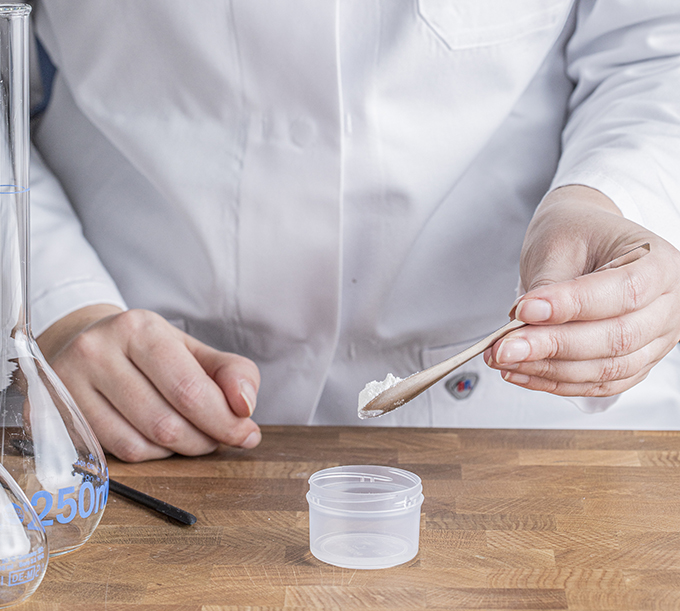
Behind the scenes, the company works with technical partners to translate lab-scale protein expression into industrial fermentation. Scaling precision fermentation is not only about biological efficiency. It is about process engineering, continuous-flow systems, oxygen transfer, and downstream purification. Those Vegan Cowboys is building those capabilities deliberately, step by step.
The capital to scale
That momentum was reinforced on 18 December, when Those Vegan Cowboys announced the close of its first funding round, raising €6.25 million. The capital marked a shift from technical validation to commercial execution, giving the company the runway to take animal-free casein out of the lab and into real food systems. For van der Kaa, the timing mattered as much as the amount. “Development to market is the leap most food innovations never make,” she says. “That’s the hardest part – and we’ve made it.”
Backing from established dairy players formed part of the round, signaling that the technology is being evaluated not as a fringe alternative but as a credible future pathway for the category. With production scale now in sight, the company is focused on translating functional advantages at the protein level into finished products that perform reliably at commercial volumes.
The round also sets the stage for the next phase. Those Vegan Cowboys plans to open a crowdfunding round in early 2026, offering retail investors the opportunity to participate alongside institutional backers as the company moves toward broader market entry.
Measuring what matters
Van der Kaa insists that impact be tracked, not assumed. “We conducted an analysis with Wageningen University, showing that our method can produce five times more casein per hectare than traditional dairy farming,” she reveals. That finding speaks directly to food security: more protein from less land, with orders of magnitude lower emissions.
A full Life Cycle Assessment will follow once the company’s dedicated facility becomes operational. Early signals from the wider precision fermentation landscape already point to similar outcomes. But for van der Kaa, long-term impact is tied to adoption, not only data.
“In five years, we’ll be collaborating with major food companies that make cheese, chocolate, and other products using our casein,” she says. “By then, the first real benefits for animals and the planet will be clearly visible.”
It is a vision in which sustainability emerges not as a separate value proposition but as the natural consequence of industrial transition.
What 2026 needs
Looking ahead, van der Kaa sees two structural shifts shaping the coming year. Regulatory progress tops the list. “I hope that regulatory agencies worldwide will adopt faster and more tailored approval processes for precision fermentation products,” she says. The technology is ready. The frameworks evaluating it are still catching up.
Equally important is cooperation. “I also expect to see more collaboration across the sector, especially around scaling and shared infrastructure.” Fermentation capacity, supply chain standardization, and equipment availability are industry bottlenecks that no single company can solve alone.
Her biggest call to action, though, is unambiguous. “We need a regulatory framework that fits the realities of our industry in 2025 – one that enables innovation while safeguarding consumers.”
Margaret, the messenger
For a company intent on removing cows from the food chain, Those Vegan Cowboys still keep one close. “Our mission is to get all cows out of the food chain, but we did bring one back: Margaret, our stainless-steel cow mascot,” van der Kaa reveals. “She’s become a symbol of our movement and travels the world as part of exhibitions, conferences, and industry events.”
Her own motivation is rooted in a moment of clarity. Shortly after becoming a mother, she visited a dairy farm. A newborn calf stood alone while its mother cried out from the other side of a barrier. “The farmer said, ‘Beautiful, isn’t it, how she keeps calling for her calf?’ For me, it was heartbreaking and it became the final push to go vegan and dedicate myself fully to Those Vegan Cowboys.”
And the next chapter is already taking shape. “We’re preparing for launches in the USA and Asia and taking our casein from the lab to the market. It’s an incredibly exciting step: the moment when science meets taste, and change becomes reality,” she says.
And with that, the company’s direction becomes unmistakable: dairy that preserves the tradition, the functionality, the flavor, and the culture, while removing the dependency that defined it for generations.
If you have any questions or would like to get in touch with us, please email info@futureofproteinproduction.com

More Features

Protein Pioneer: Justin Kolbeck

Deep Dive: Breakout bets

Feeding change

Protein Pioneer: Kesha Stickland


