


Ones to Watch: The oil change
26 FOOD TECHS TO WATCH IN 2026
Palm oil has underpinned global food manufacturing for decades. Julie Cortal from NoPalm Ingredients believes fermentation and upcycled side streams can offer the industry a scalable, price-competitive alternative without land-use trade-offs
Palm oil has long been a default in global food manufacturing – a cheap, versatile ingredient underpinning thousands of formulations and shaping factories and supply chains alike. But the conditions that made it reliable are eroding. Land constraints, climate volatility, and tightening regulation are forcing manufacturers to confront a question long deferred: what happens when the world’s most widely used oil can no longer scale as it once did?
For Julie Cortal, Chief Commercial Officer at NoPalm Ingredients, that question defines the company’s mission. “Our ambition is bold: to enable forward-thinking brands to transition to sustainable oils at an industrial scale and ultimately to build a green, parallel oil and fat industry,” she says. “Starting by producing palm oil without palm trees.”
Founded in 2021 and headquartered in Wageningen, the Netherlands, NoPalm Ingredients develops sustainable oils and fats through fermentation of upcycled agri-food side streams. Its aim is not to create a niche substitute, but offer an alternative foundational ingredient without compromising cost, functionality, or scale.
When reliability becomes a risk
Pressure on tropical oils is no longer theoretical. Climate change, geopolitical instability, and land-use limits are converging on ingredients the industry has historically relied on. “We’re nearing a tipping point where traditional ingredients like shea, coconut, and palm will become too expensive, scarce, and unstable,” Cortal cautions.
Demand continues to rise regardless. Palm oil demand is growing around 4% annually, while sustainable supply lags far behind. Only 19% of global production is RSPO-certified, and anti-deforestation regulations are set to tighten access further. “This gap will drive price increases and restrict access to key ingredients,” she says. For manufacturers, tropical oils are becoming not just an environmental concern, but an operational risk, increasingly exposed to disruption, traceability pressures, and regulatory scrutiny.
Fermentation designed for industry, not experimentation
NoPalm Ingredients’ approach is built around fermentation, but with a clear industrial objective. Rather than engineering an ingredient that requires reformulation, the company set out to replicate the oils the industry already depends on.
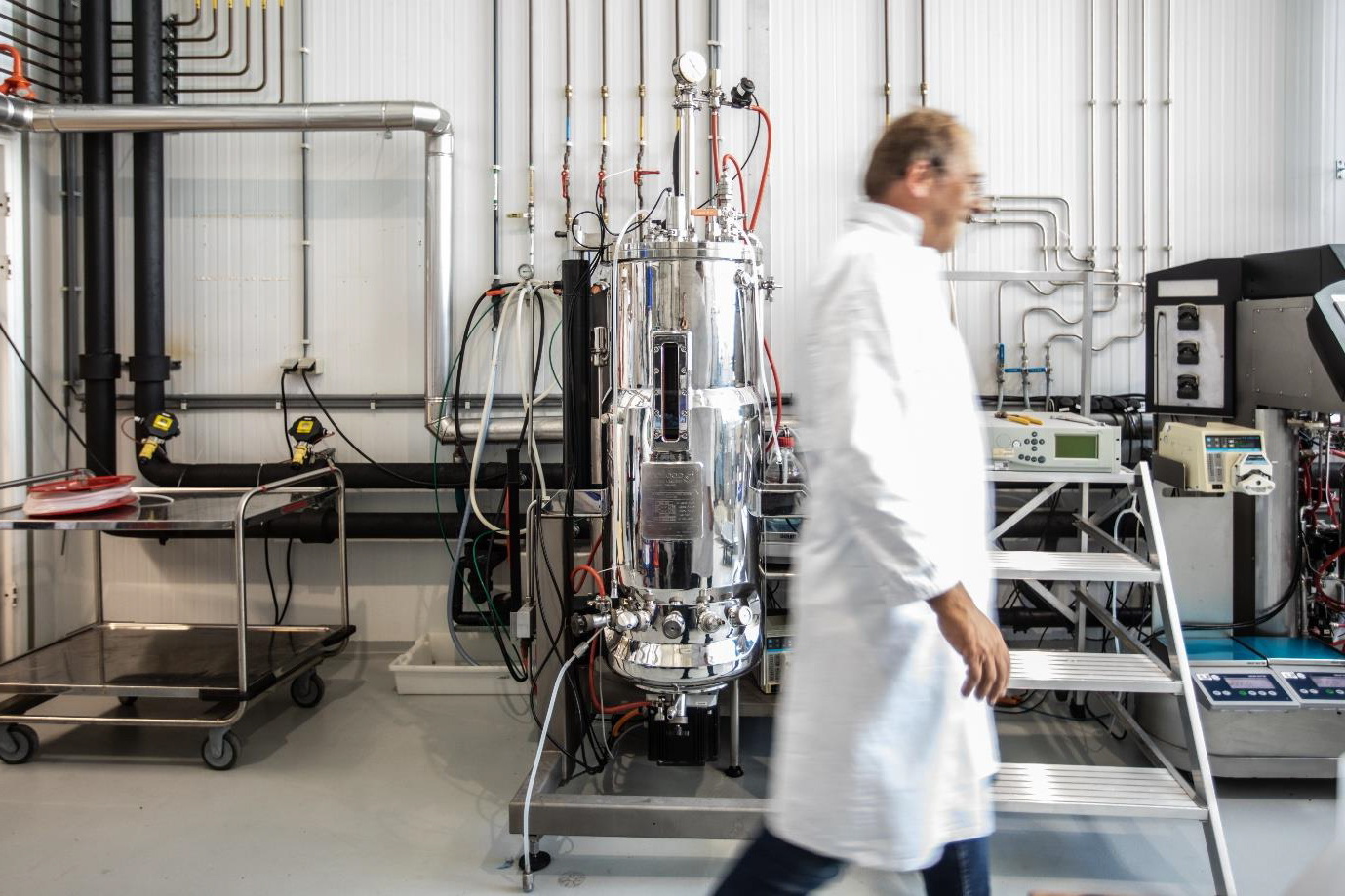
The process begins with agri-food side streams such as potato peels or whey permeate, which are converted into a fermentable substrate. A proprietary non-GMO yeast then consumes sugars, organic acids, or alcohols in that substrate, accumulating oil within its cell bodies over a short fermentation period. After fermentation, pure fat is extracted, while the remaining ‘defatted’ biomass can be reintegrated into other value chains.
“The oils and fats produced inside the yeast cells can be tailored to different functionalities based on production settings,” Cortal explains. By adjusting fermentation parameters, NoPalm can influence fatty acid composition, creating fats that range from more solid to more liquid and closely match the profiles of different tropical oils.
That flexibility underpins the company’s drop-in strategy. “This ensures our ingredients integrate seamlessly into current recipes, machinery, and consumer experiences,”
she says. “No reformulation, no extra investment – just a sustainable, drop-in alternative to conventional tropical oils.”
Designing out the green premium
Sustainability in food has often been framed as a trade-off, with higher costs justified by environmental gains. Cortal sees that view as outdated. “The biggest misconception in food tech is the idea of a ‘green premium,’” she says. “Sustainable alternatives don’t have to cost more, and we challenged that assumption from day one.”
Price parity was built into NoPalm Ingredients’ technology choices. A low-CapEx fermentation process, combined with upcycled side streams, is designed to compete directly with conventional oils at commercial scale. A co-location model further reduces costs by placing fermentation close to feedstock sources and manufacturers.
“By placing fermentation vessels next to manufacturers and feedstock, we remove dependence on fields, deforestation, and climate,” Cortal says. The result is a decentralized production network that cuts logistics, improves traceability, and strengthens supply-chain resilience.
In 2025, NoPalm Ingredients moved from promise to proof by demonstrating its full process at industrial scale with a 120,000-liter fermentation run, validating feedstock conversion and downstream processing. That milestone enabled the next step: a First-of-a-Kind Demonstration Factory at NIZO. Previously reliant on multiple contract manufacturers, NoPalm Ingredients faced higher costs and operational risk. Bringing the full process under one roof changes that. Once operational, the facility will produce up to 1,200 tons of REVÓLEO fats annually, supporting early customers and near-commercial validation.
A partnership with dairy cooperative Milcobel underpins the strategy. Milcobel supplies whey permeate for the demo plant and will host NoPalm Ingredients’ first commercial-scale facility at its Langemark site in Belgium.
From demonstration to deployment
The coming year is all about execution. In 2026, NoPalm Ingredients plans to install and launch its demo factory while co-developing its first commercial-scale facility with Milcobel. That plant is designed for a capacity of around 9,000 tons per year, with start-up expected at the end of 2028.
To support this expansion, the company is raising a Series A following a €5 million seed round and a €2.5 million EIC Accelerator grant. Scaling, however, is not only about volume. It is also about measurable impact.
A third-party life cycle assessment by the Bühler Group confirmed that NoPalm Ingredients’ approach delivers a 90% reduction in CO₂ emissions and a 99% reduction in
land use compared to palm oil. At commercial scale, each factory could save between 60 and 90 million kilograms of CO₂ per year while protecting thousands of hectares of rainforest from conversion into plantations.
Ultimately, Cortal sees NoPalm Ingredients’ trajectory as part of a broader recalibration in food tech. “In 2026, the sector will continue to shift from B2C hype to B2B solutions that solve real industry problems at scale,” she predicts. Technologies such as fermentation and modular production are gaining traction not for their novelty, but because they integrate into existing supply chains.
Regulation is accelerating that shift. The EU Deforestation Regulation will require companies to adopt traceable, certified sustainable palm oil or move to land-free alternatives. “Our technology offers a deforestation-free, low-carbon solution at price parity,” Cortal says, enabling brands to meet compliance requirements without added cost.
The vision is clear. “We want to build a parallel industry to today’s palm oil supply chain,” she says, one capable of meeting global demand for oils and fats without driving deforestation or biodiversity loss. If successful, sustainability becomes the default rather than the exception.
If you have any questions or would like to get in touch with us, please email info@futureofproteinproduction.com

More Features

Protein Pioneer: Justin Kolbeck

Deep Dive: Breakout bets

Feeding change

Protein Pioneer: Kesha Stickland


