

Ones to Watch: Sweet rebellion
26 FOOD TECHS TO WATCH IN 2026
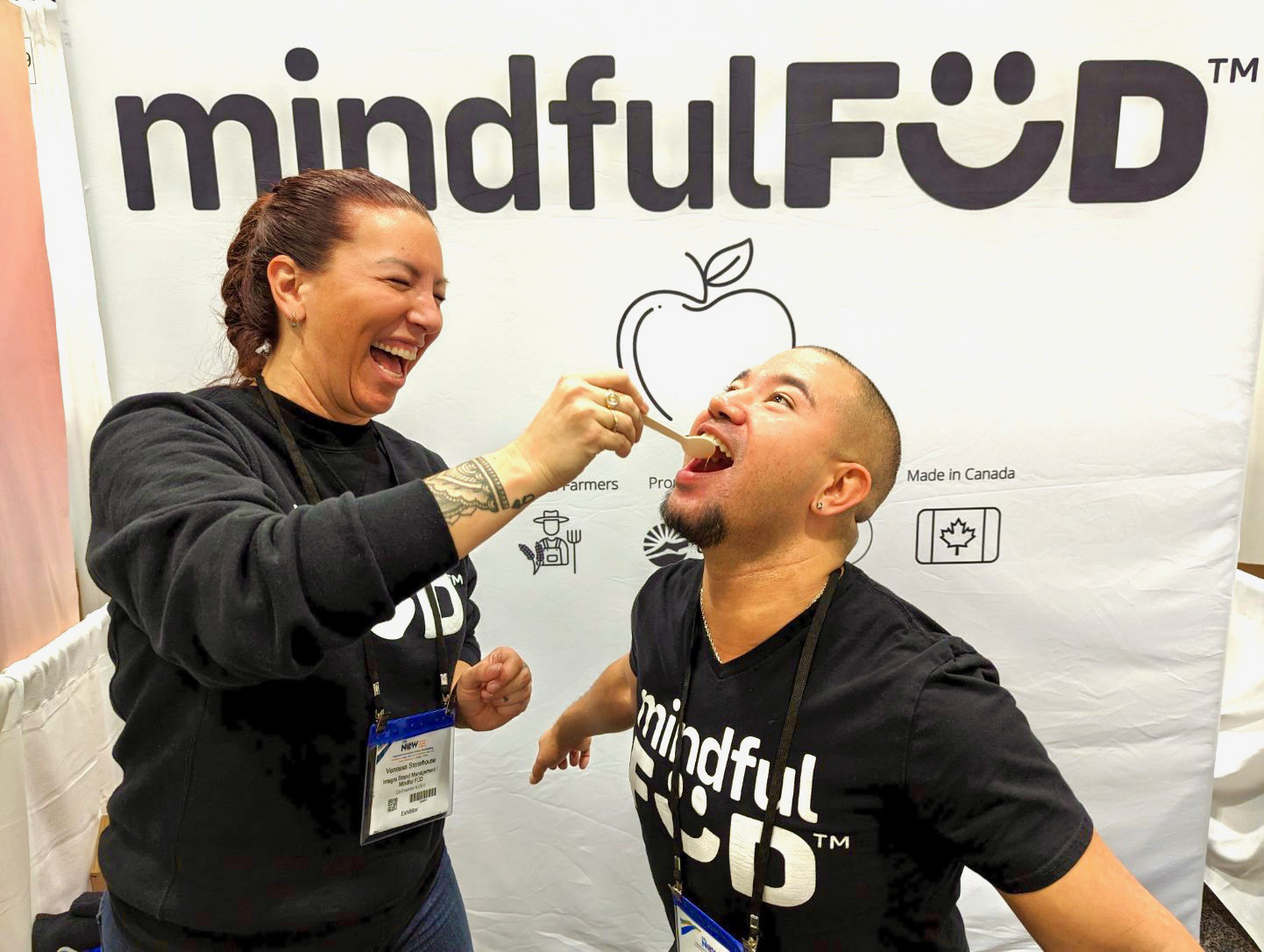
Venessa Stonehouse, Co-founder & CEO at Mindful FÜD, on reinventing honey without the bees
Honey carries deep cultural weight, from childhood breakfasts to ancient remedies. But the modern honey industry tells a more complicated story. Industrial beekeeping places growing strain on pollinator health, while vast quantities of perfectly edible fruit are discarded every year. Venessa Stonehouse saw those pressures converging – and an opportunity to rethink how sweetness is made.
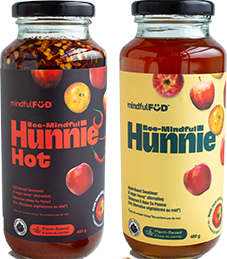
With Mindful FÜD, she set out to transform surplus fruit into a honey-style sweetener designed to deliver familiar taste and functionality, with far lower environmental and economic cost. “We turn rescued apples into honey-style sweeteners that taste like the real deal, but with zero bees harmed,” says Stonehouse, the company’s CEO & Co-founder. Products like BeeMindful Hunnie and Hunnie Hot are designed to replace honey, maple syrup, or agave in everyday cooking, combining performance, affordability, and a lighter footprint.
For Stonehouse, sustainability alone was not enough. Cost had to work, too. Mindful FÜD’s products come in at roughly half the price of traditional bee honey, a difference that matters beyond plant-based consumers. “That is a huge driver for chefs,” she says. “They switch because it performs, it’s reliable, and it costs less – not because it’s labeled vegan.”
Honey’s appeal is universal, but its production is increasingly fragile. “Honey is one of the most loved sweeteners on earth, but commercial production puts massive pressure on bee populations and ecosystems,” Stonehouse notes. At the same time, surplus apples often rot in storage or orchards, releasing methane as theydecompose. “We’re tackling food waste and protecting pollinators in a single jar.
“We use rescued Canadian apples as our primary raw material, not lab-grown sugars, syrups, or starches,” Stonehouse continues. A short ingredient list and a proprietary process deliver the body, sweetness, and versatility that consumers expect from honey, without crystallization or artificial additives. “While others focus on lab-grown honey or artificial replacements, we’re keeping it clean, local, and waste-free.”
That simplicity has translated into momentum. In 2025, Mindful FÜD expanded into more than 400 retail stores, launched nationally with London Drugs, and joined the ProVeg Incubator, securing US$100,000 in funding and strategic support. Food-service adoption followed, with Joyride Pizza and Ignite Pizzeria adding Hunnie Hot to their menus. The assets of US honey-alternative brand Mellody were also acquired, extending the footprint across North America.
Industry recognition followed. Stonehouse recently returned from the Plant-Based World Expo in New York, where BeeMindful Hunnie placed ninth out of more than 500 applicants for Best Plant-Based Product in North America.
Scaling with intention
Growth is now the priority, but not at any cost. In 2026, Mindful FÜD is preparing for US expansion, strengthening distribution across Eastern Canada and Quebec, and developing a private-label line. Food service remains central to that strategy. “Once chefs discover BeeMindful Hunnie, they never look back,” Stonehouse insists.
Investor backing has supported that trajectory. The company raised CA$150,000 through FrontFundr alongside the ProVeg investment. “Our investors aren’t just financiers,” Stonehouse says. “They believe in a food system that actually makes sense – and they love the taste, which helps.
“Convincing retailers and consumers that a honey alternative can taste just as good as bee honey was a challenge,” she admits. Technical hurdles followed, too. Achieving a smooth, non-crystallizing texture using only natural ingredients took years of iteration. The result is stable, clean-label, and consistent across applications. Stonehouse also pushes back on lingering assumptions. “Too many people still think eco-friendly means bland, boring, or expensive,” she says. “We’re food rebels, not scientists in goggles. Our ‘lab’ smells like apples and spice, not solvents.”
By 2030, Stonehouse imagines BeeMindful Hunnie as a staple in kitchens across North America, alongside a broader family of upcycled sweeteners and sauces. But the deeper goal is cultural. “If people start checking ingredient lists and asking, ‘Was this made mindfully?’ that’s when I’ll know we’ve won.”
If you have any questions or would like to get in touch with us, please email info@futureofproteinproduction.com

More Features

Protein Pioneer: Justin Kolbeck

Deep Dive: Breakout bets

Feeding change

Protein Pioneer: Kesha Stickland


