

Ones to Watch: Mushroom rising
26 FOOD TECHS TO WATCH IN 2026
Through Meatless Kingdom, Widya Putra is showing how mycelium-based foods can scale by aligning culture, cost, andproduction from day one
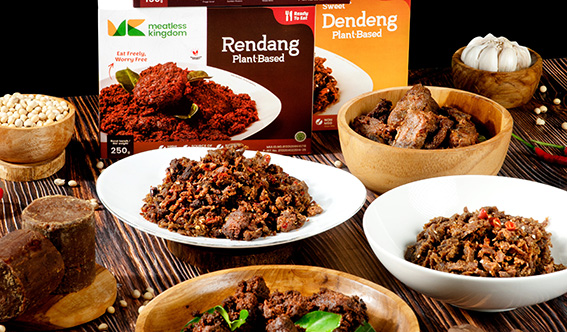
In Indonesia, food is not just nourishment. It is memory, identity, and history anchored in dishes that carry centuries of meaning. From the caramelized depth of Dendeng to the aromatic intensity of Rendang, Indonesian cuisine lives in the tension between heritage and innovation. But for Widya Putra, CEO & Co-founder of Meatless Kingdom, there was never a contradiction to resolve. Tradition and transformation could grow together, powered by one of the oldest ingredients in Southeast Asian kitchens: mushrooms.
The world has no shortage of companies promising the next great alternative protein. Very few start from the ground up by asking what local consumers actually want, what they can afford, and what supply chains in emerging markets can realistically sustain. Meatless Kingdom, founded in 2020, grew out of those questions. It began not with expensive biotech stacks, but with a fermentation specialist from West Java who believed a better food future for Indonesia needed to start with familiarity, not novelty.
“We define three main problems in Indonesia that our company wants to solve,” Putra says. “People suffer from diabetes, cholesterol, and protein deficiency. We still imported more than 280 thousand tons of beef last year to fulfill national demand. And food security in Indonesia is still below global standards.”
Those concerns gave Meatless Kingdom its blueprint. The solution had to be healthier, built around local supply chains, and priced to compete directly with meat. Anything else would be a distraction.
Rooted in culture
Putra’s academic grounding in food science and technology shaped much of the company’s early approach. Before founding Meatless Kingdom, he spent time in product development, quality assurance, and supply chain roles across established food companies. The work taught him that Indonesian consumers do not buy into abstractions like ‘protein transitions’ or ‘future foods’. They buy flavor, texture, and memory.
His founding team made a decision: instead of reinventing global meat analogs, they would recreate Indonesia’s favorite dishes from local ingredients. “Our products are research based by our food technologist team with high fiber and high protein. They are shelf stable so they are easy to distribute, and most importantly, we have a competitive price compared to meat,” he says.
The first prototypes were built around mushrooms, which offered the fibrous structure and natural umami missing from many first-generation plant-based meats. But the bigger insight was what mushrooms could do long before they reached the plate. They could be grown vertically, with agricultural waste as feedstock, requiring minimal land and water. In a country facing climate pressure and rising protein demand, mushrooms were not just an ingredient. They were a systems solution.
From mushroom kits to national distribution
Meatless Kingdom did not begin as a food-tech company though. Its first product was a mushroom-growing kit for children, ‘Mushome’, aimed at teaching families how food is grown and why sustainability matters. “So you could say our journey started not with plant-based meat, but with education,” Putra continues. “Teaching kids how to grow food at home inspired the next generation to value sustainability, and that naturally led us into mushroom-powered food innovation.”
We do not tech-wash food. This is not synthetic biology theater. It is commercial grade designed for cost, flavor, and scale in Southeast Asia
That early focus on education shaped the company’s communication style. Indonesia’s plant-based sector is still young, and awareness remains low outside major cities. Convincing consumers to try meat alternatives requires direct engagement and sensory experiences.
“Building plant-based awareness in Indonesia remains a challenge, especially with a limited marketing budget,” Putra reveals. “We focus on consistent storytelling across Instagram and TikTok to show that plant-based food can be delicious, accessible, and familiar. We also actively join local and national exhibitions, because once people taste it, they believe in it.”
Today, Meatless Kingdom produces an array of plant-based versions of traditional specialties: Rendang, Spicy Jerky and Smoked Jerky. The company also makes selected Western-style items, but its strength is cultural fidelity. These are not generic analogs. They are Indonesian foods rebuilt from the fiber up.
The strategy resonates. Data shows that 78% of Indonesians have already tried an alternative protein product, and nearly a quarter say they want to switch to a fully plant-based diet. But desire only becomes action when products hit three criteria: taste, familiarity, and price. Meatless Kingdom designed for all three.
“Our vision is to make tasty, affordable foods from locally sourced ingredients with a higher nutritional profile,” Putra says. In practice, that means focusing on mushrooms and legumes, avoiding artificial MSG, and minimizing gluten across the portfolio. “We do not tech-wash food. This is not synthetic biology theater. It is commercial grade designed for cost, flavor, and scale in Southeast Asia.”
Traction through affordability
The company’s commercial progress has accelerated quickly. In 2025, Meatless Kingdom recorded its all-time high revenue in Q3, supported by “strong demand and successful channel execution”, Putra says. E commerce performance surged as well. “Our online business accelerated significantly, with e commerce sales growing tenfold compared to 2024, proving that consumer adoption and brand pull are rapidly increasing.” Albeit he clarifies that this surge in online sales was driven primarily by the company’s mushroom seasoning rather than increased demand for plant-based meat.

A key advantage is pricing. Many global plant-based products remain out of reach for Indonesian households, trapped in a premium bracket. Meatless Kingdom took another path, designing its ingredients and manufacturing processes to compete with conventional meat on cost from day one.
It is one reason investors such as Big Idea Ventures, Lever Foundation, Sustainable Food Ventures, and ProVeg Incubator backed the company early. Local distributors across major Indonesian cities have also played a role, enabling faster expansion into the HORECA and B2B channels that form Meatless Kingdom’s next major growth phase.
“We aim to scale revenue threefold year on year,” Putra says. “There is a clear path to becoming the preferred products for food-service operators.”
As Meatless Kingdom grew, Southeast Asia began taking notice. In 2023, the company won the Asia-Pacific Scale It Up! Innovation Challenge, beating 30 teams across a six-month process judged by Bühler, Cargill, and Givaudan. Its winning product was a plant-based Bak kwa that delivered on taste, aroma, and price.
“We felt honored to be the first winner of the Asia-Pacific Scale It Up! Innovation Challenge,” Putra recalls. “The experience enriched our knowledge and competency in product development.” The award also unlocked access to Singapore’s Protein Innovation Centre, technical mentorship from multinational sponsors, and specialized ingredients to refine production at scale.
What the industry needs now
Putra’s perspective on where food-tech is heading in 2026 is refreshingly blunt. “It will be defined by food-tech moving from hype to discipline,” he says. “Profitability, localization, and tech that solves real supply-chain gaps, not just creates headlines.”
He believes the biggest blind spot in the industry is simple: too many companies forget to listen. “The food-tech industry must deeply understand what consumers truly need. Only by leading with empathy can we develop solutions that genuinely fit their tastes, lifestyles, and expectations.”
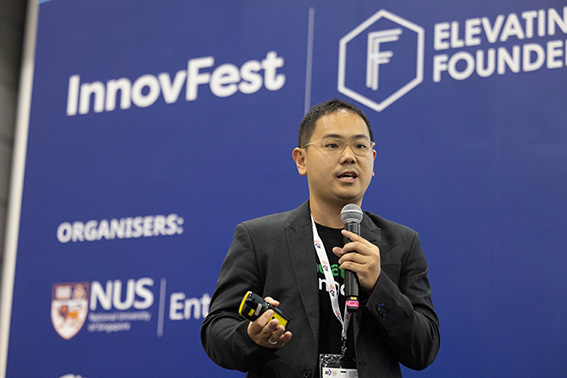
When asked what misconception frustrates him most, he does not hesitate. “The biggest misconception is that food-tech equals over-engineering and premium pricing forever. That might be true for companies dependent on imported inputs and expensive biotech stacks, but not for us.”
Meatless Kingdom’s ambitions remain grounded. Putra sees success in simple targets: a scalable factory, lower prices, bigger volumes, and millions of units sold annually across multiple markets. But he also sees cultural influence growing alongside commercial reach.
By 2030, he hopes Indonesians will embrace mushroom-based foods as everyday staples. “I want Meatless Kingdom to be known not just as a plant-based brand, but as a new food movement rooted in Southeast Asia, where sustainability, culture, and flavor grow together.”
If you have any questions or would like to get in touch with us, please email info@futureofproteinproduction.com

More Features

Protein Pioneer: Justin Kolbeck

Deep Dive: Breakout bets

Feeding change

Protein Pioneer: Kesha Stickland


