
Ones to Watch: Food from air
26 FOOD TECHS TO WATCH IN 2026
Rami Jokela, CEO of Solar Foods, reveals how turning electricity, carbon dioxide, and hydrogen into food could reshape protein production, as the company moves toward industrial-scale manufacturing
The idea that food production must begin with soil is so deeply embedded that it rarely gets questioned. Crops need land, livestock needs feed, and even the newest protein technologies typically trace their origins back to fields, oceans, or forests. Solar Foods is built on a different premise: that protein can be produced without agriculture at all.
“Our mission is to bring a completely new harvest to humankind,” says Rami Jokela, CEO of the Finnish company. “One that is independent of land use, weather, and climate.”
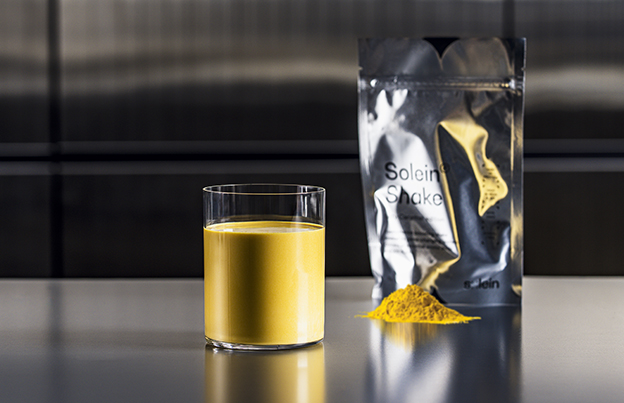
At the center of that ambition is Solein, a protein produced through gas fermentation. Instead of feeding plants with sunlight or microbes with sugars, Solar Foods feeds a naturally occurring microbe with hydrogen, oxygen, and carbon dioxide, using renewable electricity as the primary energy source. The result is a dry, protein-rich powder that looks unassuming, but represents a radical departure from conventional food systems.
“We feed our microbe like you would feed a plant,” Jokela notes, “but instead of watering and fertilizing it, our main raw materials are carbon dioxide from air and hydrogen split from water using renewable electricity.”
Turning physics into nutrition
Gas fermentation is not new, but Solar Foods has pushed it into unfamiliar territory by treating it as a food production platform rather than a biochemical niche. The system relies on electricity, water, and captured carbon rather than agricultural inputs. Inside the bioreactor, the microbe grows rapidly, converting these inputs into cellular biomass.
“We don’t modify the microbe in any way,” Jokela continues. “At the end of the production process, we remove excess water and dry the microbes, and the end result is a very protein-rich powder that we call Solein.”
From a nutritional standpoint, Solein is unique. It contains all nine essential amino acids, without cholesterol or saturated fat, and includes iron and vitamin B12 – nutrients that are often missing from plant-based proteins. Functionally, it can act as both a protein source and a texture-giving ingredient, adding creaminess and mouthfeel in applications ranging from drinks to desserts.
“Solein can replace traditional proteins in virtually any food,” Jokela reports. “It combines the best qualities of dairy- and plant-based proteins.”
For years, gas fermentation sat comfortably in the realm of promising ideas. In 2025, though, Solar Foods crossed a more consequential threshold. Its first commercial-scale facility, Factory 01, reached its full design capacity of 160 tons of Solein per year, operating continuously after an extended ramp-up period.

That may sound modest compared to agricultural output, but the comparison Solar Foods uses is telling. At full capacity, Factory 01 produces roughly the same amount of protein per day as a 300-cow dairy farm, without fields, feed crops, or seasonal variability. “Our production is completely decoupled from traditional agriculture,” Jokela says. “It can operate anywhere in the world, every day of the year.”
The innovative food-tech company has continued to refine productivity and energy efficiency, laying the groundwork for a much larger leap. In late December 2025, Solar Foods announced the location of Factory 02 in Lappeenranta, Finland. The planned facility would increase annual production from hundreds of tons to thousands, with
a first phase designed for 3.2 kilotons per year and a second phase doubling that to 6.4 kilotons.
The move from Factory 01 to Factory 02 marks more than a capacity upgrade. It signals Solar Foods’ transition from a technology demonstration to an industrial system shaped by infrastructure constraints. Location mattered. Lappeenranta offers access to renewable electricity, water and wastewater infrastructure, and opportunities to integrate with district heating, all of which are essential when electricity is not just an input, but the foundation of the process.
Commercially, during 2025, Solar Foods also signed Memorandums of Understanding and Letters of Intent with international customers covering volumes that could match or exceed Factory 02’s planned output, should they convert into binding agreements. Jokela positions this as deliberate sequencing rather than aggressive expansion. “We are moving from technological and scientific innovation into commercialization,” he says, pointing first to the USA as a key market.
Food systems under stress
The appeal of Solein is not only environmental, but systemic. Agriculture faces mounting pressure from climate volatility, water scarcity, and geopolitical disruption. Solar Foods’ approach sidesteps many of those constraints by design.
“As our production method is completely independent from land use, weather, and climate conditions,” Jokela adds, “it can be produced anywhere in the world, ensuring a continuous supply of food with stable quality and price.”
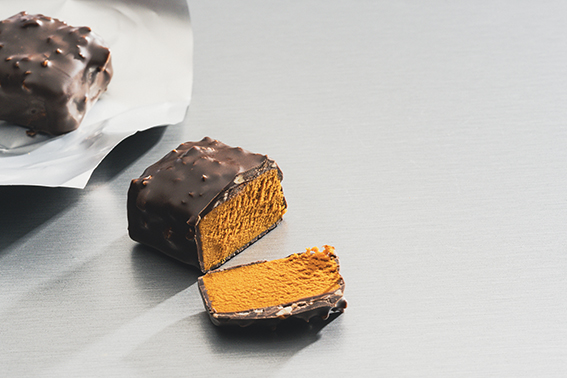
In practice, Solar Foods has pursued market entry cautiously. In 2025, Solein appeared in limited consumer products through partners, including coffee drinks and desserts in Singapore and protein bars and powders scheduled for US release in early 2026. These launches emphasized functionality and nutrition rather than
novelty, introducing Solein first in health and performance nutrition before broader food categories.
One of the more unusual stress tests for Solar Foods’ technology emerged far from supermarkets or factories. In 2025, the company continued work with the European Space Agency and industry partners to develop a small-scale Solein production system designed for testing in microgravity and other extreme operating conditions.
The space project is not about turning astronauts into early adopters, but about probing the boundaries of the system itself. Gas fermentation relies on precise control of gas and liquid flows, which behave very differently without gravity. If the process can be stabilized there, it offers insights into robustness everywhere.
For Jokela, the significance is philosophical as much as technical. “Our technology enables food production even in environments where traditional food systems struggle,” he says.
Regulation, realism, and what comes next
Despite its technical progress, Solar Foods still operates within a regulatory landscape built around familiar ingredients and farming models. Jokela identifies regulation as one of the industry’s most immediate needs. “There is a need for agile regulation processes,” he says, “so that food-tech companies are able to commercialize their innovations.”
Looking ahead, Solar Foods plans to continue scaling Solein through a network of production facilities, beginning in Finland but extending internationally. The long-term vision is not to replace agriculture wholesale, but to revolutionize the global food system by feeding the ever-growing population in a more sustainable way.
If Factory 02 goes ahead as planned, Solein will move from an intriguing idea to a measurable contributor to global protein supply. “We can’t wait to see products powered by Solein available for consumers all over the world,” Jokela concludes. And for a company turning electricity, air, and microbes into food, that moment would mark the point where Solein would be produced at industrial scale.
If you have any questions or would like to get in touch with us, please email info@futureofproteinproduction.com

More Features

Protein Pioneer: Justin Kolbeck

Deep Dive: Breakout bets

Feeding change

Protein Pioneer: Kesha Stickland


