
Ones to Watch: Circular matter
26 FOOD TECHS TO WATCH IN 2026
Katarzyna Nowak sheds some light on how MycoVibes Biotech is building a closed-loop, nutrient-rich mycoprotein platform powered by shiitake mycelium
The race to define the next generation of sustainable protein is crowded with competing ideas, noisy promises, and technologies at very different levels of maturity. Yet one trend is cutting through the narrative clutter: circularity is no longer a hopeful ideal but a structural requirement for a climate-resilient food system. Few founders articulate that shift as clearly as Katarzyna Nowak, CEO & Founder of Poland’s MycoVibes Biotech, whose work centers on the metabolic capability of fungi to turn waste into value – specifically, the shiitake mycelium that drives the company’s proprietary fermentation platform.
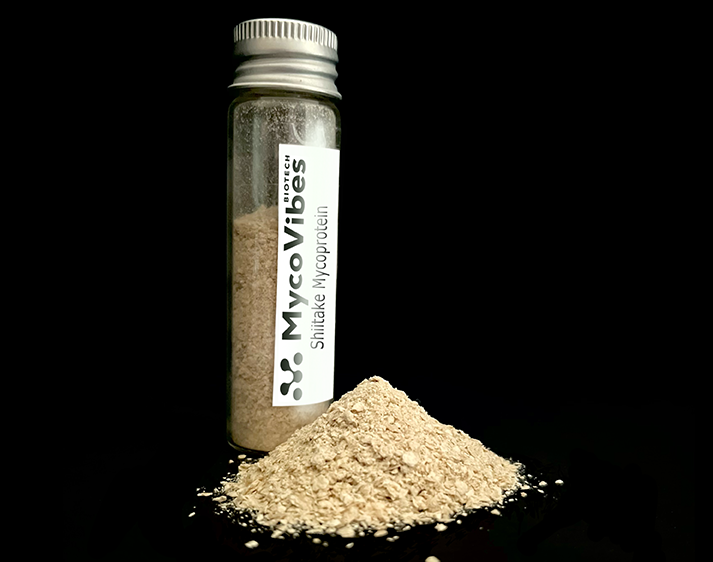
MycoVibes Biotech upcycles food-industry sidestreams into a nutrient-dense mycoprotein ingredient naturally rich in vitamin B12, iron, and all essential amino acids. It
is a straightforward premise, but the company’s execution reflects a tightly focused understanding of the gaps in today’s protein landscape and how fungi can begin to close them.
“The global food system faces growing pressure to provide nutritious protein without harming the planet,” Nowak notes. “Current alternatives either lack essential nutrients, have poor taste and texture, or depend on resource-intensive crops. Our solution transforms side streams into a circular, sustainable protein source, reducing environmental impact while offering food manufacturers an ingredient for tasty, nutritious, and climate-friendly foods.”
A different fungal logic
Most mycoprotein developers rely on well-trodden fermentation strains such as Fusarium or Paecilomyces. MycoVibes takes a different route by building its platform around shiitake mycelium, a species with a long history of culinary and medicinal use. That starting point shapes not only the biological characteristics of the ingredient but also its regulatory and consumer pathways.
“Shiitake mycelium is a globally recognized edible and medicinal species, instead of the usual fermentation strains,” Nowak states. “By converting food industry by-products into nutrient-rich, allergen-free mycoprotein, our approach enables faster regulatory approval and consumer acceptance, while delivering superior nutritional quality, functional performance, and truly circular production.”
It is an uncommon combination in a sector still wrestling with cost, complexity, and scalability. It also expands the role mycoprotein can play, particularly for hybrid products where nutritional completeness is increasingly non-negotiable. The familiarity of shiitake offers something rarer: a bridge between biotechnology and consumer intuition.
Moving from concept to commercial relationships
The company’s progress in 2025 reflects a young venture that has moved with speed but without sacrificing discipline. MycoVibes completed proof-of-concept work, produced its first prototypes, and signed LOIs with several B2B manufacturers exploring new protein ingredients. Visibility grew through major conferences, selection into the ProVeg Incubator 2025 (Cohort 13), and participation in the EIT Food Bilbao Campus Experience.
“We were selected as one of only 10 startups worldwide for ProVeg Incubator 2025 and recognized as a Positive Impact Startup Laureate in Poland,” Nowak says. “These achievements demonstrate early market validation, growing industry interest, and readiness to engage in co-development and commercial partnerships.”
Grant funding totaling €320,000 (approximately US$352,000) enabled early nutritional validation and process optimization. That foundation now supports an upcoming pre-seed round focused on pilot-scale fermentation and deeper industry collaboration.
Fungi embody collaboration and circularity, forming symbiotic networks that sustain entire ecosystems
As MycoVibes prepares for its next chapter, the emphasis is on technical precision and strategic alignment with industry partners. “Our top priorities are to successfully scale up our fermentation process, secure co-development agreements with strategic corporate partners, and strengthen visibility within the European alternative protein market,” Nowak reveals. Establishing an in-house R&D lab will support that progression, enabling faster iteration and customized ingredient development.
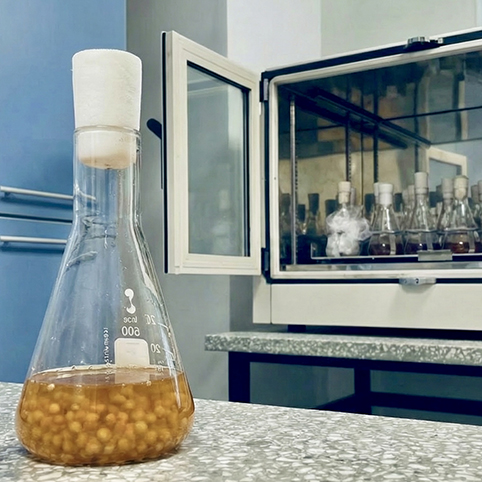
Fermentation scale-up is a well-known challenge for ingredient biotech. Maintaining consistency in biomass composition, texture, and function requires granular process control, particularly when working with upcycled feedstocks. “One of our main challenges has been optimizing process scalability while maintaining consistent product quality and functionality,” Nowak says. “We are addressing this through continuous R&D work supported by grant funding and by collaborating with experienced bioprocess engineers and academic partners.”
The network surrounding the company reflects this deliberate approach: mentors, scientists, manufacturing experts, and ecosystem partners capable of guiding technology out of the lab and into industrial workflows.
Standing apart in a crowded space
As the number of mycelium companies increases, Nowak notes that the category is often misunderstood as a monolith. “It is quite common to hear, ‘You’re another mycoprotein startup’. In reality, our approach is fundamentally different,” she says. The use of shiitake mycelium brings implications for nutrition, safety assessment, and consumer recognition that diverge meaningfully from the lesser-known strains commonly used in fermentation.
Regulation plays a pivotal role here. The familiarity of shiitake simplifies certain safety considerations and opens potential labeling advantages in markets where consumer acceptance remains a hurdle for biotech-derived ingredients. For partners seeking clean-label, functional, and nutritionally complete protein sources, these distinctions matter.
A systems-level impact lens
MycoVibes evaluates its progress through the United Nations Sustainable Development Goals, grounding the technology in broader environmental and social contexts. Its approach contributes to SDG 12 through sidestream valorization, SDG 2 and SDG 3 through improved nutritional access, SDG 6 and SDG 13 through reduced resource use and emissions, and SDG 9 through its innovation-driven development framework.
This structure aligns with how Nowak thinks about long-term success. “In five years, success means seeing MycoVibes Biotech’s shiitake mycoprotein integrated into everyday foods across Europe, from plant-based meals to hybrid products,” she says. “We aim to be recognized as a key enabler of sustainable, nutritious, and circular protein innovation.”
Industry direction reinforces that trajectory. “2026 will be defined by a stronger move toward the planetary diet, where nutrition meets sustainability,” Nowak says. “Circularity and scalable food bioprocessing will become central to building resilient, low-impact protein systems.”
Clearer regulation and consumer engagement will determine how quickly these shifts accelerate. “The industry needs smarter regulation that keeps pace with scientific progress and enables faster market entry for safe, sustainable ingredients,” she says. “At the same time, greater consumer education is essential to build trust and understanding of biotechnology-driven solutions.”
A founder shaped by a different vantage point
Nowak’s entry into food-tech came from years spent advising others. “One surprising thing about my journey is that I didn’t come from the lab-side,” she says. Her background in EU funding, regulatory strategy, and scale-up planning offered a perspective often missing in early-stage biotech. “When I founded MycoVibes, I built it in reverse. We started with regulatory viability, cost-in-use, and industrial integration first, and product expression second.”
Rather than anchoring MycoVibes in a single breakthrough, the company was shaped by understanding why innovations fail and how to avoid familiar pitfalls. That orientation has given the venture a degree of structural clarity uncommon in the earliest stages of ingredient development.
Her inspiration remains rooted in the organism at the center of the platform. “Fungi embody collaboration and circularity, forming symbiotic networks that sustain entire ecosystems,” she says. “In many ways, our team reflects that same spirit.”
If you have any questions or would like to get in touch with us, please email info@futureofproteinproduction.com

More Features

Protein Pioneer: Justin Kolbeck

Deep Dive: Breakout bets

Feeding change

Protein Pioneer: Kesha Stickland


