

VTT research finds route to turn rice bran and rapeseed side streams into functional food ingredients

Research from VTT Technical Research Centre of Finland has identified how rice bran and rapeseed press cake could be tailored for use as food ingredients, including through enzymatic treatment that improved their ability to form strong, water-binding structures.
• VTT researcher Anni Kortekangas studied rice bran and rapeseed press cake as potential sources of protein, dietary fiber and minerals for human food applications.
• Enzymatic degradation of phytic acid improved the materials’ ability to form strong, water-binding structures, an important property for texture in plant-based foods.
• Reducing phytic acid, which is known to improve mineral bioavailability, did not produce significant changes in protein digestibility during the research.
Rice bran is generated during rice milling, while rapeseed press cake remains after oil has been extracted from rapeseed. Both contain protein, dietary fiber and minerals but are currently used relatively little for human consumption.
The doctoral research by Anni Kortekangas, MSc in Food Sciences and Research Scientist at VTT, examined the technological and nutritional characteristics of the two side streams and how their properties could be modified for food applications.
One of the key findings concerned phytic acid, a naturally occurring plant compound commonly associated with reduced mineral bioavailability.
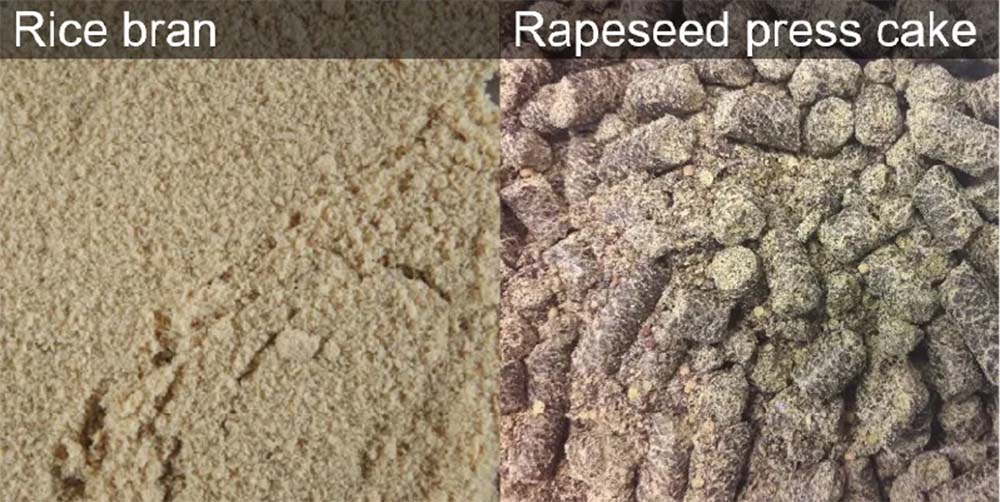
Kortekangas found that compounds such as phytic acid also affected the techno-functional properties of the materials, alongside protein and dietary fiber. Enzymatically degrading phytic acid improved their ability to form strong structures capable of binding water.
Those characteristics can be important when developing plant-based foods, where ingredients need to contribute not only nutritional value but also properties such as texture and water retention.
The findings add another consideration when assessing side streams as potential ingredients. Their usefulness cannot necessarily be predicted from protein and fiber content alone, with interactions between different components affecting how the material performs during processing and in finished foods.
Reducing phytic acid is already known to improve mineral bioavailability. However, Kortekangas found that its reduction did not lead to significant changes in protein digestibility.
The work examined interactions between protein, dietary fiber and other compounds naturally present in plant-based side streams, with the aim of understanding how these interactions affect both technological properties and digestion.
According to VTT, a better understanding of those relationships could allow enzymatic and other biotechnological methods to be used to tailor raw materials for particular food applications.
The research could also support greater use of materials that are already generated in substantial food-processing operations but currently have limited application in foods for human consumption.
“The research helps us understand how the properties of these materials can be tailored to make them suitable for food applications,” said Kortekangas. “This knowledge can be used to develop new plant-based foods and ingredients and to make more efficient use of currently underutilised side streams. In this way, the research supports a more sustainable food system and more efficient use of natural resources.”
Kortekangas’s doctoral dissertation, Interactions of protein, dietary fiber, and co-passengers in plant-based side streams – Technological and digestive perspectives, is being examined at the Faculty of Health Sciences at the University of Eastern Finland on 21 August.
Professor Laura Nyström of ETH Zurich will serve as opponent, with VTT’s Docent Emilia Nordlund serving as custos.
If you liked this, check these out...
• Raisio secures €4.5 million research investment to transform grain side streams into next-generation fiber ingredients
• PROSCALE secures €7 million EU backing to scale single-cell proteins from food industry sidestreams
• Fermtech raises £2.5 million seed round to scale cocoa alternative made from side streams

Join Us At One Of Our Upcoming Events

If you have any questions or would like to get in touch with us, please email info@futureofproteinproduction.com


