

University of Sheffield puts evolution to work on next-generation proteins

Researchers at the University of Sheffield are using a combination of precision fermentation, Darwinian evolution and AI-driven automation to develop microbial strains capable of producing food proteins at scale.
• Professor Tuck Seng Wong's team applies selective pressures inside automated fermenters to identify microbial strains better suited to producing food ingredients at industrial scale.
• The researchers combine evolutionary stress-testing with AI-driven automation, allowing millions of potential candidates to be screened in days rather than years.
• Alongside fermentation, the team is developing methods to recover RuBisCo, an abundant complete protein, from crop leaves and agricultural waste streams.
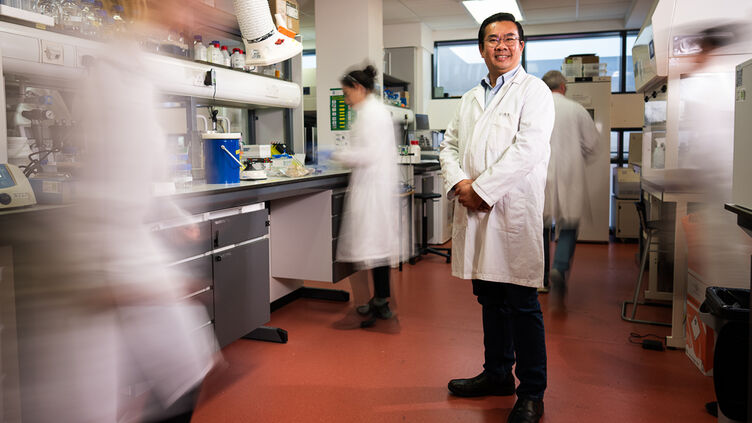
The work is led by Professor Tuck Seng Wong, Chair of Biomanufacturing at the University of Sheffield and Deputy Co-Director of the National Alternative Protein Innovation Center (NAPIC).
Precision fermentation uses microorganisms programmed with specific genetic instructions to produce targeted molecules, including proteins that have traditionally come from animals.
"Instead of asking a micro-organism to just ferment freely, we give it very specific genetic instructions," Wong said.
His team's approach draws heavily on evolutionary biology. Rather than attempting to engineer every desirable characteristic directly, the researchers expose microbial populations to selective pressures and allow the best-performing strains to emerge.
"Nature is a much better engineer than me," Wong said. "The best, most simple, and most elegant solution already exists in nature for the most complex challenges we face in society."
"Our job is not to invent something completely new, but to harness these natural solutions and turn them into something scalable, economically viable, and relevant."
Selective pressures applied in the team's automated fermenters can include heat, alternative carbon sources or the presence of inhibitors. Strains that perform well under these conditions can then be selected for further development, with the aim of finding organisms better suited to the conditions encountered during commercial production.
The researchers are combining this evolutionary approach with AI-driven automation to accelerate strain screening. According to the university, the system can evaluate millions of candidates within days, rather than the years that conventional development approaches can require.
Successful strains could ultimately be cultivated to produce ingredients including dairy proteins without livestock.
The Sheffield group is also looking beyond precision fermentation to proteins already available in plants but currently underused by the food industry.
Rice, maize and wheat together account for nearly 60% of plant-derived food calories consumed globally, despite the much larger number of edible species available.
"Over-reliance on a tiny number of staple crops means we desperately need to diversify our food resources," Wong said. "We're only scratching the surface of what nature has given us, and that isn't healthy for the planet."
One area under investigation is RuBisCo, the enzyme central to photosynthesis and widely described as the most abundant protein on Earth. It contains all nine essential amino acids, yet remains largely absent from the human food supply.
Wong's team has designed a process to recover RuBisCo from crop leaves and agricultural waste, potentially creating another protein source from biomass that would otherwise have limited value.
The work forms part of a broader effort at Sheffield to connect protein production technology with nutrition, consumer behavior and commercialization. Through the university's Institute for Sustainable Food, Wong works with researchers including behavioral psychologists, economists and nutritionists.
"There's something deeply wrong about how we produce and consume food today," Wong said. "We live in a world where significant populations don't have enough access to good nutrition, while at the same time, others eat too much of the wrong food."
He argues that developing new production technologies alone will not address that imbalance.
"Accessing nutritious food is a fundamental human right. Everyone deserves equitable access to good nutrition regardless of where they're from. Solving this problem isn't just a biological challenge, it's engineering, economics, behaviour, policy, and culture working together."
The Sheffield team is working with NAPIC partners including Unilever and Mars, as well as UK startup FibreFolks, which is developing high-protein, high-fiber fermented flour.
If you liked this, check these out...
• University of Leeds AI search uncovers nearly 800 plant proteins with emulsifier potential
• University of Queensland microalgae system could cut cultivated meat media costs by up to 90%
• University of Leicester launches £1.95 million trial to study health effects of vegetarian and vegan diets

Join Us At One Of Our Upcoming Events

If you have any questions or would like to get in touch with us, please email info@futureofproteinproduction.com


