University of Illinois researcher urges precision fermentation to start with consumers and costs

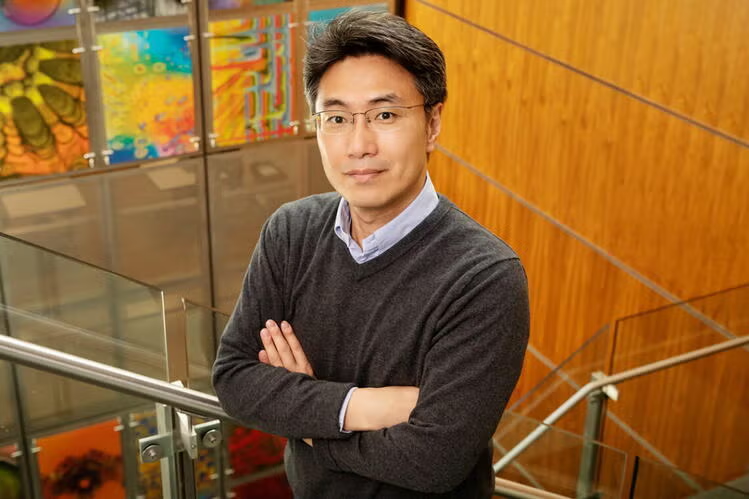
Precision fermentation research needs to incorporate consumer demand and production economics earlier if it is to deliver commercially viable food ingredients, according to University of Illinois Urbana-Champaign researcher Yong-Su Jin.
In a recent publication in Current Opinion in Biotechnology, Jin examines the milestones needed to turn laboratory developments into products that offer consumer value and can be manufactured safely and economically. His framework spans high-value compounds, functional proteins and commodity ingredients, with different commercial requirements for each.
• Jin’s minimum viable product framework places consumer value, safety and production economics at the center of precision fermentation development.
• His ingredient pyramid separates high-value compounds, functional ingredients and commodities according to production volume, market value and functionality.
• The university’s Integrated Bioprocessing Research Laboratory reports interest from major consumer packaged goods companies in fermentation-derived dyes, sweeteners and preservatives.
“Scientists typically study fundamental technology, while consumers in the marketplace are looking for mature products,” said Jin, a professor in the university’s Department of Food Science & Human Nutrition. “But if we start with consumer input, we can ensure greater acceptance.”
“We also need to conduct techno-economic analysis to evaluate market viability. This is a paradigm shift that is needed to advance the precision fermentation industry,” he said.
The approach places commercial considerations alongside microbial engineering from the outset. Demonstrating that a microorganism can produce a target ingredient is one milestone; establishing that the resulting product meets a market need at an achievable cost is another.
Jin describes a three-tier precision fermentation ingredient pyramid, organized around production volume, market value and functionality. The framework distinguishes products that can command higher prices in smaller markets from ingredients that must compete at much larger volumes and lower costs.
At the top are high-value food ingredients traditionally obtained through plant extraction or chemical synthesis. One example is beta-carotene, used as a food colorant and antioxidant. The university identifies microbial production as a potentially economical alternative to extracting the compound from carrots.
The middle tier comprises functional ingredients that provide specific properties in concentrated form. Ovalbumin, the main protein in egg whites, is one example because of its use in baking and other food applications. Producing functional proteins through fermentation offers a route to obtaining those properties without sourcing the ingredients from animals.
Commodity ingredients form the pyramid’s base. These generally face greater price pressure because established production methods are inexpensive. Jin’s framework also considers microbial production of edible single-cell biomass and established fermentation products such as lysine for animal feed and citric acid.
“Most products are currently developed in the high-value category, which is a small market. My vision is to fill the whole pyramid, including commodity ingredients, within the next 10 to 20 years to obtain greater environmental impact,” Jin said.
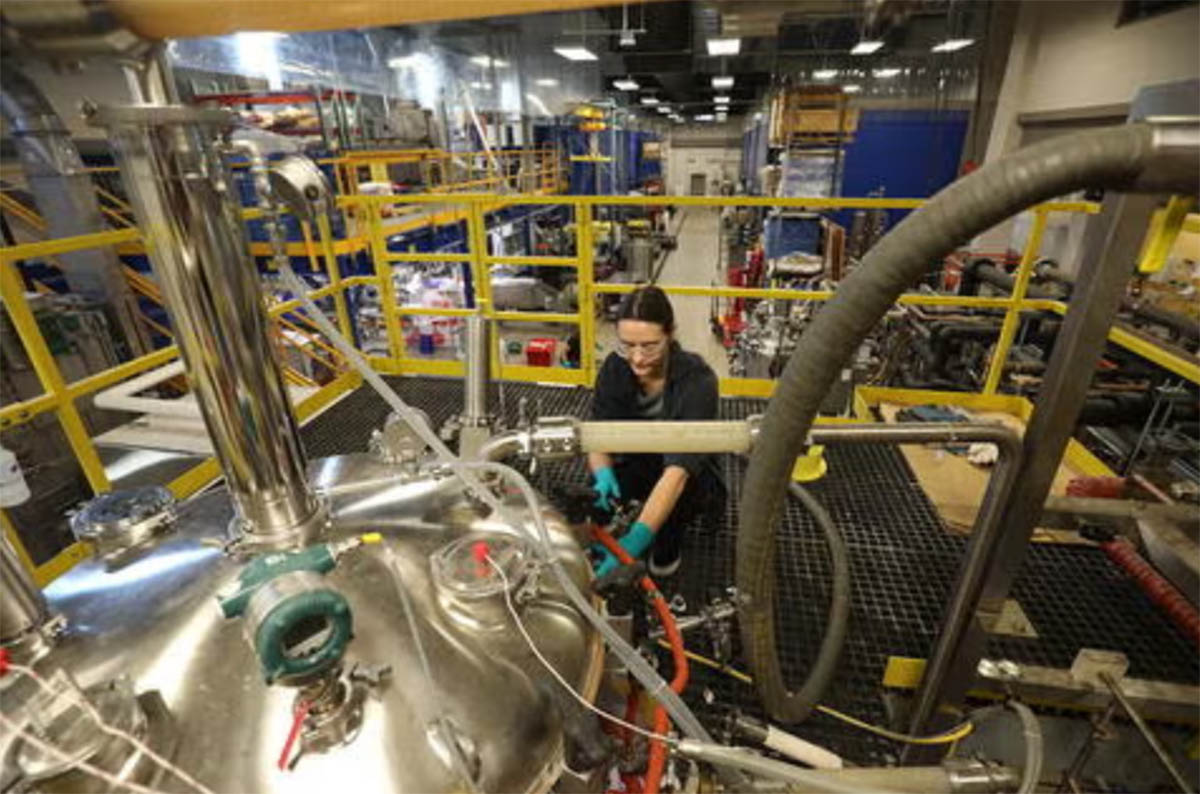
The university supports fermentation development through facilities including the NSF iBioFoundry and the Integrated Bioprocessing Research Laboratory (IBRL), which works with companies to bridge the gap between discovery and commercialization.
“Precision fermentation is one of our core competencies, and one of the areas that has been the busiest for the IBRL. Currently, we're seeing a lot of interest from the major consumer packaged goods companies on replacing traditionally petroleum-derived ingredients with natural alternatives, including food dyes, non-caloric sweeteners, and preservatives,” said Beth Conerty, IBRL Associate Director of Business Development.
That interest covers ingredients used for color, sweetness and preservation, alongside the proteins that have attracted much of the attention around food applications of precision fermentation. Jin is collaborating with campus facilities, including IBRL, and industry partners on consumer product research and development.
He is also a program lead at the Centre for Precision Fermentation and Sustainability (PreFerS) in Singapore. The center is administered through the Illinois Advanced Research Center at Singapore, a university-affiliated nonprofit organization.
Supported by Singapore’s National Research Foundation, PreFerS focuses on microbial cell engineering and bioprocess development. Its work includes producing nutritional molecules such as proteins, lipids and vitamins, while addressing production efficiency and scale-up. An earlier university announcement put its five-year grant at US$14.8 million.
“The center focuses on advancing technologies for microbial cell engineering to produce targeted nutritional molecules, including alternative proteins and vitamins. The goal is to enhance cost-effective production of safe and nutritious foods, ultimately improving food security while reducing environmental impacts,” Jin said.
The paper, Minimum viable products in precision fermentation: defining translational milestones for food biotechnology, is published in Current Opinion in Biotechnology
If you liked this, check these out...
• Your process works. Your factory might not
• ECOFERM consortium targets lower-cost precision fermentation with continuous production
• Biotech knows what to scale. The problem is everything else

Join Us At One Of Our Upcoming Events

If you have any questions or would like to get in touch with us, please email info@futureofproteinproduction.com