

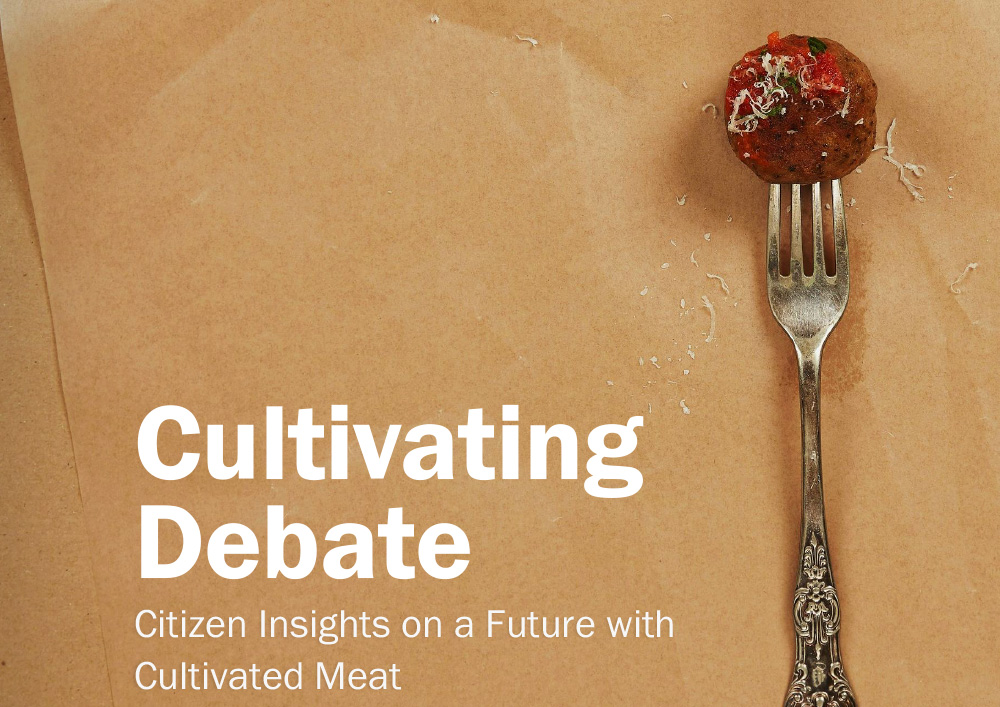
UK citizens urge tougher safeguards as cultivated meat edges toward regulation

As cultivated meat moves closer to regulatory consideration in the UK, a new public-led report has called for stronger safeguards to ensure the technology earns public trust before it reaches supermarket shelves.
The recommendations come from the CARMA Citizen Forum, a group of 18 people selected to reflect the diversity of the UK public. Over the past year, participants have engaged with scientists, regulators, and other experts to explore the social, ethical, and environmental implications of cultivated meat.
• A UK citizen forum convened under the CARMA project called for stronger safeguards as cultivated meat approaches regulation.
• Recommendations included two-year eating trials, long-term independent testing, strict import controls, and mandatory front-of-pack labeling.
• Participants expressed cautious optimism about environmental and animal welfare benefits but said safety alone would not secure public trust.
Cultivated meat, produced by growing animal cells rather than raising and slaughtering livestock, has been under development for decades and is now moving from research into potential commercialization.
The forum was convened as part of the Cellular Agriculture Manufacturing Hub (CARMA), a collaboration between the University of Bath, the Royal Agricultural University (RAU), University College London, Aberystwyth University, the University of Birmingham, and the University of Bristol. CARMA aims to develop and integrate cellular agriculture technologies into the UK food system.
Rather than taking a simple position for or against cultivated meat, forum participants developed a set of conditions they believe must be met for the technology to gain social license in the UK.
While participants expressed confidence in the UK’s food safety system and the role of the Food Standards Agency (FSA), they emphasized that regulatory approval alone would not be enough to secure public confidence.
Professor Marianne Ellis, Director of CARMA at the University of Bath, said, “It is fantastic that the Citizen Forum has been able to contribute in this way; doing so early will allow us to maximize their steer on our research efforts. The discussions have been engaging and productive and such participatory research will continue to be central to our thinking and planning going forward.”
James Riley, a Research Fellow at the RAU who helped lead the forums alongside Dr Atenchong Talleh Nkobou, said participants had time to move beyond initial reactions.
“We know, from other research, that one of the main immediate concerns people have when they hear about cultivated meat is the potential health impact,” Riley said. “Over the course of a year, we have given the Forum members time, space, and resources to deliberate on a food future with cultivated meat, developing views that are far richer than can be captured in a survey.”
Among the health-related recommendations were the introduction of two-year eating trials to assess potential impacts, mandatory ongoing long-term independent product testing, and strict controls on imports of cultivated meat.
However, the forum’s recommendations extended beyond public health. Participants also called for the establishment of a non-commercial governing body to oversee the sector and for industry accountability to cover animal welfare, environmental impacts, and market power.
The group recommended analysis of how cultivated meat could affect food equality in the UK and urged support for farmers through compensatory and transition schemes.
Clear, standardized and mandatory front-of-pack labeling was another key demand. Participants said labels should include the term 'cell' and concise explanations such as 'grown from animal cells' to avoid consumer confusion.
Despite their concerns, forum members expressed cautious optimism about cultivated meat’s potential benefits. These included reducing animal suffering, lowering the environmental impact of diets, and improving food system resilience by providing an alternative protein source.
Dr Talleh Nkobou described the initiative as the beginning of an ongoing dialogue. “The CARMA Citizen Forum is a multi-year initiative and new cohorts of citizens will be invited each year to deliberate on emerging developments in cultivated meat and the wider cellular agriculture sector,” he said. “This first report marks the beginning of an ongoing public conversation, rather than a definitive verdict.
“The Forum’s findings underline that the future of cultivated meat in the UK will depend not only on scientific innovation, but on how the technology is governed, regulated, and integrated into existing social, cultural, and economic systems.”
CARMA is funded by the Engineering and Physical Sciences Research Council and operates through a hub-and-spoke model, with the University of Bath as the hub and the other universities as partner institutions.
As the UK considers its regulatory pathway for cultivated meat, the forum’s findings signal that public acceptance may hinge as much on governance, transparency, and fairness as on technical safety assessments.

Join Us At One Of Our Upcoming Events

If you have any questions or would like to get in touch with us, please email info@futureofproteinproduction.com


