Tufts University opens cell bank to give cultivated meat startups a second life

For much of the past two years, the cultivated meat sector had been defined as much by contraction as by ambition. Startups scaled back, pivoted, or closed altogether as funding tightened and timelines stretched. Now, a new initiative led by Tufts University aims to ensure that the technical advances behind those companies were not lost with them.
• Tufts University and the Good Food Institute partnered to create an open-access cell bank for cultivated meat research.
• The first deposits included eight beef cell lines and two serum-free media recipes acquired from SCiFi Foods after its closure.
• The cell bank was designed to make food-relevant cell lines broadly available to industry and academia with minimal restrictions.
The Tufts University Center for Cellular Agriculture, which focuses on enabling the production of meat, milk, and eggs from cells instead of animals, teamed up with nonprofit partner the Good Food Institute to recover and redistribute intellectual property from defunct cultivated meat companies. The effort centered on obtaining cell lines and making them publicly available for further development by researchers and companies.
Cell lines are cells of a specific type that can be grown indefinitely in nutrient-rich media and used to produce cultivated meat. By securing these assets and opening access to them, Tufts and the Good Food Institute sought to preserve years of research and millions of dollars of investment that would otherwise disappear following company closures.
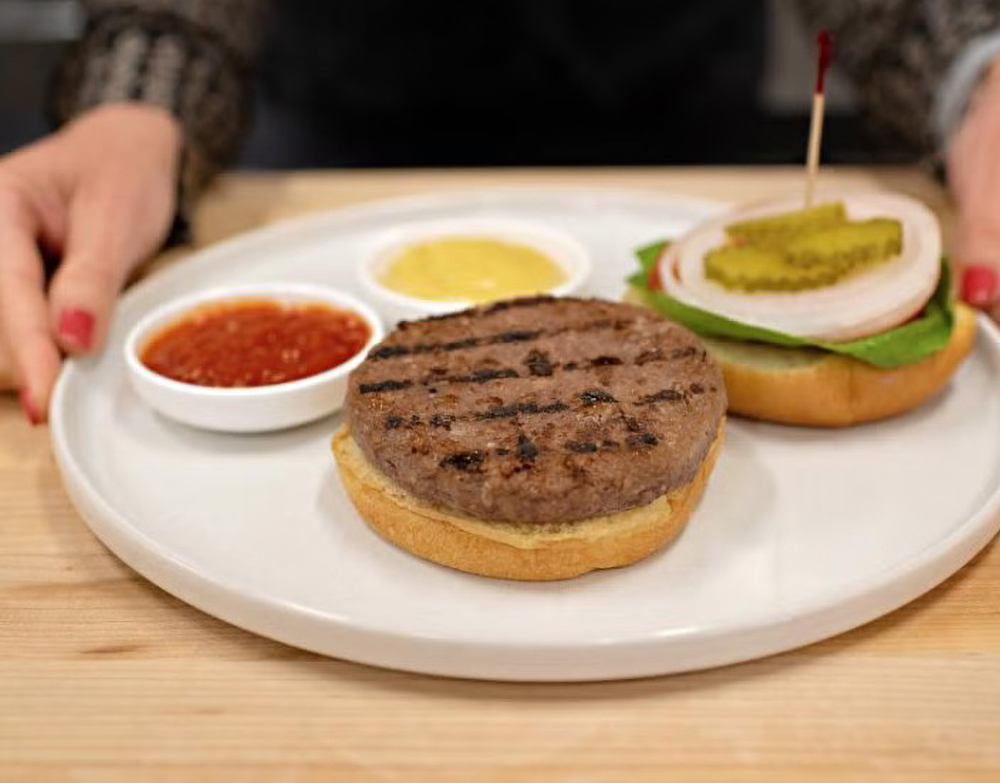
One of the first and most prominent examples came from SCiFi Foods, a San Francisco-based startup that began developing beef cell lines for food applications in 2023. Over several funding rounds, the company raised a total of US$40 million and developed a hybrid burger made from 90% soy protein and 10% cultivated beef cells. It had also submitted its cultivated beef to the FDA for regulatory review.
Later that same year, however, investor enthusiasm for cultivated meat cooled. SCiFi Foods shut down, and its assets, including its cell lines, were sold at auction.
“We didn’t know who else might show up for the auction, but collectively agreed it would be a shame for SCiFi’s technology to get locked in a box somewhere, so we were excited that GFI decided to bid,” said Meera Zassenhaus, director of communications for TUCCA.
The Good Food Institute submitted the winning bid, acquiring eight cell lines along with recipes for two serum-free media formulations. The organization then transferred those assets to Tufts for storage and validation, with the explicit aim of making them available to others for use and further development.
The SCiFi portfolio included what Tufts described as the company’s three most commercially advanced beef cell lines. All had been modified using CRISPR gene-editing technology to allow them to grow indefinitely in culture and adapted to grow in scalable single-cell suspensions. Two of the lines were further engineered to remove antibiotic resistance markers introduced during research, making them suitable for food applications.
The cells were slated to become part of an open-access cell bank maintained by the Tufts Cellular Agriculture Commercialization Lab. The lab was in the process of raising funds to expand its infrastructure and develop additional cell lines from a range of livestock and harvested animal species.
“We’ll make them available with very few restrictions on use,” said Andrew Stout, an Assistant Professor in the Tufts biomedical engineering department who led the cell bank efforts.
The cell bank was set to be housed within TUCCA’s planned future foods innovation hub. That facility was intended to provide shared-use prototyping and scale-up research space, incubator laboratories for startups, and access to technical expertise to accelerate cellular agriculture development in Massachusetts and beyond.
Stout, together with Elliot Swartz, senior principal scientist for cultivated meat at the Good Food Institute, evaluated SCiFi’s portfolio to identify the most promising candidates for initial release. “The most exciting feature about the first cell lines is that they can be grown in single-cell suspension,” Stout said.
Unlike many cell types that must attach to a surface before being harvested, single-cell suspension cultures float freely in solution, forming what Stout described as a slurry. “That allows for simple, large-scale production in bioreactors, making them the first such livestock-based cell lines broadly available to the field,” he said.
Natalie Rubio, executive director of the Cellular Agriculture Commercialization Lab, said access to these cells could enable more applied research. “There’s a lot of research that can be done about figuring out how to make other cell lines grow in single-cell suspension,” she said. “The cells we acquired will open the door for some more scalable research, like bioreactor optimization.”
Beyond the SCiFi-derived bovine cells, the Tufts cell bank planned to offer additional lines developed in-house, including bovine, mackerel, and pork cells. Zassenhaus said Tufts and the Good Food Institute expected strong demand and had made a waitlist available for interested parties.
“We are essentially composting intellectual property, or IP, from an individual startup and transforming it into a public good to benefit the entire field,” Zassenhaus said. “This model of IP re-use makes sense for all kinds of technologies even beyond alternative proteins, especially as climate tech broadly faces a contraction in funding.”

Join Us At One Of Our Upcoming Events

If you have any questions or would like to get in touch with us, please email info@futureofproteinproduction.com

More News