

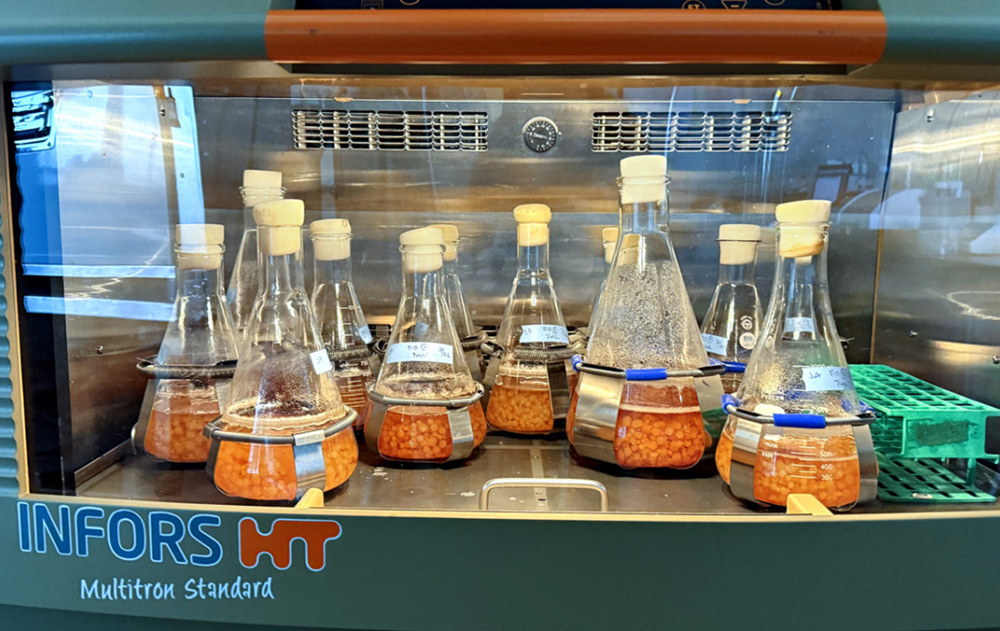
Cornell researchers outline fungal biorefinery model to turn agricultural waste into protein

Cornell food science researchers have outlined a model for using fungal fermentation to convert agricultural and food waste into high-protein, nutrient-rich foods, arguing that fungi could play a central role in a future circular food system.
• A Cornell-led review published in Trends in Food Science & Technology examined fungal fermentation as a way to convert agricultural waste into high-protein foods.
• Researchers described an 'emerging circular fungal biorefinery' model that uses low-value byproducts as feedstock for fermentation.
• The team identified technological, economic, and consumer perception challenges that must be addressed to scale the approach.
Published on February 11 in Trends in Food Science & Technology, the review was led by Ke Wang, Assistant Research Professor of food science at Cornell AgriTech in the College of Agriculture & Life Sciences. The paper explores how low-value agricultural residues and food-processing byproducts could be upcycled through fungal fermentation.
“The main driver of this type of research is identifying new and sustainable food sources,” Wang said. “We looked at all the possible perspectives and tried to understand the technologies and the research gaps.”
The researchers described what they termed an “emerging circular fungal biorefinery,” in which waste streams from agriculture, food processing, manufacturing and even households could serve as feedstock for precision fermentation systems.
Their aim was to identify value-added products that could be generated from these underutilized materials, said Krishna Kalyani Sahoo, first author and postdoctoral researcher on the project.
Their review concluded that fungal fermentation has the potential to upcycle low-value agricultural and food wastes into nutritious foods, but that success depends on integrating advanced processing technologies and improving yield, functionality, and product quality.
Fungi have long played a role in traditional foods such as tempeh, miso and cheese. Certain strains also underpin commercial products like Quorn, which has been on the market for decades. The review argues that the field is entering a new phase, in which fungi are treated not only as alternative protein sources but as biological systems capable of transforming waste into structured, functional foods.
Agricultural residues, fruit pomace, and mixed green waste are typically composted, discarded or underutilized. These materials contain carbohydrates and nutrients that could support fungal growth, provided they undergo appropriate pre-treatment such as mechanical, thermal or biological processing.
“Fungi are remarkably efficient at converting complex biomass into structured proteins,” Wang said. “And they are the most promising substitute for animal-based protein. Beyond their high protein content, they are rich in minerals and other bioactive compounds beneficial to human health.”
The concept aligns with broader efforts to build a circular bioeconomy, in which byproducts from one system become inputs for another. Rather than dedicating cropland solely to protein extraction, fungal systems could rely on existing waste streams that do not compete directly with human food supplies.
However, the researchers emphasized that large-scale production remains technically complex. Fungal fermentation is influenced by multiple interacting variables, including carbon-to-nitrogen ratios, temperature, aeration and bioreactor design. These factors significantly affect growth efficiency and product characteristics, and can contribute to high production costs.
The review noted that advanced approaches such as co-cultivation, where multiple microbial species are grown together, and genetic engineering could enhance productivity or enable fungi to produce specific amino acids or bioactive compounds.
Mycelium, the fibrous network that forms the structural body of fungi, offers a natural advantage for meat analog applications. Its filamentous structure resembles muscle fibers, potentially reducing the need for extensive processing to replicate meat texture.
Despite technical promise, consumer perception remains a barrier. Kalyani Sahoo noted that while younger consumers and “reducetarians” may respond positively to sustainability narratives, some people associate fungi with mold or spoilage. Food technology neophobia can also limit acceptance of novel production methods.
Addressing those perceptions will require careful communication and transparency, the researchers suggested.
If successfully implemented, the model could support distributed production systems that convert regional waste streams into locally manufactured, high-value protein products.

Join Us At One Of Our Upcoming Events

If you have any questions or would like to get in touch with us, please email info@futureofproteinproduction.com


