The intelligence layer: Why food companies are racing to capture what they already know

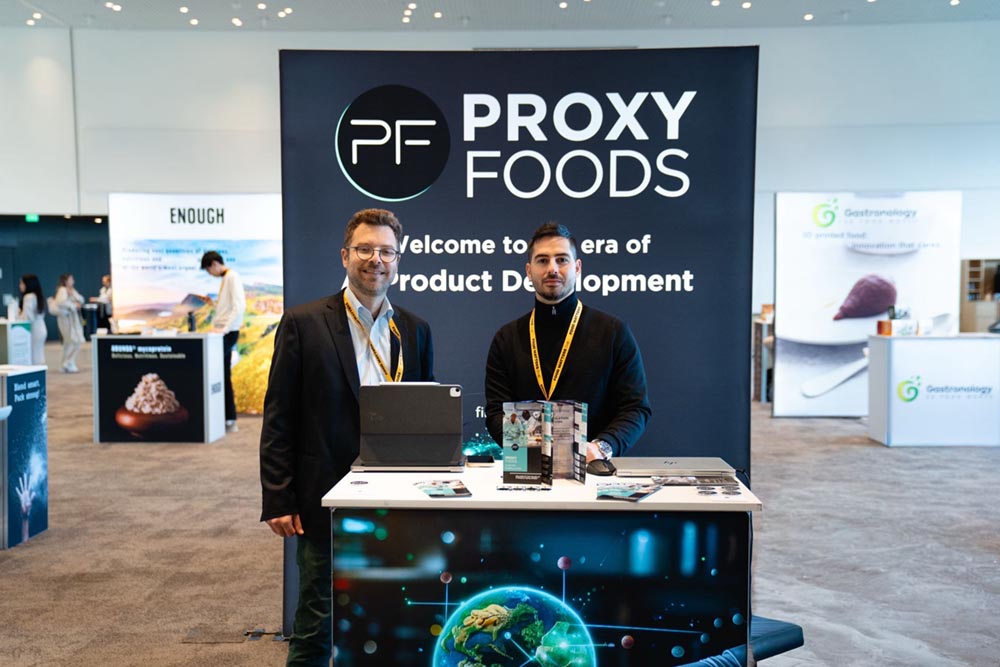
Proxy Foods AI CEO Panos Kostopoulos explains why the future of food innovation depends less on generating new data than on finally making use of everything companies already know
Every food company is sitting on a goldmine. Decades of formulation work. Consumer research. Sensory testing. Manufacturing trials. Ingredient evaluations. Failed experiments. Successful launches. The problem is that much of it remains buried in spreadsheets, laboratory notebooks, disconnected databases and the memories of the people who generated it. Every food company possesses this accumulated knowledge. Few have found a way to use it systematically.
Until recently, that mattered less. Today, developers are expected to balance nutrition, affordability, sustainability, functionality, regulatory compliance, manufacturing feasibility and consumer acceptance at the same time. The number of possible formulation pathways has become enormous, and experience alone is no longer enough to navigate them.
For Panos Kostopoulos, CEO of Proxy Foods AI, that helps explain why artificial intelligence is becoming part of the food industry's innovation toolkit. "Our focus isn't speed for its own sake," he says. "It's to raise the bar on R&D excellence and achieve business outcomes."
Much of the discussion around AI centers on faster formulation, faster prototyping and faster commercialization. Kostopoulos sees speed as the outcome rather than the objective. The bigger opportunity is making previously unmanageable formulation challenges tractable.
The bottleneck the industry under-discusses is functional properties at a price the mainstream consumer will pay
The hidden bottleneck
For much of the past decade, alternative protein development has been judged largely through the lens of taste. Companies invested heavily in improving flavor profiles, reducing off-notes and creating products that more closely resembled their conventional counterparts.
"The bottleneck the industry under-discusses is functional properties at a price the mainstream consumer will pay," he says.
Taste is only part of the equation. Products also have to deliver the texture, appearance, mouthfeel, shelf-life and processing characteristics consumers expect while remaining commercially viable.
"Flavor has improved significantly," he says. "Flavor houses do excellent work, prediction models close the rest of the gap, and most of those solutions sit comfortably under the 'natural flavoring' umbrella, which consumers accept. Functional performance is harder."

Many of those functional properties depend on ingredients that remain expensive, difficult to source or slow to gain regulatory acceptance. The result is often formulations built from multiple ingredients, each addressing a different challenge.
"To compensate, you end up layering in multiple ingredients to hit each property," says Kostopoulos, "which adds label complexity at exactly the moment consumers want cleaner labels."
Alternative proteins are not unique. Across food and beverage, developers are expected to deliver products that are nutritious, affordable, sustainable, commercially viable and appealing to consumers, while also satisfying manufacturing and regulatory requirements. Every additional objective reduces the number of workable solutions.
A search problem disguised as food science
Food formulation is a search problem. Developers begin with a desired outcome and work through thousands of combinations of ingredients, processes, nutritional targets, costs, sensory characteristics and regulatory constraints. For many years, that search depended largely on scientific experience, intuition and repeated experimentation. "The most striking acceleration is at the front and middle of the process," says Kostopoulos. "Going from a raw idea to a validated concept, a defined brief, and a working prototype in a single day. That used to be impossible."
Our goal is to do roughly 90% of the work in silico and reserve the wet lab for validation and targeted optimization steps
Food still has to be manufactured, tasted and tested. "Our goal is to do roughly 90% of the work in silico and reserve the wet lab for validation and targeted optimization steps," he says. "The 90% faster benchtop number is demonstrable," Kostopoulos says. "But the more important compression happens upstream of the bench, in experimental design itself."
Much of the time savings come before a scientist ever begins mixing ingredients. By narrowing the number of formulation pathways that need to be explored physically, development teams can focus their time and resources on the candidates most likely to succeed.

Why alternative proteins became an AI proving ground
Alternative proteins have become one of food's most demanding formulation challenges.
Plant-based products require complex interactions between proteins, fats, fibers, flavors, stabilizers and processing conditions. Fermentation-derived ingredients introduce additional functional variables, while cultivated meat adds biological complexity on top of that. Every project generates vast amounts of data and an enormous number of potential formulation pathways.
Proxy Foods AI has applied its platform across plant-based dairy, food-service, fermentation-derived ingredients and cultivated meat programs. One project focused on developing a plant-based sauce that supported a gut-health claim while reducing sodium and calories without sacrificing consumer acceptance.
The platform has also been applied to plant-based dairy, where texture and sensory performance remain major barriers to wider adoption.
"We've deployed it on two plant-based dairy programs and have seen our agents driving a significant improvement in sensory characteristics," says Kostopoulos. "In yogurt it improved 29% from the baseline, and in cottage cheese 26% based on a trained panel evaluation."
The company compared the platform directly with a professional food scientist working under the same 40-hour development window.
"On the yogurt, we ran a controlled comparison against a professional food scientist," he says. "From scratch under the same 40-hour budget, the food scientist was able to make about half of the progress that our food science agent accomplished."
"The food scientist worked the way the industry has for decades," Kostopoulos explains. "The platform ran a global model of the formulation space and proposed three informed candidates per iteration."
The cultivated meat equation
The same challenge exists further upstream. Cultivated meat remains one of the most technically demanding areas of food production, and culture media continues to account for a large proportion of manufacturing costs. Depending on the production system, it can represent between 55% and 90% of total costs, making media optimization one of the sector's biggest priorities.
Through a Good Food Institute-funded project involving researchers from McGill University and the Federal University of Paraná in Brazil, Proxy Foods AI is exploring plant-derived alternatives to conventional culture media ingredients. The work begins with agricultural side streams, including organic cocoa production.
The food scientist worked the way the industry has for decades. The platform ran a global model of the formulation space and proposed three informed candidates per iteration
"The combinatorial space here is enormous," says Kostopoulos. "Which is exactly where AI-driven candidate selection beats traditional trial-and-error."
The challenge is often not discovering entirely new ingredients. It is identifying combinations, substitutions and functional interactions already hidden within datasets too large for conventional approaches to explore.

When knowledge becomes intellectual property
As companies begin applying AI across product development, another question quickly follows. How do they protect the data that gives those systems value? Proxy Foods AI recently announced a partnership with cybersecurity specialist Aperio Global. The collaboration centers on technologies including homomorphic encryption, confidential computing environments and quantum-resilient cryptography. "Formulations are among the most valuable IP a food company owns," says Kostopoulos.
He says the same concern comes up repeatedly in conversations with enterprise customers. "'We see the value of the platform; we cannot send our formulation data into a system we don't fully control.' That's legitimate, and meeting it was a precondition for serious enterprise adoption, not a feature to market around."
For decades, intellectual property in the food industry has centered on recipes, ingredient systems, manufacturing processes and supplier relationships. AI places new value on something less visible: years of formulation data, consumer feedback, processing knowledge, regulatory decisions and experimental results.
Once AI systems can learn from that information, the data itself becomes part of a company's competitive advantage. "These technologies go beyond standard enterprise-level security," says Kostopoulos. "We're building for a future where data that's impossible to decrypt now becomes at risk with the convergence of AI and quantum computing."
The same technologies could also make it easier for companies to collaborate without exposing their intellectual property. "Practically, this unlocks a category of collaboration – co-development, supply chain intelligence, shared ingredient functional data – that's been blocked by IP concerns for years."
Beyond the ERP analogy
Comparisons between AI and enterprise software are common. Kostopoulos believes they overlook something important. "ERP standardized known processes," he says. "AI in product development is doing something different. It's changing what's possible to attempt."
The difference becomes clear when companies begin stacking multiple design objectives together. High protein. Low cost. Clean label. Allergen free. Regionally sourced. Shelf stable. Compliant across multiple markets. Not long ago, pursuing all of those goals within a single product could make a formulation project impractical simply because there were too many variables to explore. "Products with seven simultaneous constraints were rarely attempted because the search space was unmanageable," says Kostopoulos. "They're becoming tractable."
The organizations that learn fastest
Kostopoulos believes the biggest impact of AI has less to do with automation than with how organizations retain and apply knowledge. Food companies have traditionally built expertise one project at a time. Scientists ran experiments, generated insights and moved on to the next challenge. Some of that learning was documented. Some stayed with individual teams. Some disappeared altogether. AI offers a different model. "The institutional knowledge base compounds," says Kostopoulos. "Every project makes the next one faster and stronger."
That changes how companies think about research and development. Instead of treating projects as isolated exercises, every formulation, sensory panel and manufacturing trial adds to a growing knowledge base that can inform future decisions.
Brands, manufacturing expertise, ingredient technology and supply chains will continue to shape competitive advantage. Kostopoulos believes another is emerging alongside them: the ability to learn continuously from everything an organization has already done.
The companies that win won't be the ones with the best AI tools. They'll be the ones that restructure their R&D organizations around what AI makes possible
He also believes that will change how the industry thinks about intellectual property. "A meaningful part of competitive IP will shift away from 'how' toward 'what'," he says. "Understanding what consumers want, and will want, before competitors do."
If exploring thousands of formulation pathways becomes faster and less expensive, companies can pursue opportunities that once seemed commercially unrealistic. Products designed for smaller markets become more viable. Regional variants become easier to justify. Reformulation can become an ongoing process rather than a periodic exercise.
Whether that vision becomes reality will depend on more than software. Companies will need different workflows, different skills and, perhaps most importantly, a different approach to managing knowledge. "The companies that win won't be the ones with the best AI tools," he says. "They'll be the ones that restructure their R&D organizations around what AI makes possible."
Proxy Foods AI announced its partnership with Aperio Global as a cybersecurity collaboration. It also points to a larger change. Food companies have generated vast amounts of knowledge without an effective way to connect it, search it or build upon it. Artificial intelligence offers the possibility of turning that accumulated experience into something far more valuable than a historical record: an engine for future innovation.

Join Us At One Of Our Upcoming Events

If you have any questions or would like to get in touch with us, please email info@futureofproteinproduction.com

More News