

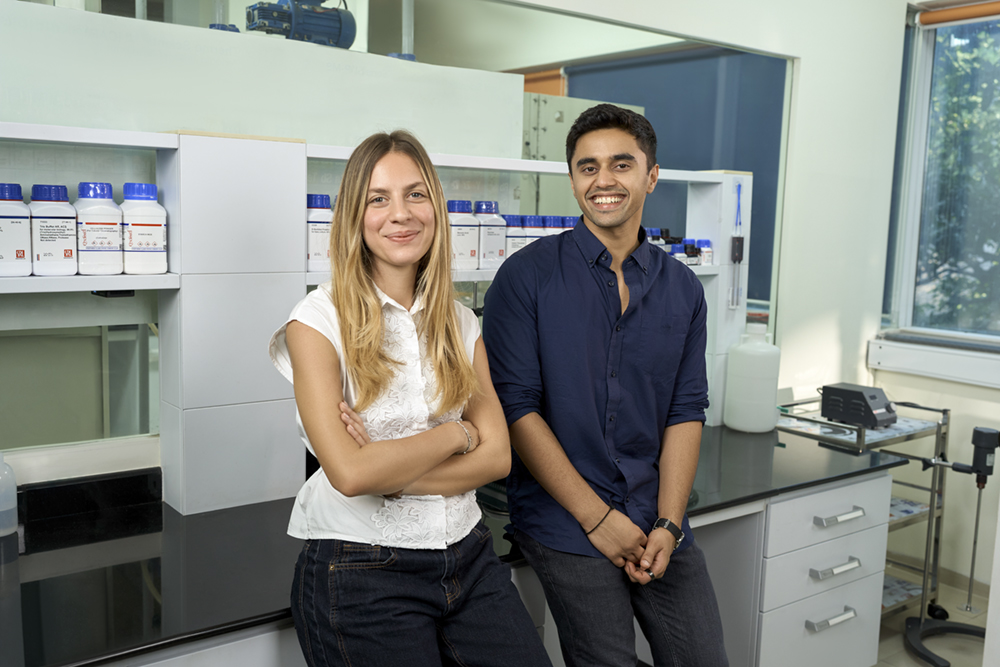
The Bland Company builds solutions for volatile protein markets

Backed by new pre-seed funding, The Bland Company is developing a protein platform designed to replace eggs in food manufacturing by upgrading overlooked agricultural side streams
The Bland Company has raised US$2.67 million in pre-seed funding led by Initialized Capital, alongside Entrepreneurs First, Transpose Platform, Behind Genius Ventures, Alumni Ventures, and Vento, to accelerate development of its protein functionalization platform and bring its first ingredients to market.
• Bland Company has raised US$2.67 million in pre-seed funding led by Initialized Capital, with participation from Entrepreneurs First, Transpose Platform, Behind Genius Ventures, Alumni Ventures, and Vento.
• The startup has developed a protein functionalization platform that transformed agricultural side streams into functional ingredients designed to replace eggs in multiple food manufacturing applications.
• The funding has been allocated to accelerate R&D, expand the scientific team, validate techno-economics, and advance commercialization of its first egg-replacement ingredients.
The startup has focused initially on one of the most embedded and volatile ingredients in the food system: eggs. Roughly one third of global egg production is used in food manufacturing, where eggs enable the production of baked goods, sauces, confectionery, snacks, and prepared foods. But that central role has also created exposure. Egg prices have fluctuated two to three times over the past 18 months due to avian flu outbreaks, cage-free regulation rollouts, demand seasonality, climate shocks, and feed costs, forcing manufacturers to reformulate and reforecast repeatedly.
Yash Khandelwal, co-founder of Bland Company, said the decision to start with eggs emerged through close engagement with industry. “The process of identifying the key long-term issues CPGs and ingredient producers face and what capabilities our protein functionalization platform solves for them has been an iterative process,” he said. “Clients have emphasised that supply breakdown and cost volatility for ingredients such as egg and other commodity proteins has been increasingly difficult to manage over the past few years.”
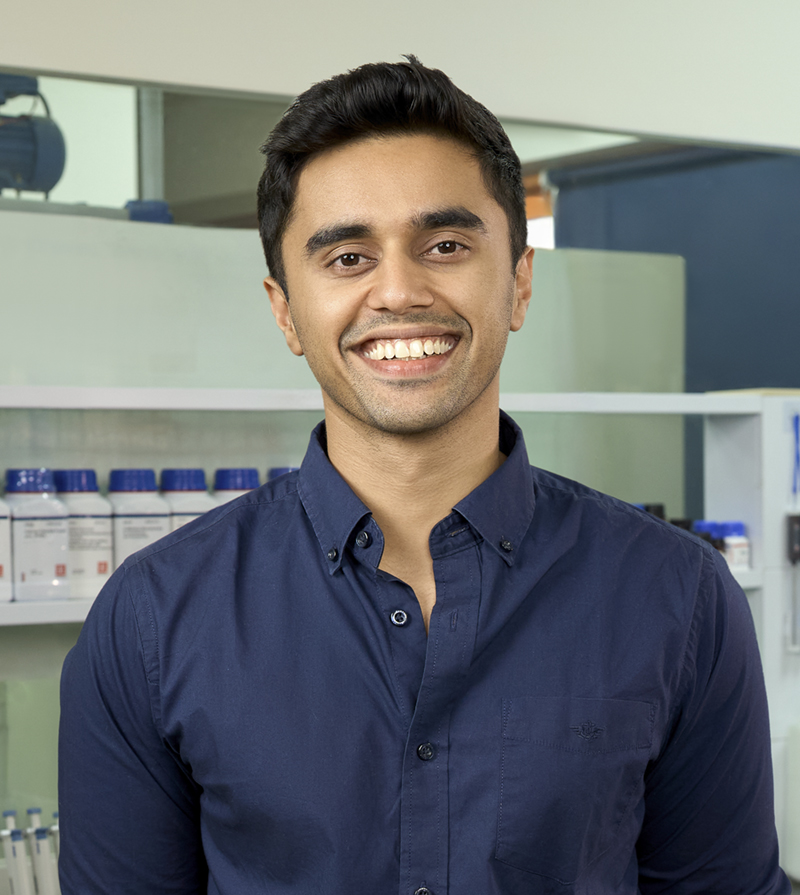
He added that existing alternatives have struggled to scale because “cost efficiency and performance parity simultaneously is very difficult to achieve.” Early prototypes gave the team confidence that a different path was possible. “The results of our early prototypes helped us understand that there can be a path where we could unlock functional parity and cost efficiency for applications that have been hard to solve for.”
Eggs remain difficult to replace precisely because they perform multiple functions at once in formulations. “From a functional perspective egg ingredients are phenomenal, which is why they’ve been hard to replace,” Khandelwal said. “That said, we see strong solubility, foaming, and emulsification concurrently in our first versions.” He noted that the company was developing beachhead applications its initial ingredients could support and would share more in the coming months.
Bland Company has described its approach as feedstock-agnostic, transforming underused agricultural side streams into functional proteins using a proprietary biochemical process that does not require novel equipment. In practice, that flexibility required deeper technical work than early models suggested.
“We’ve tested a range of feedstocks to validate how feedstock-agnostic the platform really is,” Khandelwal said. “What we’ve found is that our process consistently improves functionality, but the way it improves depends on the input and tweaks applied to the process. Different substrates see different functionality amplified – solubility, emulsification, or foaming – based on their composition.”
He said the main learning was not whether the platform worked across substrates, but how differently each feedstock responded. “The biggest gap wasn’t whether the platform worked across different substrates, it was understanding how differently each feedstock responds, and building the processing around that variability.” The company has since narrowed its focus to feedstocks offering the strongest combination of functionality improvement and commercial scalability.
Although eggs represent the starting point, Khandelwal said the ambition was always broader. “This was always the goal as no large ingredient business is built on one standalone ingredient,” he said. “From both a sustainability and business perspective, developing a biorefinery that takes one plant feedstock and fractionates it into multiple high performance solutions is essential to support the vast array of food and non-food applications we want to serve.”
Scalability has shaped technical decisions from the outset. Rather than designing a process dependent on bespoke infrastructure, Bland Company has worked within existing industrial constraints. “We’re still early in our journey, and a lot can change between now and large scale, but from the start we’ve taken a first-principles approach to building the process with scalability and unit economics in mind,” Khandelwal said. “We’re trying to use what’s already available at protein production plants and, on the customer's side, ensure that formulators can use our ingredients without changing their manufacturing lines.”
He said the team had been intentional about building around widely available unit operations instead of relying solely on state-of-the-art systems, in order to make adoption easier for the industry.
The pre-seed round closed within a few months. “We’ve been lucky in that the raise moved very quickly,” Khandelwal said. “A big part of that came down to strong early conviction around the problem we’re solving, the technical traction we’d already built, and the scale of the market opportunity.” Participation in Entrepreneurs First’s Demo Day also helped introduce the company to the San Francisco fundraising ecosystem.
He acknowledged that biotech infrastructure businesses currently require more investor education. “If anything slowed things down, it was building conviction in a category where investor optimism is more measured,” he said. “A lot of the current hype is concentrated around AI, so for biotech and infrastructure-heavy businesses like ours, you spend more time educating investors and framing the long-term value. But once that clicks, the conversations tend to move quickly.”
Cost economics emerged as the most common objection. “The most common objection, especially this early, was around cost economics. Investors wanted to understand how we could be cost-competitive,” he said. That scrutiny led the team to deepen its techno-economic validation, working with domain experts across processing, scale-up, and infrastructure to pressure-test assumptions and build sensitivity analyses around unit economics.
Initialized Capital led the round. Khandelwal said the firm quickly recognized the broader opportunity. “We think what Initialized saw early was a shared conviction that modern food infrastructure will inevitably need to evolve, but it can’t do so by relying on the same inputs or processing paradigms that exist today,” he said. “They didn’t view us as a single-ingredient company, but as a broader platform play built around that transition.”
At the pre-seed stage, he said investors were not expecting full commercial proof, but they did expect credible signals. “On the performance side, that meant demonstrating clear, repeatable improvements in functionality and validating the core technology. We also scaled the process from lab bench to small pilot to begin de-risking how it translates beyond purely experimental lab conditions.”
Looking back over the past year, he said constant testing had reshaped initial assumptions. “As with most cutting edge science projects, we’re constantly testing hypotheses, and having your assumptions proven wrong is the norm rather than the exception,” he said. The company has refined its product development strategy, clarified which applications to target, and identified supply chain partners best suited to its stage. The new funding, he added, would help accelerate the R&D cycle and move closer to commercialization.
For Bland Company, eggs are the entry point. The longer-term aim is to reduce dependence on volatile commodity proteins by building a new layer of functional supply that food manufacturers can integrate without overhauling their infrastructure.

Join Us At One Of Our Upcoming Events

If you have any questions or would like to get in touch with us, please email info@futureofproteinproduction.com


