

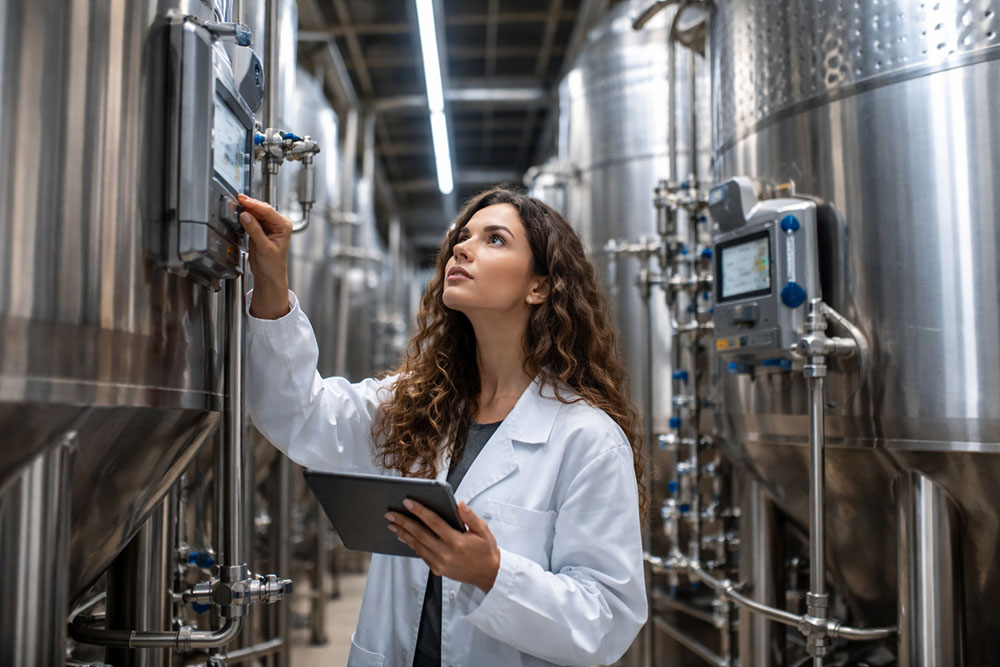
Systemiq report says fermentation could become a core pillar of Europe’s protein supply

A recent report from Systemiq examined the role fermentation could play in reshaping Europe’s protein system and concluded that the main barriers to scale were now political and institutional rather than technical.
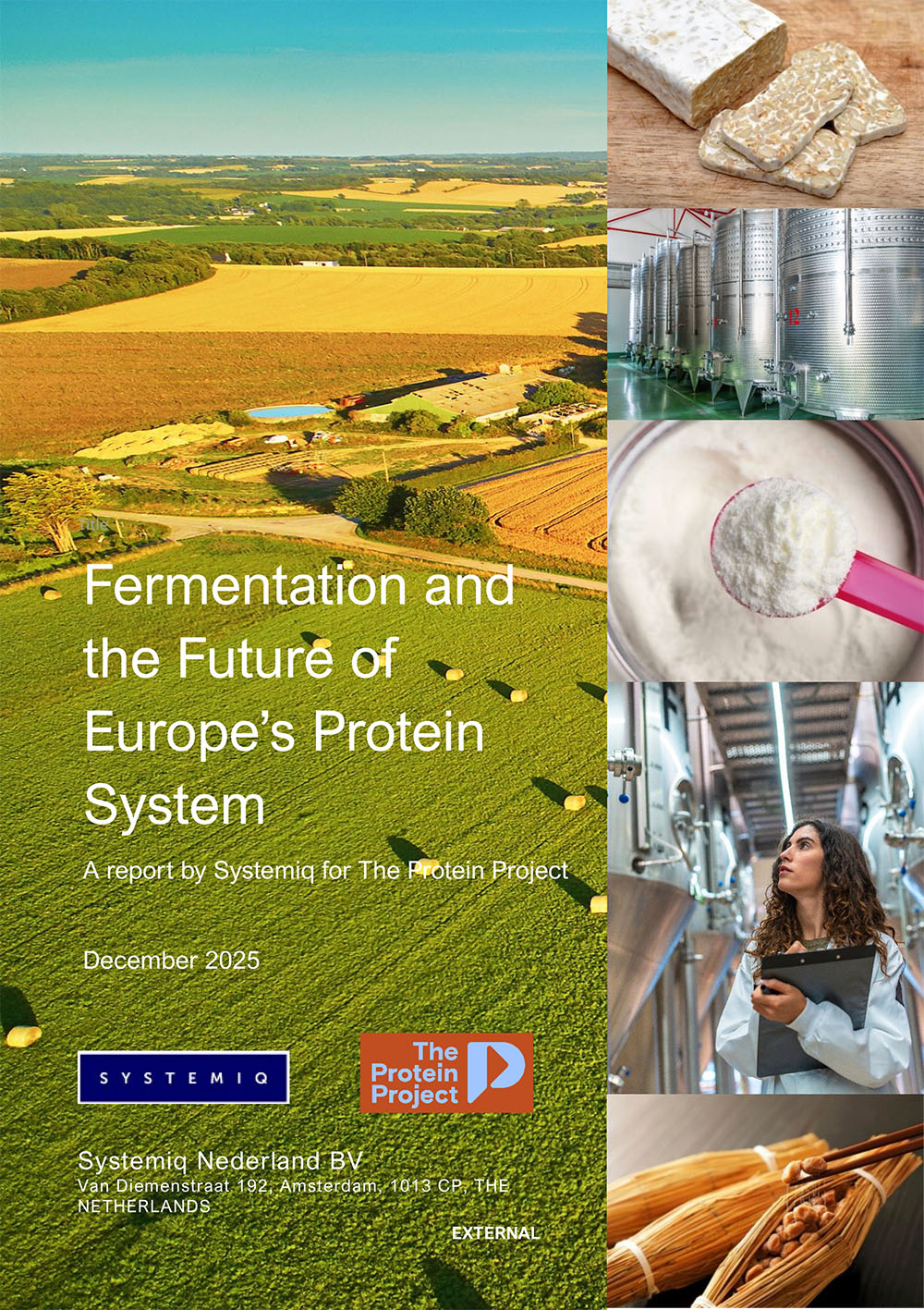
The report, Fermentation and the Future of Europe’s Protein System, was published in December 2025 for The Protein Project and assessed the potential contribution of classical, biomass, and precision fermentation to European food security, climate targets, and industrial competitiveness. It focused on production capacity, land use, emissions, regulation, and infrastructure rather than consumer behavior or branding.
Systemiq found that Europe’s current protein system faced structural pressures that could not be resolved through incremental improvements alone. The EU remained dependent on imported protein, particularly soy for animal feed, while simultaneously committing to emissions reductions, biodiversity protection, and land-use constraints. According to the report, fermentation offered a way to increase domestic protein supply without expanding agricultural land or intensifying livestock production.
The environmental analysis was intentionally conservative. Under a scenario in which fermented proteins replaced around 3% of animal protein consumption by 2040, the report estimated annual emissions reductions of approximately 20 million tons of CO₂e. It also projected land savings of 11 million hectares and freshwater savings of 1.5 billion cubic meters. Systemiq stated that these estimates were based on average European electricity mixes and conventional feedstocks, rather than assuming rapid shifts to fully renewable energy or novel substrates.
Among fermentation pathways, biomass fermentation was identified as the most immediately scalable. Products such as mycoprotein and microbial biomass were already produced at industrial scale and faced fewer regulatory hurdles than novel ingredients. The report said these pathways were closer to cost parity with animal protein and could expand more quickly over the next decade.
Precision fermentation was assessed as a longer-term contributor. Systemiq focused on applications where functional performance justified higher costs, including dairy proteins such as casein and whey, as well as omega-3 fatty acids. Rather than assuming these ingredients would replace animal products outright, the report described their role in reducing animal inputs by improving the functionality of hybrid foods.
The report placed significant emphasis on non-technical constraints. Systemiq concluded that Europe already had the scientific capability and early commercial evidence needed to expand fermentation, but lacked a coordinated policy environment. Regulatory timelines for novel foods were described as unpredictable, particularly for precision-fermented ingredients that were chemically identical to existing products but still required lengthy approval processes.
Infrastructure gaps were identified as another limiting factor. The report noted a shortage of shared pilot and demonstration facilities, which forced companies to either invest heavily at an early stage or move production outside Europe. According to Systemiq, this increased capital risk and raised the likelihood that intellectual property and manufacturing capacity would be developed elsewhere.
Misalignment across policy areas also featured prominently. Fermentation-related projects often fell between agricultural policy, industrial strategy, bioeconomy funding, and climate programs, limiting access to scale-up support. The report called for clearer integration of fermentation into the Common Agricultural Policy, EU industrial policy, and competitiveness initiatives.
Systemiq did not present fermentation as a low-cost or low-energy solution. The report acknowledged that fermentation was capital-intensive and sensitive to electricity prices, with production economics closely tied to energy availability and cost. It warned that without continued investment in clean energy and grid stability, some environmental benefits could be reduced.
The report also addressed concerns about agriculture and rural livelihoods. Rather than describing fermentation as a substitute for farming, Systemiq identified opportunities for integration, particularly through the use of agricultural sidestreams such as sugar beet pulp, molasses, and starch residues as fermentation feedstocks. It argued that these materials were underutilized and could support new value chains linked to existing agricultural activity.
Livestock production was not presented as disappearing under the scenarios examined. Instead, the report suggested that fermentation could reduce pressure on land and feed markets while allowing animal agriculture to operate within tighter environmental limits.
For alternative protein companies, the report presented a mixed outlook. It supported the view that fermentation could contribute meaningfully to Europe’s protein supply, but emphasized the need for cost control, industrial reliability, and predictable regulation. Systemiq projected that while biomass fermentation could scale significantly within the next decade, precision fermentation was more likely to reach broader price competitiveness between 2035 and 2040.
The report largely avoided discussion of consumer acceptance or dietary shifts. Its focus remained on supply-side capacity and system resilience. Systemiq argued that protein security, climate commitments, and industrial competitiveness were increasingly linked, and that fermentation could address all three if institutional barriers were resolved.
Systemiq concluded that fermentation had moved beyond the stage where progress depended primarily on scientific breakthroughs. According to the report, future outcomes would depend on decisions around regulation, infrastructure investment, energy policy, and coordination across EU institutions. In that sense, fermentation was presented as a test of whether Europe could translate long-term sustainability goals into industrial capacity at scale.

Join Us At One Of Our Upcoming Events

If you have any questions or would like to get in touch with us, please email info@futureofproteinproduction.com


