
Revo Foods turns apricot kernels into high-protein cottage cheese

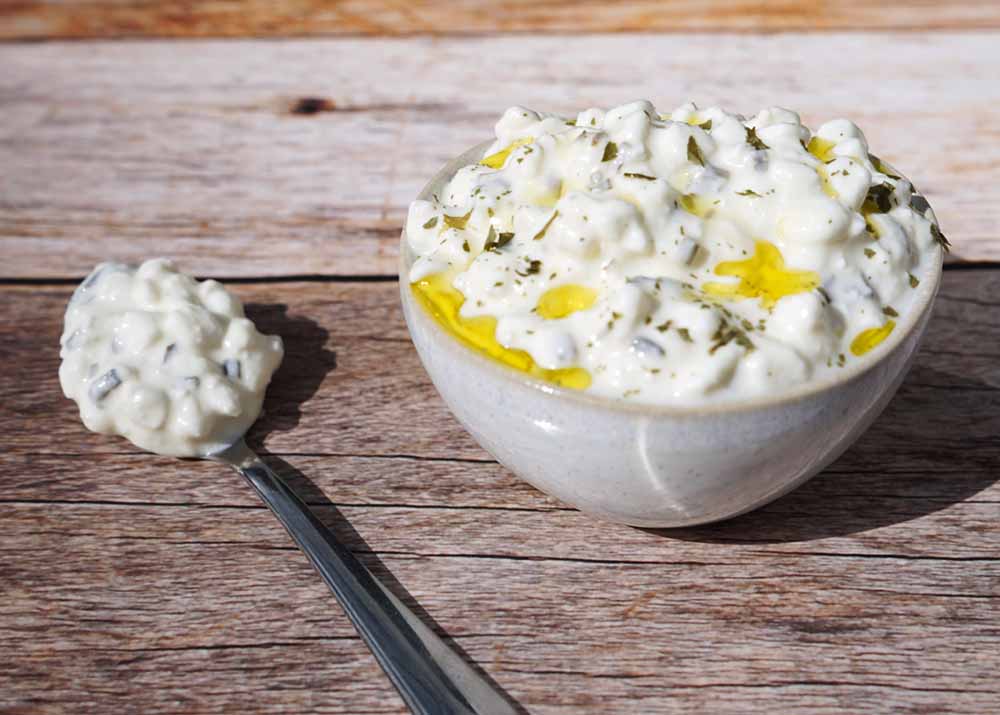
Revo Foods has turned apricot kernels into a fermented, cottage cheese-style product containing 17g of protein per cup, taking an unlikely new protein source into EDEKA and REWE stores across Germany.
• COTTAGE PROTEIN+ contains 11.5% protein from apricot kernels themselves, rather than added protein isolates or concentrates, and will launch at EDEKA and REWE in Germany.
• Revo Foods uses fermentation to develop the product's acidity, flavor and grainy texture, with an ingredient list of apricot kernels, water, salt and vegan cultures.
• The first commercial batch has been produced at Revo Foods' Taste Factory in Vienna, with the company now scaling production and targeting a mid-market price level.
For a company best known for fungi protein, 3D food structuring and alternatives to conventional seafood and meat, COTTAGE PROTEIN+ is an unusual addition to the portfolio.
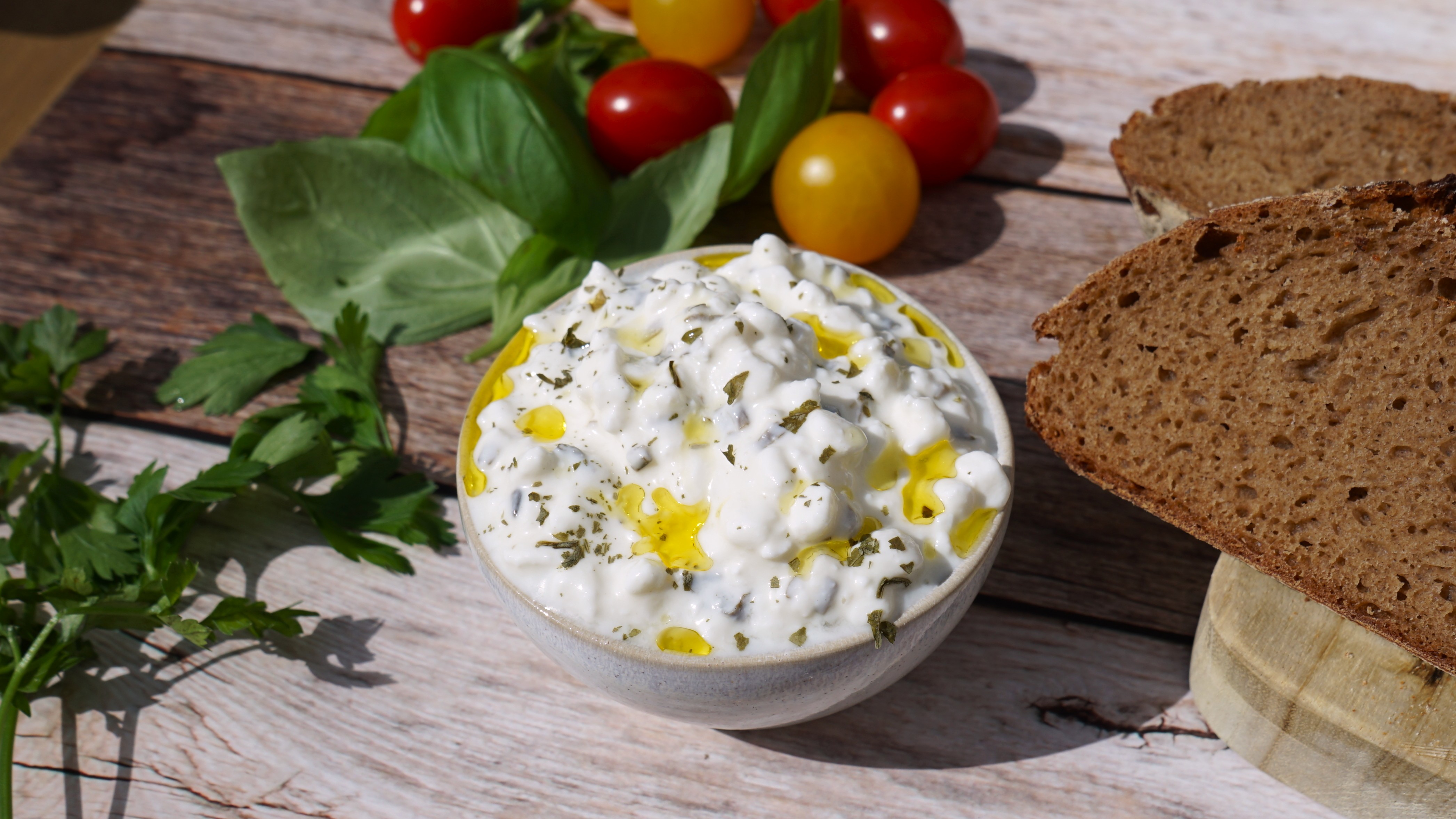
It is made from 40% apricot kernels, which Revo Foods grinds and ferments with water and vegan cultures. The protein and fat come naturally from the kernels, while fermentation develops the acidity, flavor and grainy texture associated with cottage cheese.
But Revo Foods is deliberately not selling it as a vegan cottage cheese alternative. “We are focused on a sustainable protein shift, and will offer whatever consumers want to make more compelling offers. This product is completely different from a positioning perspective. Meat alternatives have been unfairly scrutinized in recent years and face massive emotional objections from a large segment of consumers. Products like the Cottage Protein+ go in a completely different direction. This is almost a primary agricultural product, with only apricot kernels, water and salt on the ingredient list, yet an amazing nutritional value,” says Robin Simsa, Commercial Director at Revo Foods.
The intention is to compete for consumers already looking for high-protein foods, rather than asking them to buy into another dairy alternative.

An unlikely protein source
Large quantities of apricot kernels are left over when the fruit is processed into products such as juice, jam and dried fruit. Revo Foods says they remain little used by the food industry despite containing useful levels of both protein and fat.
“We saw an opportunity to give an ingredient normally discarded as a byproduct a new purpose, especially given its excellent protein and fat profile,” Simsa says. “But we see COTTAGE PROTEIN+ primarily as a high-protein fitness product with a cottage texture that happens to be made from apricot kernels. We are pragmatic in choosing different protein types, and will continue to chose the best product type for a given application.”
The result contains 11.5% protein, equivalent to 17g in each 150g cup.
Revo Foods has achieved that without fortifying the product with pea, soy or another protein isolate or concentrate. “The protein comes from the kernels themselves, rather than added isolates or concentrates,” Simsa explains. “Fermentation is part of creating the finished product, and studies have shown that fermentation has additional positive effects on protein digestibility and overall nutritional quality.”
The kernels also provide the product's fat, so no additional fats are required. Revo Foods says the resulting profile is rich in unsaturated fatty acids and resembles that of olive oil.
For CEO David Petuzzi, fermentation provides the link between COTTAGE PROTEIN+ and Revo Foods' existing work with fungi protein. “We stand for healthy proteins. That is the thread running from our fungi protein through to COTTAGE PROTEIN+: We use fermentation as a tool to turn natural raw materials into foods that deliver real nutrition and taste great,” he says.
Letting fermentation do the work
The manufacturing process sounds remarkably simple when Revo Foods describes it. “It is very simple, actually comparable to what happens in dairy cottage production,” Simsa says. “We take grinded apricot kernels, mix them with a bit of water and vegan cultures. During fermentation, the typical texture and flavor develop, such as with dairy cottage cheese. Thanks to the fermentation, the ingredient list reads so charmingly: Apricot Kernels, Water, Salt. There is really nothing else to it, because the fermentation does the work for us, and not complex ingredient formulations”
That last point is central to the product. Many plant-based chilled products use vegetable fats, starches, stabilizers and thickeners to recreate the body and texture normally provided by dairy ingredients. COTTAGE PROTEIN+ instead relies on its raw material and fermentation process to do much of that work.
“Most plant-based fresh products aren't fermented, they're formulated: coconut fat, starch, thickeners, and usually no protein to speak of,” says Niccolò Galizzi, Head of Food Tech at Revo Foods. “We do it the other way around. With COTTAGE PROTEIN+, the fermentation cultures do the work for us. Texture, acidity and flavor develop in the fermenter, not on the ingredient list. That's why we need only four ingredients and still end up with a product that stands out on both taste and nutrition. This is truly a product that captures the trend of the time: Simple, few natural ingredients, high in proteins and tasty.”
The short ingredient list hides several years of development. “The biggest challenge was achieving great taste and a cottage texture with very few ingredients, while keeping the protein content high,” Simsa says. “It took many years of development to get that balance right, and that simplicity is what makes the product special. The secret lies in using the best process conditions as well as starting cultures and apricot kernel combination.”
Rather than building the formulation around an added protein, Revo Foods is using fermentation to work with the protein and fat already present in the kernel.
Dealing with amygdalin
Apricot kernels also bring a food-safety question that Revo Foods had to address before making them 40% of a commercial food product.
Amygdalin occurs naturally in apricot kernels and can release cyanide when consumed, with bitter kernels particularly associated with higher concentrations.
Revo Foods says its raw material undergoes several processing steps to remove the compound.
“The kernels undergo multiple processing steps which ensure removal of amygdalin,” Simsa says. “We routinely test the efficacy, and so far all analyses showed no detectable amygdalin in the products, showing the efficacy of our removal process.”
Revo Foods purchases kernels from several suppliers and says availability is substantial because relatively little of the material currently enters the food industry.
But being a side stream does not automatically make it inexpensive.
“You’re right that being a byproduct does not automatically make something a cheap food ingredient once preparation, logistics and quality control are included,” Simsa says. “In the beginning, when establishing a new supply chain, such raw ingredients are often more expensive because first new processes at scale to retrieve the ingredients need to be established. The attraction here is also its nutritional composition, which allows us to create the product without a long list of additional ingredients.”
The raw material may be a byproduct, but turning it into a consistent food-grade ingredient still carries processing, logistics and quality-control costs.
In this case, Revo Foods sees value in getting both protein and fat from the same primary ingredient, as well as finding another use for a material already generated by the existing apricot industry.
Putting taste to the test
A four-ingredient product containing 40% apricot kernels still has to persuade consumers that it belongs alongside familiar refrigerated foods.
Revo Foods conducted a blind comparison between COTTAGE PROTEIN+ and a dairy cottage cheese already available at retail.
The company says 60% of participants preferred its product for taste and smell, while 45% preferred its texture.
There is an important qualification to those figures: the test involved 16 people.
“We tested this with 16 testing persons, which we gave to compare our Cottage Protein+ and a dairy-based cottage cheese available in retail here,” Simsa says. “We asked about comparison for taste, texture and smell. Then we compiled the data, and found that on both taste and smell our product was preferred by 60% of the tasting persons than the retail version, while on texture it was 45%, slightly lower than the dairy version.”
Sixteen participants is too small a sample to establish broader consumer preference, but the exercise gives Revo Foods an early indication of how the product compares with conventional cottage cheese.
A much larger test begins this month.
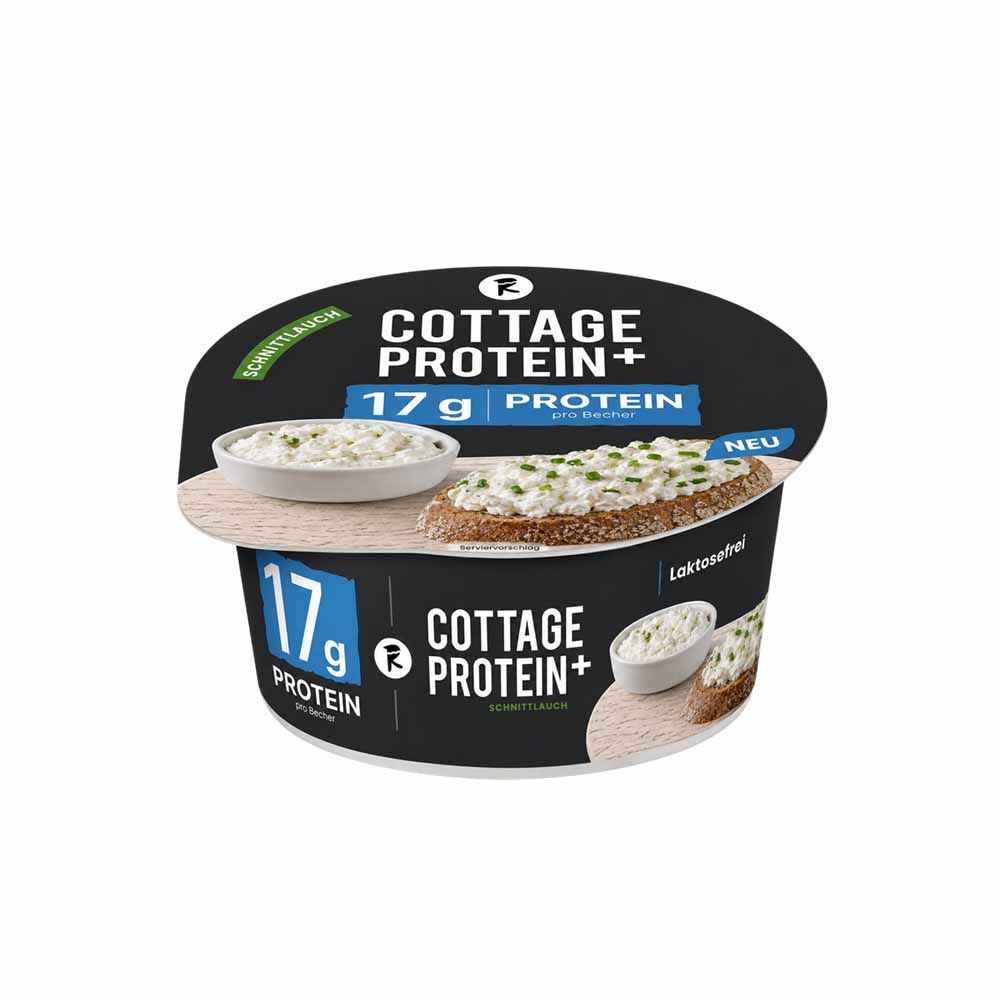
COTTAGE PROTEIN+ is being launched in 150g refrigerated cups through EDEKA and REWE in Germany, putting it into mainstream grocery retail rather than restricting the first release to direct-to-consumer sales or a small market trial.
Scaling at the Taste Factory
The first commercial batch has already been delivered.
Production is taking place at Revo Foods' Taste Factory in Vienna, the facility it opened in 2024 and which is perhaps better known for housing the company's industrial 3D food extrusion technology.
COTTAGE PROTEIN+ introduces a very different manufacturing process into the same facility.
“We are just starting out, and have just delivered the first batch of our products,” Simsa says. “Hence, we are still in the process of scaling our production, which is taking place at our facility “The Taste Factory” in Vienna, Austria. Initially, the product will be slightly more expensive compared to dairy-based cottage products, however with scale we will achieve a good mid-market level in the next 4-6 months.”
That timetable puts an unusually specific target on the economics.
Conventional cottage cheese benefits from established dairy supply chains and manufacturing processes operating at considerable scale. Revo Foods is entering retail before it has reached comparable economics and acknowledges that its product will initially carry a premium.
Its expectation is that increasing production will bring COTTAGE PROTEIN+ to what it describes as a good mid-market price level within four to six months.
For a product that Revo Foods wants consumers to choose primarily for protein, taste and nutrition, rather than because it replaces an animal-derived food, getting closer to familiar grocery pricing will be important.
Not another alternative
That thinking is perhaps the biggest departure from the Revo Foods consumers already know.
Founded in Vienna in 2021, the company built much of its reputation around fungi protein and 3D structuring technology, including products developed as alternatives to conventional seafood and meat.
COTTAGE PROTEIN+ arrives in a different part of the supermarket with a different message.
It borrows obvious characteristics from cottage cheese, including its refrigerated format and grainy texture, but Revo Foods does not want the product's identity to begin and end with what it can replace.
Instead, it is emphasizing 17g of protein, fermentation, four ingredients and the absence of added protein isolates and fats.
That approach also leaves Revo Foods free to use very different technologies and raw materials across its portfolio. The company says it will continue choosing protein sources according to the application rather than requiring every new product to emerge from the same technology platform.
There is plenty left to prove. Revo Foods has only just delivered its first commercial batch, production is still scaling and the company has set itself a relatively short window in which to bring the price down.
The German launch will provide a far better indication of consumer appetite than its initial tasting exercise.
COTTAGE PROTEIN+ will also test whether a sustainable protein product can win consumers without making substitution part of the sales pitch. Simsa believes that is where the opportunity lies.
“This goes in the direction of not replacing anything (we dedicatedly do not call the product a ‘Vegan Cottage Cheese Alternative’), but rather making a value proposition to consumers which makes them naturally chose products like ours because they give them better value, and not because they lead with storytelling about sustainability/being an alternative.”
If you liked this, check these out...
• Revo Foods expands beyond seafood with launch of mycoprotein-based EL POLLO
• Atlantic Fish Co and Revo Foods test hybrid path to whole-cut cell-cultivated seafood
• AuX Labs raises US$4 million to commercialize precision fermentation cheese platform

Join Us At One Of Our Upcoming Events

If you have any questions or would like to get in touch with us, please email info@futureofproteinproduction.com


%20-%20Photo%20Credit%20Matt%20Qu%C3%A9r%C3%A9e.jpg)

