

ProVeg Incubator revamps accelerator model with fast-track program aimed at tougher markets

The ProVeg Incubator has launched a new accelerator model designed to better reflect the realities facing alternative protein startups, unveiling a streamlined three-month program focused on resilience, fundamentals, and commercial progress in more challenging market conditions.
• ProVeg Incubator launched the Fast-track to Impact program, a three-month accelerator aimed at helping early-stage alternative protein startups navigate tougher market conditions.
• The new model focused on customized support, business fundamentals, and strategic partnerships while supporting twice the number of startups compared to previous cohorts.
• The fully online program required no equity or fees and offered select startups the chance to pitch at The New Food Conference in Berlin.
Announced on 12 January 2026, the Fast-track to Impact Programme marked an evolution for the ProVeg Incubator, which described itself as the world’s first and leading accelerator dedicated exclusively to alternative protein ventures. After seven years operating a longer-form accelerator model, the organization said the shift reflected lessons learned from working with founders amid tighter funding, slower commercial timelines, and more cautious investor sentiment across the food-tech sector.
Rather than extending program length or expanding scope, the Incubator condensed its support into a focused three-month format. The aim was to equip startups with the strategic clarity and operational grounding needed to survive and progress in a market where capital was scarcer and pathways to scale were under closer scrutiny.
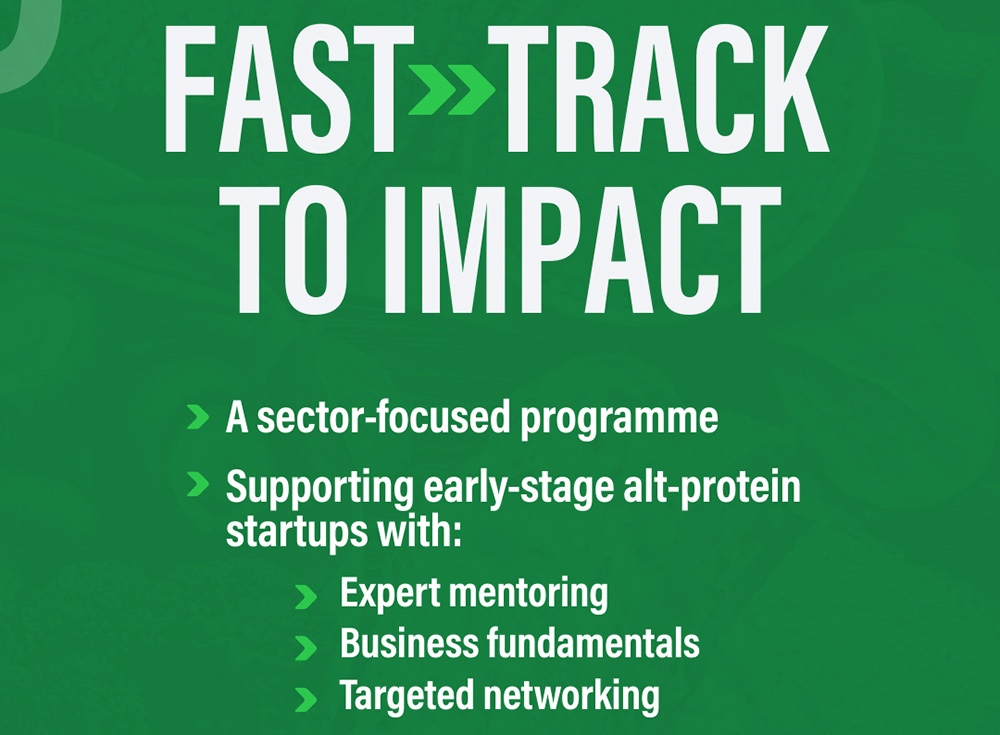
According to ProVeg, the redesigned program drew on its accumulated industry experience to help founders sharpen their value propositions, strengthen core business fundamentals, and build partnerships that could accelerate real-world progress. By shortening the programme and refining its structure, the Incubator said it could support twice as many companies per year, increasing its overall impact while maintaining tailored engagement.
Devika Suresh, Head of the ProVeg Incubator, said the shift reflected a broader change in what founders now needed to succeed. “Founders today needed more than product innovation; they needed resilience, strategic clarity, and a strong network,” she said. “Our Fast-track to Impact program focused on exactly that, helping startups navigate the complexities of this dynamic sector and emerge better positioned for long-term success.”
The program was delivered fully online and required no equity stake or participation fee, a structure the Incubator said was intended to keep support globally accessible. This approach aimed to lower barriers for early-stage teams operating outside traditional startup hubs or without access to large pools of early capital.
Participants received structured one-on-one mentoring alongside targeted programming that addressed company-building essentials. These included financial modeling, go-to-market strategy, and pitching, areas that many founders cited as critical gaps when moving from technical validation to commercial engagement. The emphasis was not only on refining products, but on ensuring that startups could clearly articulate how those products would be manufactured, sold, and scaled under real-world constraints.
The Incubator positioned the Fast-track to Impact Programme as particularly relevant for startups navigating the plant-based, fermentation-derived, and cultivated food technology space. As competition intensified and timelines lengthened across these categories, ProVeg said the ability to demonstrate commercial logic alongside technical progress had become increasingly important.
Beyond structured mentoring, the program also aimed to expand founders’ access to high-impact networks. A select number of startups from each cohort were offered the opportunity to pitch at The New Food Conference in Berlin, one of Europe’s established industry gatherings focused on sustainable food systems. The showcase was designed to connect founders directly with investors, retailers, policymakers, and other industry stakeholders, offering visibility that could be difficult to secure independently.
ProVeg described this exposure as a practical extension of the program’s focus on real-world outcomes. Rather than positioning demo days as an endpoint, the Incubator framed them as a step toward building longer-term commercial relationships and feedback loops with the broader ecosystem.
Applications for the Fast-track to Impact Programme were opened to mission-driven startups that had reached at least a minimum viable product stage in alternative proteins. Eligible companies were required to be working toward accelerating the transition to a more sustainable global food system, reflecting ProVeg’s broader organizational mission.
By tightening the program's structure and sharpening its objectives, the Incubator signaled a recognition that the alternative protein sector had entered a more demanding phase. Success, it suggested, would depend less on ambition alone and more on disciplined execution, realistic planning, and the ability to adapt under pressure.
The Fast-track to Impact Programme represented an attempt to align accelerator support with those conditions, offering founders tools and connections designed not just for growth, but for durability.

Join Us At One Of Our Upcoming Events

If you have any questions or would like to get in touch with us, please email info@futureofproteinproduction.com


