


Planteneers marks five years as Stern-Wywiol Unit pushes plant-based from niche to normal

Planteneers has marked its fifth anniversary by reflecting on how plant-based foods moved from a specialist category toward mainstream acceptance, as consumer expectations around taste, nutrition, and functionality continued to rise.
• Planteneers celebrated five years of operations, having grown to a 50-person team across three continents and built a portfolio of more than 1,200 plant-based formulations.
• The Stern-Wywiol Gruppe subsidiary focused on functional systems for plant-based meat, fish, dairy, and deli alternatives, with an emphasis on taste, protein content, and clean labels.
• The company highlighted mycelium, fermentation, and alternative proteins as core areas of future development, alongside expansion in the US and Asia.
Founded in early 2021, Planteneers was established with the aim of helping accelerate the nutrition transition through applied research and product development. Dr Matthias Moser, Managing Director of the Food Ingredients Division of the Stern-Wywiol Gruppe, said the original ambition was already taking shape. “Five years ago ‘Plant-based as the New Normal’ was our vision. Now it’s more and more a reality,” he said.
Since its launch, the company expanded to multiple locations across Europe, the Americas, and Asia, employing around 50 staff focused on developing plant-based convenience solutions. Its customer base ranged across manufacturers seeking alternatives to meat, sausage, fish, cheese, dairy products, and deli foods, with Planteneers offering more than 1,200 formulations covering all major plant-based categories.
Moser said the company’s foundations were built on earlier work within the group. “In our company group, from the beginning we asked ourselves what the nutrition of the future would look like, and realized that plant-based raw materials are the foundation for a sustainable world food supply,” he said. Drawing on experience gained through Hydrosol since 2013, he added that the group believed it could support the nutrition transition with plant-based foods that consumers enjoyed and that were accessible on price.

Over the past five years, consumer expectations had shifted significantly, according to Planteneers. Taste remained non-negotiable, but products were increasingly expected to deliver nutritional value, recognizable ingredients, and clean labels alongside sensory appeal.
“Products have to taste good, otherwise they simply don’t have a future,” Moser said. He added that plant-based claims alone were no longer enough. “They need to have a certain protein content, there needs to be fiber, and ideally products should be clean label.”
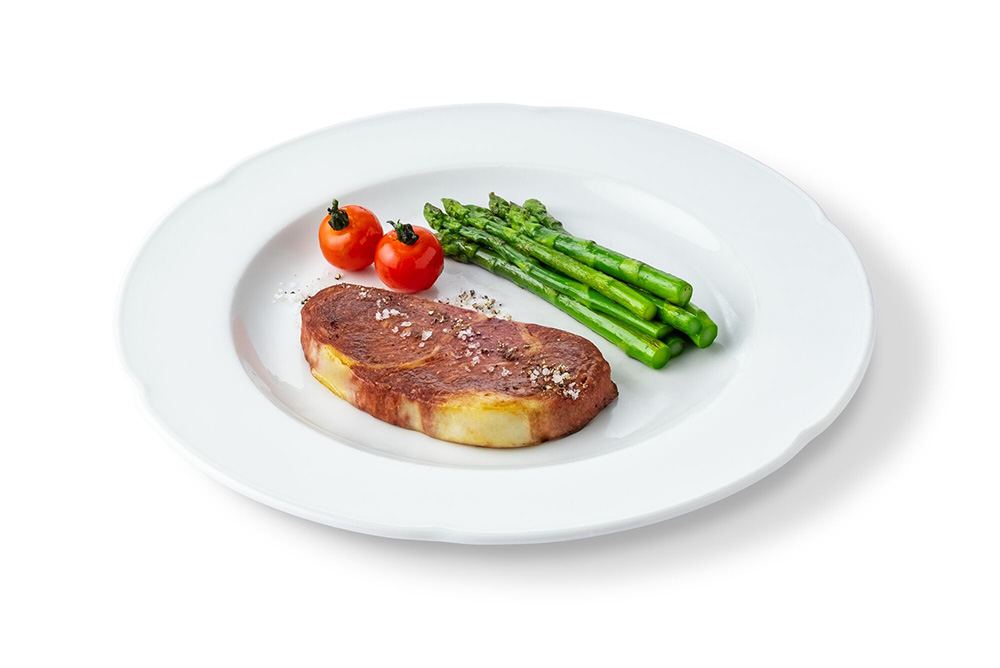
Planteneers responded by focusing on functional systems that enabled manufacturers to meet those demands. Among its recent developments were marbled plant-based steaks created in collaboration with filling and portioning equipment specialist Handtmann, as well as continued innovation in fish alternatives. In dairy alternatives, the company recently introduced a plant-based cheese slice designed to deliver a smooth, elastic texture with protein levels of up to 8%.
Research and development played a central role in the company’s strategy. Moser said Planteneers deliberately invested early in emerging raw materials and technologies. “We look into new raw materials earlier, more systematically and more intensively than others,” he said, pointing to mycelium as one example expected to play a decisive role in future product development.
Planteneers’ market profile was further raised in 2025 with the launch of the Protein Forward Summit, an industry event initiated and hosted by the company. Dr Dorotea Pein, Director Technology and Innovation at Planteneers, said the response exceeded expectations. “Representatives from the entire value chain in the field of plant proteins accepted our invitation. That was very impressive, and it’s a milestone that I personally am very proud of,” she said.
Pein also highlighted the role of collaboration within the Stern-Wywiol Gruppe, which comprised 13 sister companies spanning enzymes, flavors, vitamins, and functional ingredients. She said access to in-house expertise across flavor development, micronutrient enrichment, and raw material functionality allowed Planteneers to support customers along the full value chain.
Looking ahead, Planteneers pointed to a broader protein landscape that extended beyond plants alone. Pein said alternative proteins from plants, yeasts, fermentation, and cellular agriculture would all play a larger role in future food systems. She compared their trajectory to that of organic foods, predicting they would secure a permanent place in mainstream nutrition.
Mycoproteins were identified as a particularly promising area, with Planteneers expecting falling costs as production capacity scaled. “We think prices will drop sharply as production capacity expands,” Pein said. “Then mycoprotein will become a raw material widely used to make protein products for the center of the plate. The technology really has the potential to produce affordable protein that can feed the world.”
Geographically, the company continued to expand beyond Europe. Planteneers opened a US subsidiary in Illinois two years ago to support local customers and demand, and preparations were underway for a Technology Center in Singapore to strengthen its presence in Asia. According to the company, these investments were designed to ensure proximity to customers in a fast-moving global market rather than to chase rapid scale for its own sake.
Five years after its launch, Planteneers positioned itself less as a start-up and more as a specialist ingredient partner focused on practical solutions, reflecting how plant-based food itself had matured from novelty to established category.
(Main photo shows Dr Dorotea Pein, Director Technology and Innovation at Planteneers and Dr Matthias Moser, Managing Director of the Food Ingredients Division of the Stern-Wywiol Gruppe)

Join Us At One Of Our Upcoming Events

If you have any questions or would like to get in touch with us, please email info@futureofproteinproduction.com


