

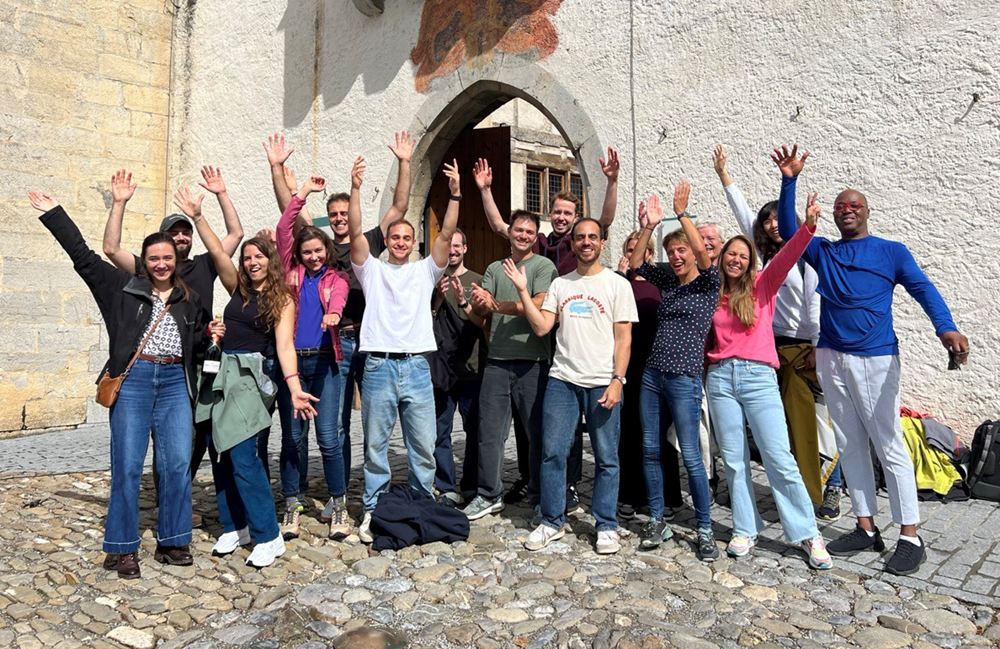
Planetary raises US$28 million to scale fermentation platform, bringing total funding to US$40 million

Planetary has secured new equity and credit financing of approximately US$28 million (CHF 22 million), bringing its total funding to around US$40 million (CHF 32 million), as the company accelerates efforts to scale industrial biomanufacturing for food production.
• Planetary has raised around US$28 million in new funding, including US$20 million in equity and US$7.5 million in credit, bringing total funding to approximately US$40 million
• The round has been led by Radikal Capital and Oetker Ventures, with participation from major food, agriculture, and venture investors
• In April 2026, the company has launched a new vegan mycoprotein filet products at price parity with conventional chicken at ALDI Suisse and is expanding globally, including into India
The Geneva-based company confirmed the financing on April 20, with equity funding of around US$20 million (CHF 16 million) supplemented by approximately US$7.5 million (CHF 6 million) in credit. The raise adds to existing capital and provides additional resources to expand its industrial footprint and licensing activity.
The round was led by Radikal Capital and Oetker Ventures, with participation from Royal Cosun, arc investors, Green Generation Fund, AgriFoodTech Venture Alliance, and existing backers Astanor Ventures and XAnge. The mix of investors, spanning agricultural producers, food companies, and venture capital, reflects growing interest in technologies that connect fermentation with existing industrial supply chains.
Planetary has built what it describes as a full-stack fermentation platform, covering bioprocess design, scale-up, and industrial manufacturing through its WIPO GREEN-listed BioBlocks system. Rather than focusing solely on product development, the company is targeting the underlying infrastructure needed to produce fermentation-based ingredients at scale, while also licensing its technology to agro-industrial partners.
That approach has taken on added significance as the funding landscape has shifted. Capital has increasingly concentrated in artificial intelligence and defense, leaving other sectors competing for a smaller share of investment.
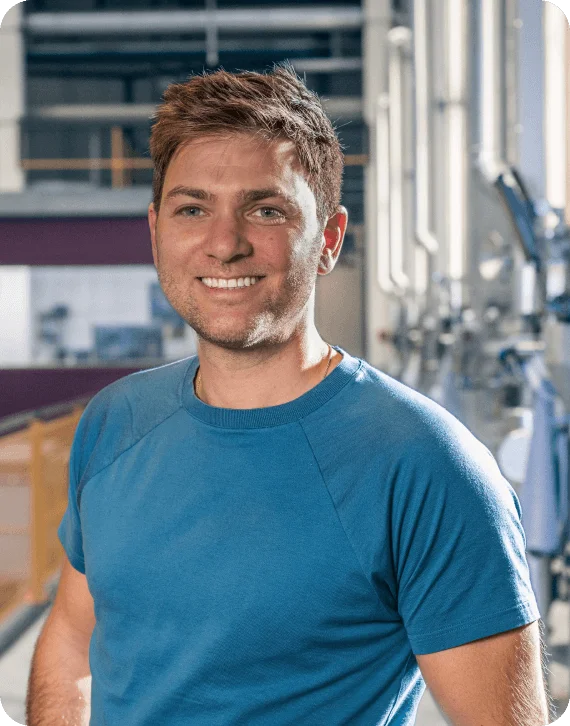
David Brandes, CEO & Co-founder of Planetary, acknowledged the change in tone. “Raising capital outside AI and defense now requires far more focus and resilience than it did just a few years ago,” he said. “Yet, recent geopolitical turmoil and commodity volatility only strengthen the case for a sovereign, circular, and high-quality food system: stay the course and hold the line, nothing worth building comes easy.”
He pointed to broader data showing that AI has absorbed 50-60% of global venture capital funding, with defense taking another 5-10%. In that context, Planetary needed to demonstrate capabilities that went beyond early-stage technology development.
According to Brandes, the company had to prove “full stack” execution, from industrial bioprocess development to production infrastructure and product distribution, supported by operational data rather than projections.
At the core of Planetary’s model is a licensing strategy aimed at large agro-industrial players, particularly in sugar production. While licensing is often presented as a scalable route to growth, Brandes described a more measured process shaped by industry behavior.
“The agro-industrial complex is an industry based on trust and certainty,” he said. “Actors seldomly take first mover approaches and need to see tech and market proof before taking risks.”
Commodity cycles, he added, play a significant role in determining when partners are willing to invest. “Additionally, commodity market cycles heavily affect the investment capacity of our partners,” he said. “Patience is key and the long-lasting relationships formed and maintained over the last years are starting to convert.”
The company’s proposition centers on enabling these partners to extract more value from existing operations. By converting low-value side streams into proteins, fibers, and enzymes, Planetary is aiming to integrate fermentation into established agricultural systems rather than replacing them.
This integration has already reached the consumer market. Planetary launched a mycoprotein filet through ALDI Suisse at price parity with conventional products, marking a step from industrial production into retail distribution.
That transition, Brandes said, revealed challenges that are less visible at earlier stages. “We are learning the hard truths of cash flow management: Working capital deployment paired with revenue recognition are metrics most early-stage business models don’t capture.”
Alongside retail expansion, the company has outlined ambitions to further reduce production costs. Planetary has highlighted the potential to produce mycoprotein below US$1 per kilogram in certain geographies, though achieving that level depends on several location-specific factors.
Brandes identified energy, feedstock availability, and market access as the main cost drivers. In regions such as Brazil, sugar producers can generate electricity from bagasse, reducing energy costs. Large-scale sugar production and favorable crop yields also lower feedstock costs, while proximity to end markets reduces distribution expenses and spoilage.
The company is now expanding into regions such as India, where these dynamics differ significantly from Europe. Brandes described a shift in priorities when entering these markets.
“In certain markets, the optimization function flips,” he said. “In Europe, sugar is relatively expensive, protein supply is established and spending capacity is solid, so the design of products centers around application innovation.”
“In India for example, sucrose availability is ubiquitous, while protein availability and consumer spending are constrained,” he added. “Products in scope are highly nutritious protein and fibre powders and fortifiers driving nutritional density at low cost.”
While these markets present operational challenges, they also offer the potential for larger-scale impact if production costs can be reduced sufficiently.
Planetary’s investor base includes several established players in agriculture and food, raising questions about how strategic priorities are aligned. Brandes indicated that alignment has been a central factor in the company’s development.
“They are invested because of, not despite of strategic alignment,” he said.
As fermentation attracts increasing attention, both in precision and biomass approaches, Brandes pointed to a set of recurring challenges that he believes are separating companies that scale from those that stall.
“The industrial bioprocess is core competency. It can not be developed out-of-house and then tech-transferred in,” he said, noting that reliance on multiple external partners has contributed to failures in the sector.
He also highlighted the importance of securing access to production infrastructure. “The production infrastructure needs to be owned or co-owned or at least exclusively accessible,” he said, arguing that contract manufacturing is not viable for bulk fermented commodities due to cost constraints.
Attempts to retrofit existing equipment, he added, often fail to deliver expected savings. “Another element which we see critically is the retrofitting of existing equipment for upstream processing, which rarely works, does not save substantial capex and usually drives up COGS, arguably the most important metric.”
Finally, Brandes emphasized the need for companies to control how products are brought to market. Direct involvement in commercialization, he said, helps align capital deployment with revenue generation and reduces delays.
Planetary is already operating industrial-scale production in Aarberg, Switzerland, and is expanding its commercial pipeline through both product launches and licensing agreements. Under its Libre brand, the company is rolling out applications across alternative meat and dairy, hybrid products, fiber-rich foods, and protein fortification.
With the new funding in place, Planetary is focusing on scaling both its infrastructure and its licensing network, while continuing to develop partnerships in regions with strong feedstock availability.
The company will selectively engage with mission-aligned investors interested in participating in a second closing of the round, planned for later this summer, as it continues to build out what it sees as the industrial backbone for fermentation-based food production.

Join Us At One Of Our Upcoming Events

If you have any questions or would like to get in touch with us, please email info@futureofproteinproduction.com


