

Planet Green enters China lactoferrin market as demand is forecast to exceed US$100 million by 2030

Planet Green Holdings has entered commercial operations to source, market and distribute lactoferrin, expanding into a high-value bioactive ingredient market that the company expects to exceed US$100 million annually in China by 2030.
• Planet Green has begun commercial lactoferrin operations, adding the bioactive ingredient to a consumer products business spanning health and nutrition applications.
• The company estimated that China represented around 22% of current global lactoferrin demand and imported nearly all of its supply.
• Planet Green identified precision fermentation as an emerging production route that could improve scalability and consistency compared with conventional extraction from bovine milk.
Planet Green, headquartered in Flushing, New York, and operating through subsidiaries in mainland China and Canada, already uses lactoferrin in its chewable immune tablets. The ingredient is also widely used across infant formula, sports nutrition, dietary supplements and immune-support products.
The company estimated current annual global demand for lactoferrin at approximately US$300 million, with China accounting for around 22% of the market. Based on an estimated annual growth rate of approximately 9%, Planet Green expected annual sales to surpass US$100 million in China and US$500 million globally by 2030.
China currently imports nearly all of its lactoferrin because of limited domestic production capabilities, according to Planet Green, creating an opportunity for suppliers able to secure consistent access to high-quality material.
“Lactoferrin is a crucial glycoprotein that is part of your body’s immune response and is the hero ingredient in our chewable immune tablets,” said Zhou Bin, Chief Executive Officer of Planet Green Holdings. “With our rapidly growing market share and consumer adoption, gaining access to this critical ingredient should only enhance our market position going forward.”
Commercial lactoferrin has traditionally been extracted from bovine milk, particularly whey or skim milk, using processes including membrane filtration and ion-exchange chromatography.
Its relatively low concentration in milk means substantial volumes of raw material are required to recover the protein, contributing to high production costs and supply constraints.
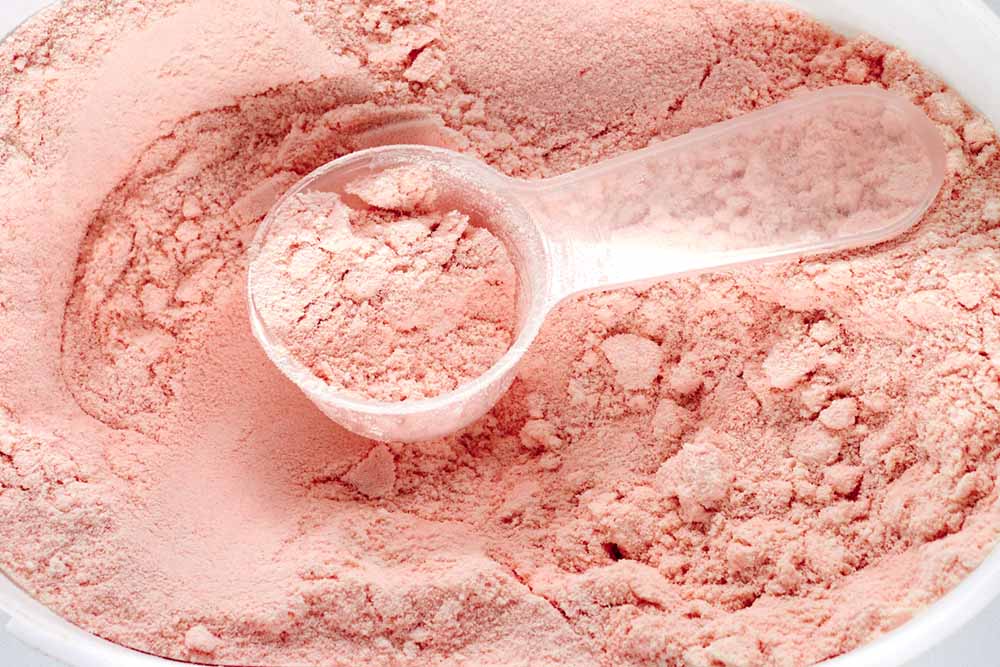
“Lactoferrin is obtained from mammalian milk, and has been dubbed ‘Pink Gold,’ not only due to its pale pink hue, but also because of its extremely high commercial value,” Zhou said. “Extracting lactoferrin from cow’s milk is a complex and costly process, and the low yield and high demand make it a valuable and sought after bioactive ingredient.”
Precision fermentation has emerged as another potential production route. Genetically engineered microorganisms such as yeast or fungi can be programmed to produce recombinant lactoferrin in fermentation vessels, reducing reliance on the quantities naturally present in bovine milk.
Planet Green identified scalability, consistency and potentially lower production costs among the advantages of the technology, while noting that commercial adoption remained relatively early.
The company did not disclose the source of the lactoferrin it will distribute or specify whether its supply will be bovine-derived or produced through precision fermentation.
Planet Green expected high-quality lactoferrin to continue attracting premium pricing because of constrained supply and the complexity of its production.
“We use pure lactoferrin which is unavailable in China for most of manufacturers and is expected to command a premium due to its high-quality,” Zhou said. “With a large market growing quickly to well over US$100 million addressable market, we see this as attracting and compelling business opportunity for many years to come.”
Alongside the commercial launch, Planet Green plans to appoint a Chief Scientist to its executive team to identify potential scientific investments, joint ventures and product opportunities.
The company has identified a leading candidate at a US academic institution and reported that discussions were at an advanced stage. The appointment is expected to support decisions around scientific initiatives and the expansion of Planet Green’s product portfolio and revenue-generating activities.
For Planet Green, the immediate opportunity is China, where its existing consumer products operations provide a route into a market that remains heavily reliant on imported lactoferrin. Its move also comes as different production technologies compete to address the supply limitations surrounding one of nutrition’s highest-value functional proteins.
If you liked this, check these out...
• Novonesis joins forces with TurtleTree to bring precision-fermented lactoferrin to global markets
• All G secures FDA ‘no questions’ letter under GRAS for precision-fermented lactoferrin in US
• Vivici strikes gold with US debut of precision-fermented lactoferrin

Join Us At One Of Our Upcoming Events

If you have any questions or would like to get in touch with us, please email info@futureofproteinproduction.com


%20-%20Photo%20Credit%20Matt%20Qu%C3%A9r%C3%A9e.jpg)

