Perceived ‘naturalness’ shapes public support for cultivated meat and other climate technologies

Whether a technology feels 'natural' can strongly influence public support for climate solutions, according to new research from the University of Colorado Boulder that could have implications for the communication and development of technologies including cultivated meat.
• Researchers surveyed 1,000 US adults and found perceived naturalness predicted support for climate technologies beyond factors including perceived risks, benefits, familiarity and understanding.
• Describing engineered technologies through comparisons with natural processes increased support, with the effect observed across the technologies examined.
• Previous research by lead author Sarah Gonzalez-Coffin found cultivated meat was generally perceived as too unnatural to attract widespread support despite its potential environmental benefits.
The findings, published in Communications Earth & Environment, examined a familiar problem for developers of emerging technologies: technical effectiveness does not necessarily translate into public acceptance.
“We found that naturalness predicts support over and above a lot of other things you might think matter, like risk and benefit perceptions or how much people understand the technology,” said first author Sarah Gonzalez-Coffin, who completed her doctorate in social psychology at CU Boulder in May.
People tend to consider something natural when it involves minimal human intervention, comes from the natural environment or is culturally familiar, according to the researchers.
That preference has already surfaced in research around food.
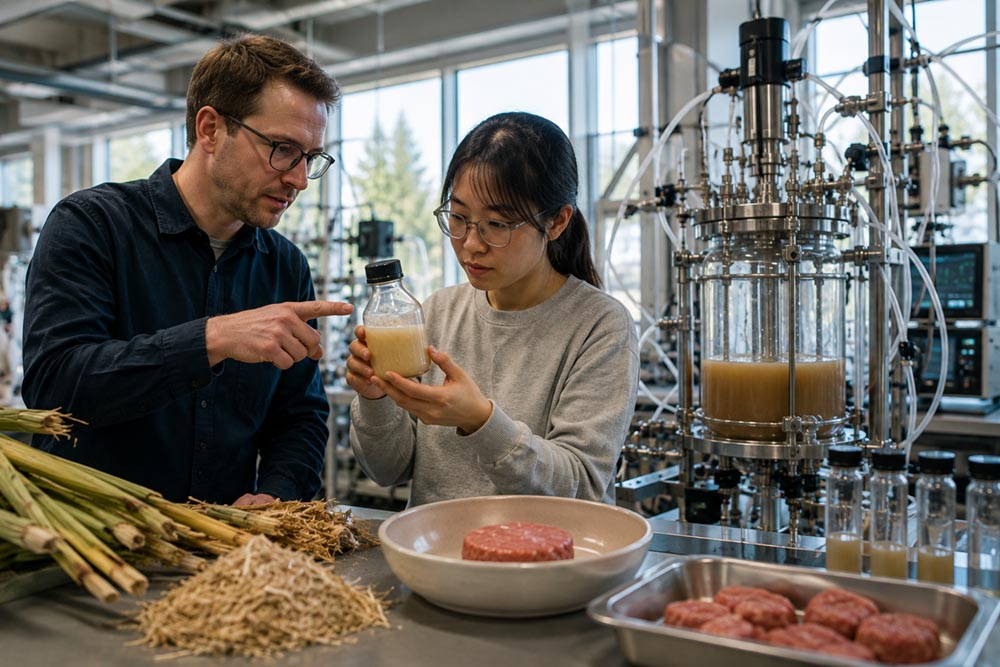
Gonzalez-Coffin's previous work found that beef grown in a bioreactor was generally considered too unnatural to support, despite its potential environmental benefits.
The new study tested whether the same response extended to a wider group of climate technologies.
Researchers surveyed 1,000 US adults about 10 approaches to reducing or removing atmospheric carbon. These included afforestation, direct-air carbon capture, nuclear energy, wind and solar power.
Participants were asked whether they would support using tax dollars to deploy each technology at scale.
Perceived naturalness predicted support even after the researchers accounted for perceived risks and benefits, fear, familiarity and understanding.
The relationship was also found across political parties.
“That is a rare point of convergence, especially in the realm of climate change, where support for solutions can be incredibly polarized,” said Gonzalez-Coffin, now a postdoctoral research associate at the University of Arizona's Lovejoy Center for Bridging Biodiversity, Conservation Science & Policy.
A second study tested whether changing the description of a technology could alter that response.
The researchers described direct-air carbon capture, for example, as mimicking a natural process in a similar way to plants drawing carbon dioxide from the atmosphere through their leaves.
Support increased when technologies were described using such comparisons.
“We sometimes assume that if we can just develop solutions to address climate change, the public will say, ‘OK. Let’s use them,’” said senior author Leaf Van Boven, Professor of Psychology at CU Boulder. “Our study shows that often it is not the technology itself, but the way we communicate about it that shapes public response.”
For cultivated meat developers, perceptions of naturalness have long presented a communication problem.
The production process requires animal cells to be cultivated in controlled environments such as bioreactors, introducing terminology and equipment unfamiliar to many consumers. Gonzalez-Coffin's earlier research examined how those perceptions affected acceptance of cultivated meat as a potential climate intervention.
“We ask ourselves all the time: Is this natural? And we have a deep aversion to things that are artificial,” Van Boven said, adding that the tendency had been observed across genders and among urban and rural populations. “It’s part of being human.”
The researchers cautioned against using the findings to make technologies appear more natural than they actually are.
Naturalness has long been used as a marketing device, including by tobacco companies promoting cigarettes as natural, organic or additive-free. Nature-based language and imagery have also been used to market products with questionable environmental credentials.
Gonzalez-Coffin said the findings should not be interpreted as an argument for greenwashing.
Instead, communicators could identify genuine links between technologies and natural systems. The researchers cited wind turbine blades inspired by humpback whale fins as one example.
Naturalness could also be considered earlier in technology development and investment decisions, particularly where public acceptance is likely to determine whether a technically viable solution reaches widespread use.
For food technologies, that creates a difficult balance. Precision fermentation, cultivated meat and other emerging production methods depend on processes that can be unfamiliar to consumers, even when their outputs reproduce proteins, fats or tissues already found in conventional food.
The research did not test whether describing cultivated meat or other alternative protein technologies in more natural terms would increase consumer acceptance. Its communication experiment focused on the climate technologies included in the new study.
It did, however, identify perceived naturalness as a factor capable of influencing attitudes independently of people's assessment of a technology's risks and benefits.
“If we want to solve climate change, we are going to have to figure out how to accept a broad range of technology solutions,” Van Boven said. “And right now, we are resistant to anything that seems remotely artificial.”
For Gonzalez-Coffin, engineering alone could not resolve that resistance.
“We have incredible engineers and others working on developing technological solutions to climate change; the gridlock that we're running into is largely social,” she said. “Our work brings that missing social component to illuminate the underlying psychology behind this gridlock.”
If you liked this, check these out...
• FSA publishes new guidance to help cell-cultivated food companies navigate UK approval process
• PARIMA and Vow's 22,000L breakthrough signals cultivated meat's next commercial chapter
• PluriCells founder Ramiro Alberio highlights how academic partnerships drove cultivated meat commercialization

Join Us At One Of Our Upcoming Events

If you have any questions or would like to get in touch with us, please email info@futureofproteinproduction.com

More News