


Penn researchers outline roadmap for fermented foods to support precision nutrition

Fermented plant-based foods such as kimchi and sauerkraut could help shape a new generation of precision nutrition strategies designed to support oral and gut health, according to a new review led by researchers at the University of Pennsylvania School of Dental Medicine.
Published in Nature Reviews Microbiology, the paper examines how fermented foods interact with the microorganisms that live in the mouth and gut. The authors argue that plant-based fermented foods offer unique opportunities because they contain diverse communities of live microbes, microbial metabolites, fiber-rich food structures, and plant-derived bioactive compounds.
• University of Pennsylvania researchers reviewed how fermented plant-based foods interact with oral and gut microbiomes.
• The paper proposed a roadmap for developing microbiome-based precision nutrition strategies using fermented foods.
• Researchers highlighted the potential advantages of solid plant-based fermented foods over liquid probiotic products.
The review was led by investigators from Penn Dental Medicine in collaboration with researchers from Penn Medicine, Penn Nursing, and Jeonbuk National University in South Korea.
Rather than focusing solely on probiotic supplements or dairy-based products such as yogurt, the researchers explored the potential of fermented plant-based foods to influence the microbiome in ways that could benefit human health.
"Fermented plant-based foods carry diverse microbial populations along with their metabolites, and in principle could be tailored to support oral and gastrointestinal health," said Hyun Koo, professor in the departments of endodontics and bioengineering and co-founding director of the Center for Innovation & Precision Dentistry at Penn Dental Medicine.
The review notes that yogurt and other liquid probiotics are already widely consumed to help modify the gut microbiome and support digestion. However, the authors suggest that solid, plant-based fermented foods may provide additional advantages because of both their physical structure and their naturally occurring plant compounds.
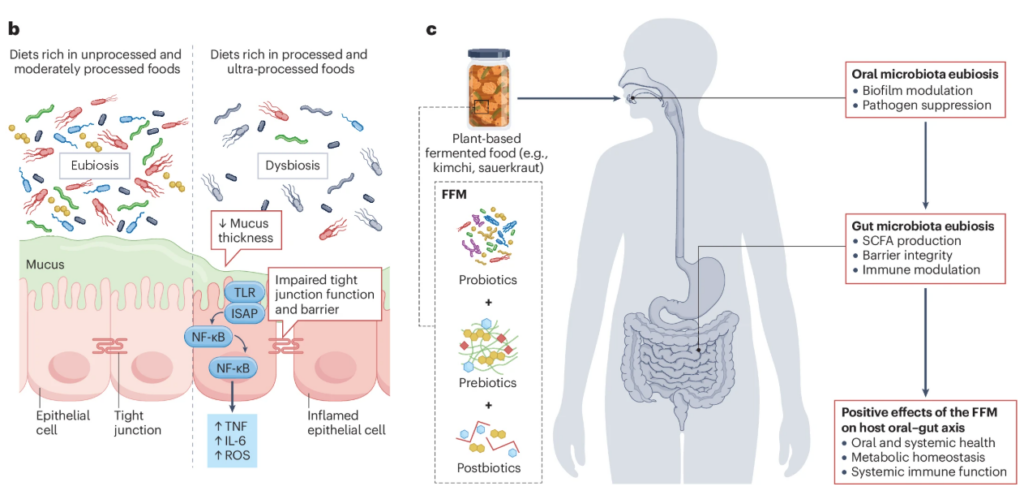
"Plant-based fermented foods may have an advantage not only in their efficiency of delivering microbes to the host but also by providing unique benefits via bioactive phytochemicals that have been shown to promote human health," said Gary Wu, the Ferdinand G. Weisbrod Professor in Gastroenterology at the Perelman School of Medicine.
The researchers also highlighted the role of the food matrix itself. Unlike isolated probiotic supplements, fermented vegetables and other plant-based products combine living microorganisms with dietary fiber and naturally occurring phytochemicals, potentially creating multiple mechanisms through which they interact with the microbiome.
To help translate these concepts into practical nutrition strategies, the review proposes several priorities for future research. These include developing more comprehensive databases of the microorganisms present in fermented foods, using advanced analytical tools to identify microbial strains and metabolites, and designing plant-based fermented products with defined microbial and chemical characteristics.
The authors suggest that these advances could eventually enable microbiome-informed precision nutrition approaches, where fermented foods are tailored to individual health needs and microbial profiles.
Alongside Koo and Wu, the project included Charlene Compher, professor of nutrition science at Penn Nursing, and collaborators from Jeonbuk National University.
If you liked this, check these out...
• Pea protein processing method shapes gut microbiota response, University of Parma study finds
• Danone North America champions gut-brain research with new fellowships for Vanderbilt and Rice students
• CarobWay unveils CarobBiome prebiotic fiber to target gut health and GLP-1 diet trends

Join Us At One Of Our Upcoming Events

If you have any questions or would like to get in touch with us, please email info@futureofproteinproduction.com


