


Palmetto Superfoods adds leaf protein to menu with Leaft Foods smoothie launch

Palmetto Superfoods has become the first food-service operator in the USA to add commercially available Rubisco protein to its menu, launching a new smoothie made with Leaft Foods’ Blade ingredient across its Bay Area locations.
• Palmetto Superfoods launched a smoothie containing Leaft Blade, a Rubisco protein extracted from green alfalfa leaves.
• The rollout marked the first commercial US foodservice use of leaf-derived Rubisco protein.
• Leaft Foods said recent breakthroughs in protein isolation and integrated processing made Rubisco commercially viable at scale.
The Blade Smoothie launch placed leaf-derived protein into a live food-service environment, moving Rubisco beyond research, pilot projects, and ingredient demonstrations. For Leaft Foods, the rollout represented a practical test of whether a protein long discussed in academic and sustainability circles could function in a real menu setting, at volume, and with consistent performance.
Rubisco, the enzyme that drives photosynthesis in green plants, has often been cited as the most abundant protein on Earth. Despite that abundance, commercial applications have remained limited. According to Maury Leyland-Penno, Co-founder, Leaft Foods, the barrier was not awareness of Rubisco’s nutritional potential, but the difficulty of extracting it intact and at scale.
“Five to 10 years ago, no one had successfully isolated Rubisco from green leaves at scale without damaging the protein. It is an extremely delicate and technically challenging process,” Leyland-Penno said. “What changed is that we solved that isolation step while also building an integrated system that adds value to every part of the leaf.”
Rather than focusing solely on protein extraction, Leaft built a system designed to utilize the full leaf biomass. Leyland-Penno said that approach was critical in turning Rubisco from a scientific curiosity into a commercially viable ingredient.
“By doing both, we've unlocked a highly productive, scalable protein system that produces around 12 times more protein per acre than dairy,” she said. “That combination of technical breakthrough and agricultural efficiency is what finally made Rubisco commercially viable, and ready to be introduced through partners like Palmetto who are committed to natural, functional ingredients.”
The decision to debut Rubisco through food service, rather than remaining ingredient-led or B2B-only, was deliberate. Leaft Foods saw food service as the fastest route to real-world validation, both technically and commercially.
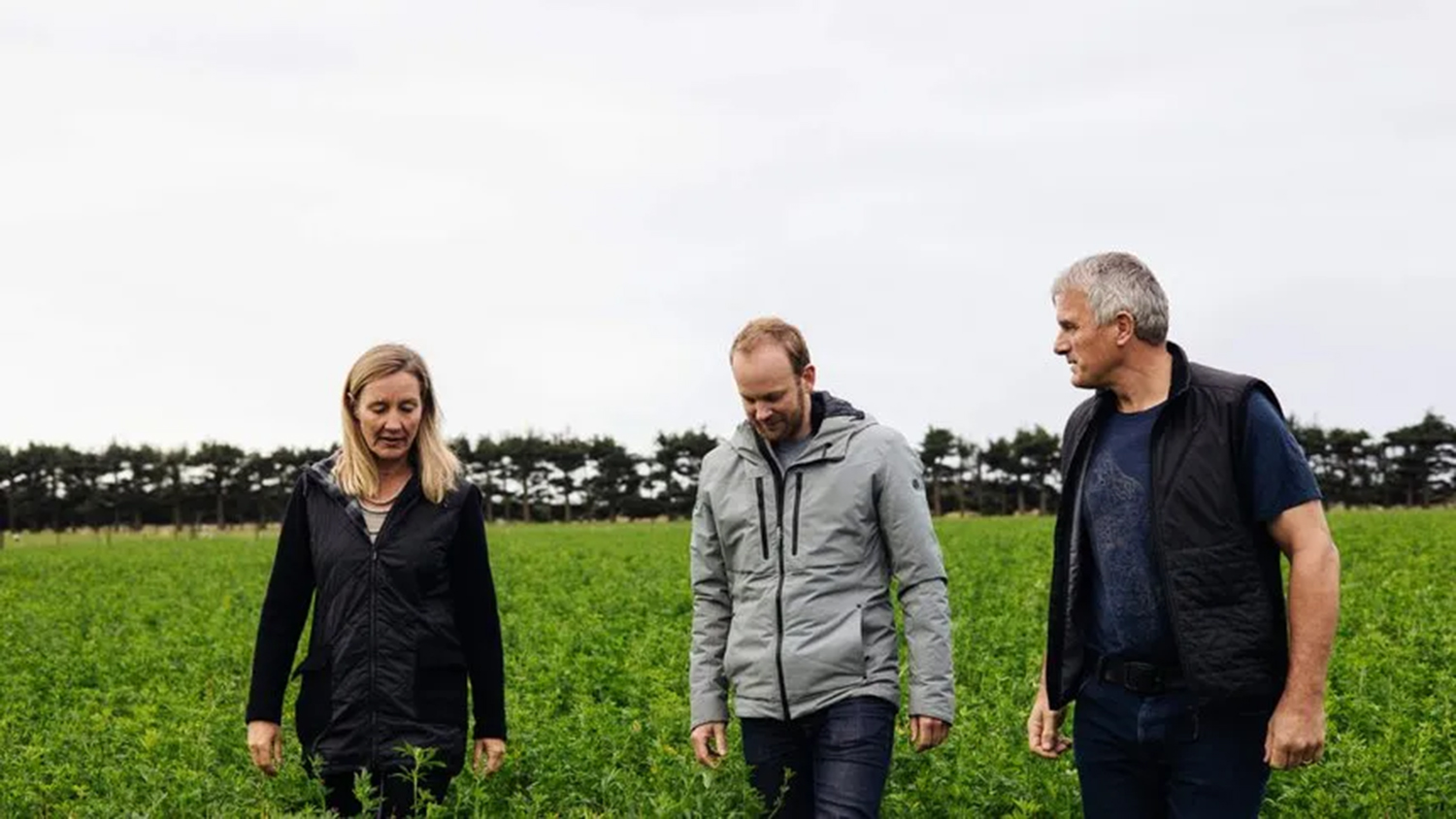
“From the start, we wanted people to experience this protein directly, and foodservice is the fastest way to do that,” Leyland-Penno added. “Palmetto Superfoods was a natural first partner because they have built their brand around sourcing the world’s most nutrient-dense ingredients in their purest forms, with no shortcuts or compromises.”
Palmetto Superfoods opened its first store in San Francisco’s Inner Richmond neighborhood in 2019 and had since grown to 15 locations, with further expansion planned. The chain built its reputation on minimal processing, in-house ingredient development, and a menu centered on functional nutrition.
“Their growth from a single San Francisco store to 15 locations reflects how much consumers trust that philosophy,” Leyland-Penno said. “Launching the Blade Smoothie with Palmetto allows us to introduce Rubisco through a brand already known for genuine functionality, while gathering real-time feedback and building awareness of an entirely new protein category.”
The Blade Smoothie combined Leaft Blade with Japanese Matchacado, tropical spirulina, pineapple, kiwi, avocado, chia seeds, dates, and coconut milk. Each serving contained protein extracted from approximately 50,000 green leaves and retailed for US$13.95.
Behind that finished product sat years of scale-up work that Leyland-Penno described as uneven and at times uncertain. While the company’s lab-scale processes showed early promise, translating those systems into pilot and commercial volumes required repeated redesigns.
“Moving from bench-scale to pilot was by far the hardest stage,” she noted. “We had moments where a process that worked perfectly in the lab simply failed once we scaled it up, which forced us back to the drawing board more than once.”
Those setbacks, she emphasized, ultimately drove the breakthroughs that made commercial production possible. Once pilot scale was achieved, Leaft’s engineering experience began to show.
“Once we reached true pilot scale, our engineers’ experience in building scalable manufacturing systems meant the transition toward commercial volumes went very smoothly, which is what enabled us to support real foodservice launches like Palmetto’s across multiple locations,” Leyland-Penno said.
Beyond manufacturing, Leaft also faced questions about how a leaf-derived protein would perform in finished products and how it should be communicated to consumers. For the company, the challenge was not just functional performance, but clarity.
“We weren’t just launching a new product, we were introducing an entirely new protein category,” Leyland-Penno said. “A major focus internally was how to communicate a fresh natural product that delivers exceptional protein quality alongside naturally occurring nutrients, without overwhelming consumers with complexity.”
Working with Palmetto helped resolve those concerns quickly, she said.

“They already excel at presenting functional ingredients in a way that feels authentic, accessible, and delicious, rather than technical or trend driven,” she said.
From a nutritional standpoint, Leyland-Penno argued that Rubisco is often misunderstood when compared with more familiar plant proteins.
“The most common misconception is that Rubisco behaves like seed proteins such as soy or pea,” she said. “In reality, it is fundamentally different. Seed proteins are designed for long-term storage, while Rubisco is an enzyme central to photosynthesis.”
Because Rubisco has been part of the human diet for as long as green plants have been consumed, Leyland-Penno said its digestibility profile more closely resembles animal proteins than many plant-based alternatives.
“It has existed since the earliest stages of life on Earth, meaning humans and our ancestors have always consumed it,” she said. “Likely as a result, it is recognized and digested and absorbed very rapidly.”
In terms of essential amino acid density, she said Rubisco performed at the top tier.
“When it comes to essential amino acid density, Rubisco performs at the very top tier, on par with and in some cases exceeding traditional animal proteins like whey,” Leyland-Penno said. “This is what makes it such a strong fit for truly functional menus like Palmetto’s.”
Early feedback from previous direct-to-consumer channels also surfaced unexpected performance characteristics. While the Palmetto launch had only just begun, Leyland-Penno said prior customer feedback revealed benefits that warranted closer examination.
“The biggest surprise from prior direct-to-consumer customer feedback was around iron levels,” she said. “People began telling us their iron had improved without changing anything else in their diets.”
Further analysis showed that the iron present in Blade was ferritin-bound, making it significantly more bioavailable than typical plant-based iron sources.
“While we knew Blade contained meaningful iron, we initially expected it to behave like typical plant-based iron with lower absorption,” Leyland-Penno said. “Further analysis showed that ferritin-bound iron is highly bioavailable and far better absorbed than most supplement forms.”
Operationally, scaling a fresh, leaf-based ingredient also introduced new variables that Leaft had to manage closely.
“Working with a fresh, natural product harvested daily also means managing some natural variation linked to factors like sunshine and rainfall,” Leyland-Penno said. “That is something we now actively monitor and adjust for as we support partners like Palmetto across their growing network of stores.”
Looking ahead, Leaft Foods did not position Rubisco as a universal replacement for existing protein sources. Instead, Leyland-Penno described a more targeted role within diversified protein systems.
“We do not see Rubisco as replacing all existing proteins, as the best diets are diverse and nutritionally rich,” she said. “Where Rubisco can make a major impact is in high-performance nutrition, recovery and clinical settings, iron and protein fortification in foods like yoghurt, as a natural and highly functional egg replacement, and as a clean-label ingredient across broader food applications.”
For Leaft, the Palmetto launch provided a concrete reference point as the company looked to scale responsibly.
“This launch has reinforced how powerful high-quality, health-focused foodservice can be as a growth channel,” Leyland-Penno said. “Palmetto Superfoods exemplifies what is possible when a brand is deeply committed to ingredient integrity and functional nutrition.”
With Rubisco now appearing on a US menu, Leaft’s focus shifted toward refining formats that worked operationally and commercially in-store.
“Our focus now is continuing to refine product formats that work seamlessly in-store, deepening these types of partnerships, and scaling responsibly as we expand into new applications and markets,” Leyland-Penno said.

Join Us At One Of Our Upcoming Events

If you have any questions or would like to get in touch with us, please email info@futureofproteinproduction.com


