Paleo secures fresh funding after cutting myoglobin production costs 613-fold

Belgian precision fermentation company Paleo has secured additional funding led by Beyond Impact VC, with Hermes Sanctorum, CEO & Co-Founder, revealing that the company has reduced production costs for its animal-free myoglobin by a factor of 613 over the past two years.
• Paleo secured additional funding led by Beyond Impact VC to support regulatory submissions and strategic collaborations with commercial partners.
• The Belgian company said it had reduced production costs 613-fold over two years and demonstrated production of its myoglobin at large scale.
• Paleo uses precision fermentation to produce animal-free myoglobin for meat and fish alternatives, targeting improvements in taste, color, aroma, and nutrition.
The financing comes as Paleo moves its precision-fermented myoglobin technology toward regulatory approval and commercialization following several years of development and scale-up work.
Sanctorum disclosed the investment in a LinkedIn update, although the size of the round was not announced. Beyond Impact VC, an existing Paleo investor, led the financing.
“It’s been a while since I posted here. We’ve been working below the radar on securing additional funding for Paleo – and I’m happy to share that we succeeded,” Sanctorum wrote.
“Our priorities are clear: advance our regulatory submissions and deepen strategic collaborations with commercial partners.”
The new financing follows a difficult period for the wider alternative protein sector and for Paleo itself. In October 2025, the company announced a restructuring and refocusing of its operations amid challenging market and financing conditions.
Sanctorum said the company had continued to make technical progress during that period, including what he described as a 613-fold reduction in production costs over two years and successful production at large scale. Paleo has not disclosed further details on the resulting production cost, fermentation volumes or other scale-up metrics.
Founded in 2020, Paleo uses precision fermentation to produce myoglobin corresponding to proteins naturally present in beef, pork, chicken, lamb and fish. Its process is designed so that the final ingredient is free of GMO.
Myoglobin contributes to the color, flavor and aroma of meat and is also a source of heme iron. Paleo's technology is intended to reproduce those properties in plant-based and other alternative protein products.
“Myoglobin is not just a random molecule,” Sanctorum told Protein Production Technology International in an earlier interview. “It contributes to meat’s natural appearance, helps develop characteristic aromas and taste during cooking, and is a source of bioavailable iron.”
When incorporated into plant-based meat, Paleo's myoglobin gives the uncooked product a red appearance before browning during cooking and contributes to reactions associated with grilled and metallic meat flavors.
The ingredient is typically used at less than 1% of the finished product by weight, according to Paleo, potentially giving it an economic advantage over functional proteins that need to be incorporated at substantially higher concentrations.
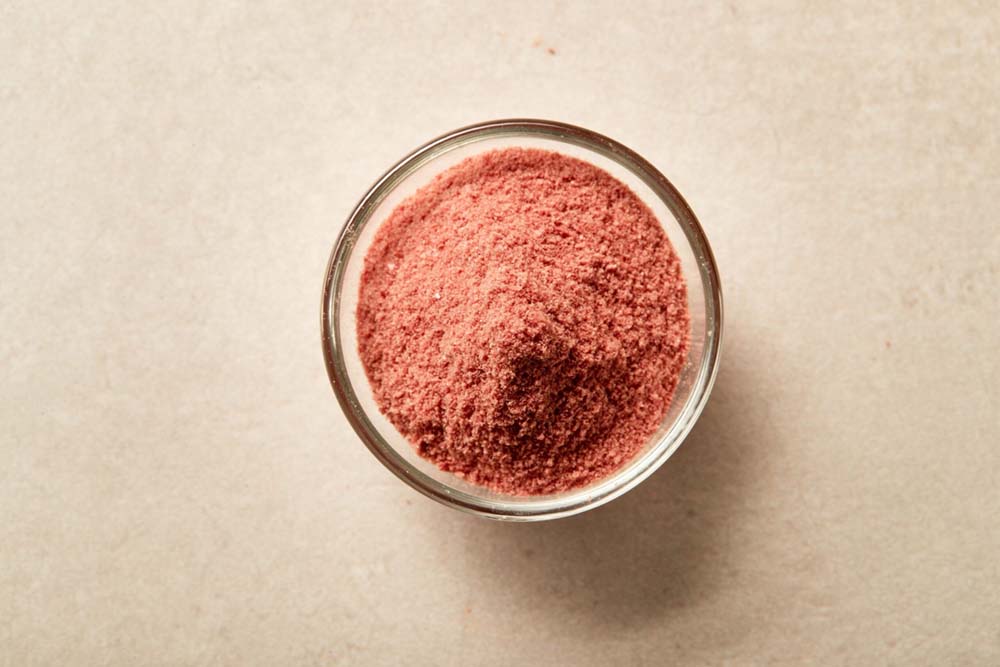
Paleo has also moved from an initially liquid ingredient to a powdered format. Chief Business Officer Pierre Donck previously told PPTI that the change improved stability, handling and formulation flexibility while eliminating the need for costly cold-chain logistics.
Paleo has been conducting trials with food industry partners since late 2024, working with manufacturers, formulators, distributors, universities and research institutes.
One publicly announced collaboration is with Austrian food-tech company Revo Foods. Paleo has also reported promising results in beef and pork alternatives as well as salmon and tuna applications.
Consumer research commissioned by the company in the USA, Germany and the UK identified recreating the conventional meat experience as a primary consideration for consumers of plant-based alternatives, alongside nutrition.
The latest funding will now help Paleo deepen such commercial relationships while pursuing regulatory approvals in multiple markets.
Regulation has previously been identified by Sanctorum as one of the company's biggest obstacles to commercialization, particularly in Europe.
“Every day in a biotech company brings new hurdles, but you solve them,” he told PPTI. “The real black box is regulation.”
Paleo has been preparing submissions across multiple jurisdictions, with Sanctorum previously pointing to North America and Southeast Asia as offering clearer regulatory pathways while maintaining Europe as an important prospective market.
The company opened a new R&D center in Leuven in February 2024, expanding its laboratory footprint to more than 500m² as it prepared for scale-up and commercialization. It also established an office in Singapore as part of its expansion into Asia.
Paleo raised €12 million in 2023 from investors including DSM Venturing, Planet A Ventures, Gimv, SFPIM Relaunch, Beyond Impact and Siddhi Capital.
Despite the difficult financing environment that followed, Sanctorum said the latest investment reflected continued confidence in the company's technology.
“With Paleo’s myoglobin, we can make the best meat alternatives in the world,” he wrote. “Burgers, sausages, gyros, dumplings, whole-cuts... That is why we keep going.”
If you liked this, check these out...
• Precision-fermentation startup Paleo officially inaugurates its new R&D Center in Leuven
• Dyadic expands precision-fermented dairy pipeline with new European biotech licensing agreement
• Penn researchers outline roadmap for fermented foods to support precision nutrition

Join Us At One Of Our Upcoming Events

If you have any questions or would like to get in touch with us, please email info@futureofproteinproduction.com

More News