

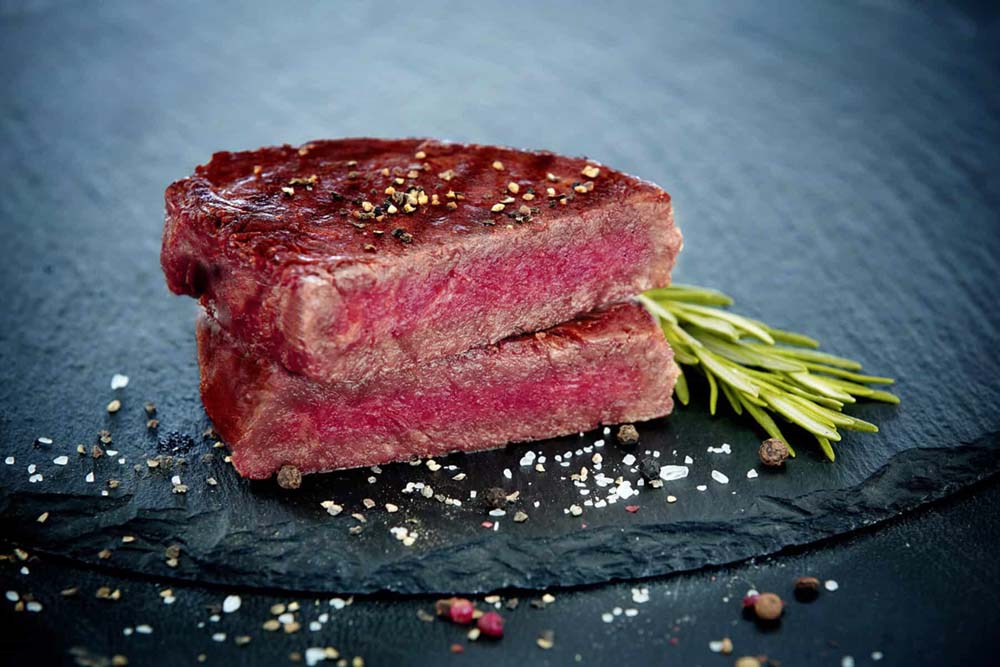
Offbeast turns plant-based steak technology into 50:50 hybrid whole cuts

Food-tech company Offbeast has adapted technology originally developed for plant-based steaks to produce 50:50 beef and plant-based whole cuts, as it seeks partnerships with major meat processors to commercialize the platform.
• Offbeast developed beef tips containing 50% beef and 50% plant-based ingredients, using its Whole Cut Engineering process to create a continuous, muscle-like fiber structure.
• The company said 16 of 20 industry testers could not distinguish its blended beef tips from conventional meat, with particularly strong feedback on texture.
• Offbeast estimated the process could increase meat producer margins by 200–400%, while cutting the product’s climate impact by more than half compared with conventional meat.
The process takes unstructured, relatively low-value meat inputs, including ground meat or fat, combines them with Offbeast’s plant protein, and restructures the mixture into aligned fibers resembling the architecture of a conventional whole cut.
The plant component performs two functions, acting as both an extender and binder between the meat fibers. Unlike established hybrid products such as burgers and sausages, Offbeast said this allowed manufacturers to produce formats including beef tips, strips, chops and steaks.
The technology originated with the company’s efforts to make convincing plant-based whole cuts. Offbeast, previously known as Mooji Meats, was founded in 2022 by German entrepreneurs Insa Mohr and Felix J. Strobl, with technology originating from research at Harvard University. The startup participated in Y Combinator’s Winter 2022 cohort and subsequently developed and commercialized plant-based steak products.
The move into blended meat followed conversations with conventional meat companies about whether the same technology could create whole cuts from their lower-value raw materials.
“When few years ago one of the world's largest meat producers asked me whether our process could make whole cuts out of their byproducts I thought this question was absurd and almost offensive,” Offbeast Co-founder & CEO Insa Mohr said.
Mohr said the company had previously expected consumers to migrate toward alternative proteins once products reached sufficient parity with conventional meat on taste, texture and nutrition. Its experience since then had led it to place greater emphasis on existing eating habits and the economics facing food manufacturers.
“Our answer: make a meat cut that eats like any other whole cut and carries the same protein, but is 200-400% more profitable to meat producers and has less than half the climate impact,” she said.
Offbeast said its process had already been implemented at production scale, with capacity of up to three metric tons per shift, and was designed to work with conventional industrial meat-processing equipment rather than requiring manufacturers to install entirely new production infrastructure.
The company reported encouraging results from early testing with meat-industry participants. Sixteen of 20 testers rated the 50:50 beef tips as indistinguishable from conventional meat, according to Offbeast, with texture performing particularly strongly.
Although steak has provided a showcase for the technology, Mohr said the company saw greater commercial potential in products such as tips and chops.
Economics are central to Offbeast’s pitch to meat processors. Rather than using plant ingredients simply to extend ground meat, the company is proposing that manufacturers use lower-cost meat and plant inputs to manufacture products that can be sold as higher-value whole cuts.
“With a blended burger, inexpensive meat and inexpensive plant ingredients are combined to create another relatively inexpensive product,” Mohr said. “Our technology is different because it can turn those same low-cost inputs into a significantly higher-value whole-cut product.”
According to Offbeast’s calculations, the resulting economics could lift typical beef margins by around 200-400% while still enabling manufacturers to offer the finished product at a lower consumer price. Protein content can remain unchanged despite replacing half the meat with plant ingredients, the company said.
The process can also be applied to pork and potentially other meats, widening its relevance beyond beef.
Offbeast’s move comes as hybrid meat products receive renewed attention from European retailers and manufacturers. Retailers including Lidl, Colruyt and Albert Heijn have tested products combining meat with plant-based ingredients, although most commercial activity to date has centered on minced, ground or emulsified formats.
Mohr has compared the opportunity with surimi, where lower-value fish is restructured with additional ingredients into higher-value seafood products. Meat processors have similarly used extenders in sausages and other processed products for decades, but Offbeast is attempting to apply that economic principle to whole cuts.
For Offbeast, the proposition also offers a different route to reducing conventional meat consumption: rather than relying entirely on consumers choosing an alternative, plant protein can be incorporated directly into products that retain meat.
The company is now in discussions with large meat producers over technology partnerships, with the aim of using their existing manufacturing capabilities and distribution networks to bring blended whole cuts to market.
If you liked this, check these out...
• Meatless survey finds UK consumers open to hybrid meat when taste and protein deliver
• ACI Group’s Briony Sayers on hybrid meat: Why partial substitution could scale sustainable protein faster than replacement
• Planteneers and Hydrosol target hybrid meat market with cost-focused product concepts

Join Us At One Of Our Upcoming Events

If you have any questions or would like to get in touch with us, please email info@futureofproteinproduction.com


