


Ministry of Future Affairs opens New Foods RegLab to tackle recurring EU application problems

Companies preparing EU novel-food applications are being invited to join a new program examining why regulatory submissions get held up and what applicants need to understand before they file them.
• The Ministry of Future Affairs has launched the New Foods RegLab to identify recurring difficulties in preparing EU novel-food applications.
• Up to 10 non-competing companies will join a two-day Brussels workshop in January 2027, with anonymized findings shared with EFSA and the European Commission.
• Applications close on November 30, 2026. EU and overseas companies, including UK businesses, are eligible.
The Ministry of Future Affairs has launched the New Foods RegLab with Atova Regulatory Consulting, recruiting up to 10 non-competing companies for a two-day workshop in Brussels in January 2027. Participants will work through questions about their own regulatory strategies, while the organizers collect evidence on difficulties that recur across different products and businesses.
Anonymized findings will be shared with the European Food Safety Authority (EFSA) and European Commission to inform recommendations for future pre-submission advice. Applications close on November 30, 2026, and are open to companies both inside and outside the EU.
The project addresses a practical difficulty in novel-food development. Scientific and administrative guidance sets out what applicants must provide, but applying those requirements to a particular ingredient, production process or proposed use can leave companies with questions they struggle to resolve before submission. Those questions can become expensive once an assessment is underway and further information or studies are requested.
The Ministry’s accompanying paper, Building on Draghi: Regulatory Learning With The New Foods RegLab, argues that too much of the knowledge gained from navigating this process remains with individual applicants, consultants or national authorities. Other companies then encounter the same problems without benefiting from that experience.
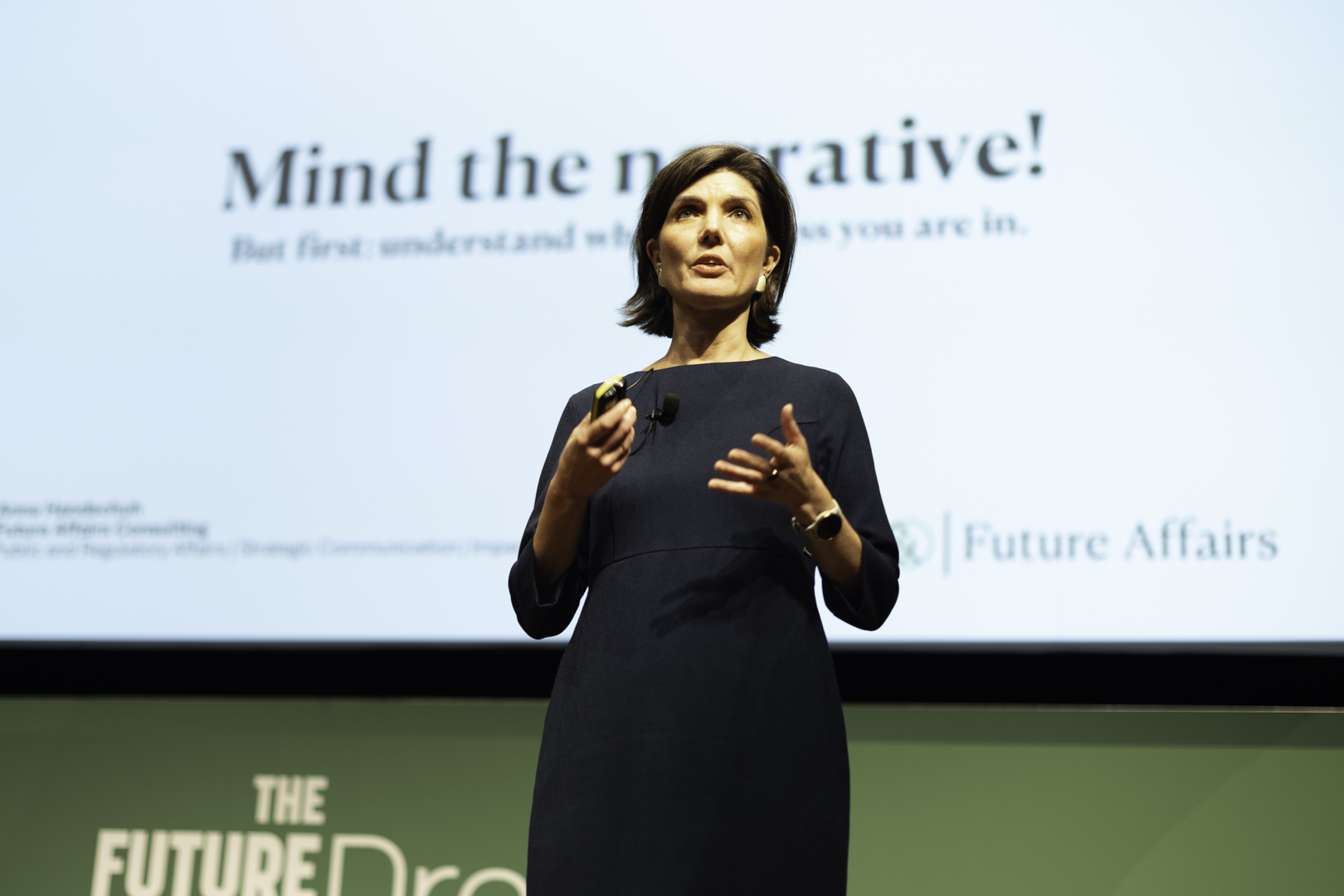
“The EU wants to introduce a much broader pre-submission advice for novel-food applicants. However this would only help one applicant at a time,” said Anna Handschuh, Founder and Managing Director of the Ministry of Future Affairs. “Shared cross-border learning platforms as enhanced collaboration mechanisms can inform a whole system and support food safety, competitiveness, and strategic autonomy.”
The Ministry wants the RegLab to establish where applicants have difficulty interpreting guidance and what support would have helped them prepare a stronger submission. Companies taking part will examine their regulatory positions, identify gaps and consider the work they need to do next.
The organizers will use those discussions to identify questions shared by applicants across product categories. Their recommendations could include areas where clearer explanations, practical examples or more targeted regulatory engagement would help companies understand what is expected.
Atova will lead the workshop, drawing on regulatory experts with more than 15 years of experience taking novel-food dossiers through the EU authorization procedure. The program will also include a policy session on the development of pre-submission advice in the context of Biotech Acts I and II.
Companies do not need a complete EU dossier or a fully developed regulatory strategy to apply. The cohort is intended to include businesses of different sizes and at different stages of preparation, including companies that have secured authorization elsewhere and are now considering EU entry.
Direct competitors will not be selected together. Discussions will operate under the Chatham House Rule, and findings passed to EFSA and the Commission will be anonymized.
UK companies are being encouraged to participate. Handschuh said experience from the UK’s cultivated-meat regulatory sandbox could make a useful contribution to the European project.
“The UK's regulatory sandbox for cultivated meat has shown very well how regulatory learning should be organised to enable the regulator to keep pace with scientific development and thereby guarantee high food-safety standards,” she said.
The New Foods RegLab itself is a regulatory learning platform, rather than a sandbox. It will not authorize products or provide a separate route to market. Its work concerns applicants’ understanding of the existing process and how that understanding could be improved before dossiers reach assessors.
The distinction is explicit in the policy paper, which presents the project as a way to improve submissions while retaining existing safety requirements. The Ministry also suggests that the experience could help inform the development of a food-and-biotech regulatory sandbox in the future.
The paper draws on research documenting the time taken to assess EU novel-food applications. An independent analysis of 292 applications submitted to EFSA between 2018 and 2024 found an average of approximately 31 months to a published scientific opinion. Individual cases ranged from around 11 months to more than six years.
Those figures measure time to an EFSA opinion, rather than complete market authorization. The Commission’s decision phase follows the scientific assessment. The paper compares the observed average with approximately ten months prescribed for the suitability check and risk assessment, and identifies administrative steps and requests for additional data as contributors to longer timelines.
For applicants, the uncertainty can be as difficult to manage as the duration. Additional work during assessment can affect development budgets and commercial plans, particularly when companies are also raising money or deciding where to build production capacity.
The Ministry argues that Europe’s investment in food research is being undermined when companies commercialize and scale their technologies elsewhere. It links a more predictable approval process to retaining manufacturing investment and reducing dependence on imported inputs used in food and feed production.
Its diagnosis focuses on knowledge transfer and the design of the process. According to the paper, understanding of scientific expectations varies between countries and consultants, while specialized novel-food regulatory expertise has declined at member-state level. National authorities consequently have less capacity to support applicants.
Expanded pre-submission advice could help companies resolve questions earlier. The Ministry’s concern is that individual exchanges alone will not capture the wider pattern of difficulties applicants encounter or ensure that useful lessons are shared.
The paper therefore proposes collaboration between willing member states, using common tools and frameworks rather than developing separate national arrangements. Participating countries would report their findings to the Commission and EFSA, with the Commission publishing reports and facilitating exchanges so that other countries could benefit.
The approach draws on voluntary collaboration models used in AI regulation and financial services. Countries could join shared arrangements without requiring every EU member state to participate.
The Ministry wants a targeted provision in Biotech Act I to enable joint regulatory dialogue and learning platforms for emerging biotechnologies, including food biomanufacturing. It proposes that Biotech Act II provide a durable legal basis and longer-term EU support.
Horizon Europe and the European Competitiveness Fund are identified as possible sources of funding for shared tools, training and reporting. The paper also argues that regulatory learning activities can begin without legislative changes, allowing interested countries to start working together while those proposals are considered.
The New Foods RegLab is supported by the Dutch Province of Zuid-Holland, LIOF and ROM-Nederland. The first Brussels workshop is scheduled for January 19–20, 2027.
Participation is free, although companies must cover their own travel expenses and nominate one attendee who can commit time to preparation. Applications are open through the
New Foods RegLab program page until November 30, 2026.
(Main photo shows Mario Draghi, former President of the European Central Bank and former Italian Prime Minister, whose call for closer European collaboration helped inform the New Foods RegLab proposal)
If you liked this, check these out...
• EU risks losing food-tech edge as innovators ‘scale elsewhere’, warns new Brussels report
• UK lays out clearer regulatory route for cultivated meat companies
• Industry coalition presses EU to include novel foods in Biotech Act sandboxes

Join Us At One Of Our Upcoming Events

If you have any questions or would like to get in touch with us, please email info@futureofproteinproduction.com


