

Millow raises €2 million as commercial mycelium protein production gets underway

Swedish food-tech company Millow has raised €2 million as it begins testing its first commercial production equipment at Stenkullen, with more than 430 tons of annual mycelium protein capacity targeted by the end of 2026 and first customer volumes expected in the coming months.
• Millow raised €2 million in a round led by entrepreneur Magnus Emilson, with Vitamin Well co-founder Jan Enhager joining as an investor and strategic adviser.
• Three production units are expected to provide more than 430 tons of annual capacity by year-end, while the existing Stenkullen building has room for three more.
• European patent EP 4 307 913, covering Millow’s low-water fungal protein production method, completed its nine-month opposition period without a challenge.
Two co-founders of Swedish technology companies with combined exits of more than US$2 billion joined the round, alongside private investors from the Swedish food sector. The round was led by Gothenburg-based entrepreneur and angel investor Magnus Emilson, who first backed Millow in 2025 and has now increased his stake. Jan Enhager, Co-founder of Vitamin Well, the group behind NOCCO and Barebells, also invested and will become a strategic adviser to CEO Fredrik Öhrn.
From construction to customers
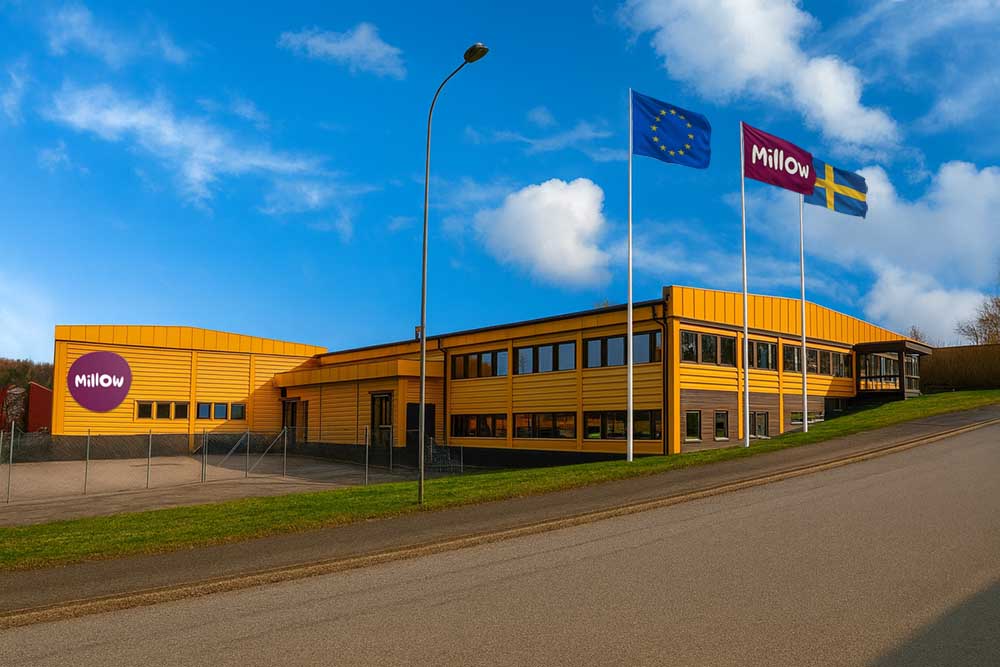
“All phase one components, including our first advanced bioreactor, are installed at the Stenkullen facility and we're now running tests,” Öhrn told Protein Production Technology International. “First commercial volumes will reach customers during the coming months.”
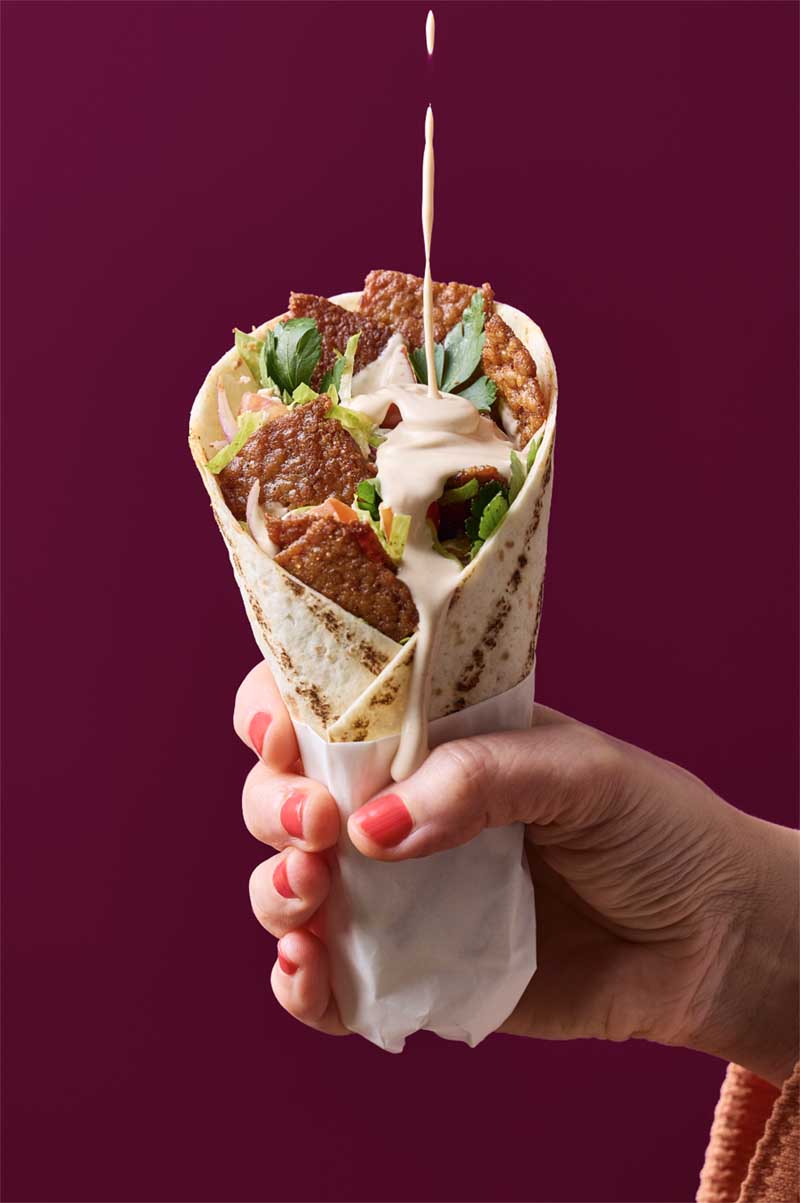
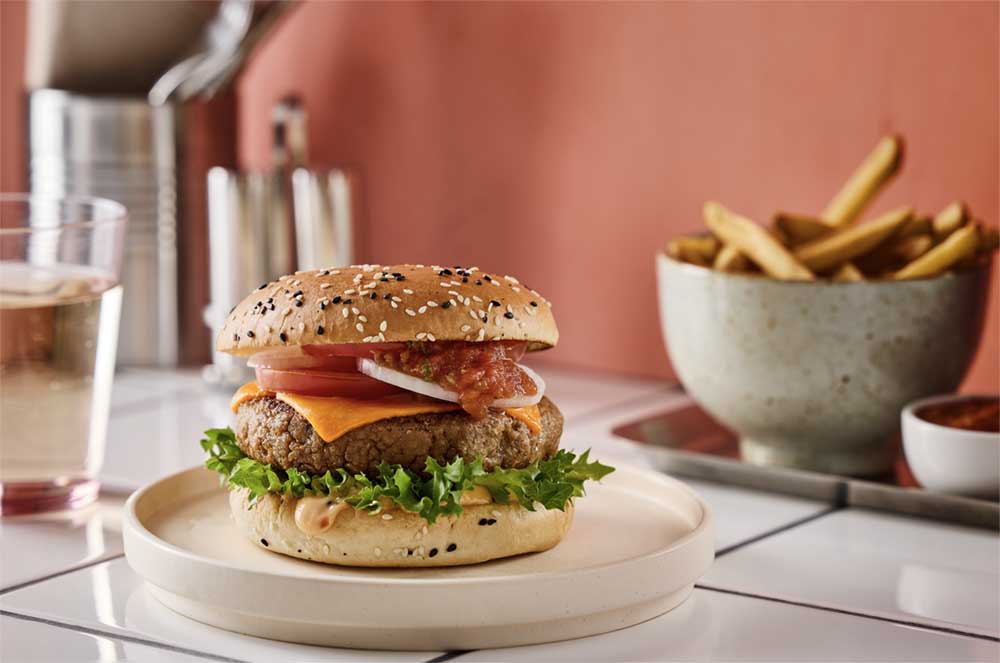
Initial applications will include mince and potentially ready-made formats for Nordic foodservice, particularly public-sector kitchens and restaurant chains. Millow is already in discussions with major operators and distributors, although Öhrn declined to identify them before products reach menus.
Millow uses solid-state fermentation to grow mycelium on Swedish oats, producing a fungal protein from two core ingredients without binders or additives. The company is targeting foodservice partly on the strength of its allergen-free, clean-label profile.
The new capital will be used to complete production capacity and add personnel across quality assurance, supply chain and key accounts, while supporting the ramp toward positive cash flow.
“Three S-units give us roughly 430+ tons of annual capacity by the end of this year,” Öhrn said. “The building already supports three more units, so doubling capacity doesn't require a new facility.”
Much of the core production capex was previously secured through EU funding from the European Innovation Council's EIC Accelerator program.
“Importantly, this round funds commercial execution rather than technology/R&D risk,” Öhrn said.
Where scale gets difficult
Commercial production will now put Millow's process through a test that pilot runs cannot replicate.
“We're at the start of that learning curve, not the end of it,” Öhrn said. “The facility is built and we're in test runs, so the deep operational data comes over the next quarters.”
Unlike fermentation systems that scale through progressively larger vessels, Millow's solid-state process is designed to expand through additional production units.
“What we already know is that solid-state fermentation scales by adding units rather than enlarging vessels, which means the biology itself transfers well from pilot,” Öhrn said. “The areas we'll watch most closely are the ones around the fermentation: material flows, pre- and post-processing throughput, cleaning routines, and the quality systems industrial customers audit.”
Its relatively short fermentation time could also prove useful as production ramps.
“Our short 16- to 24-hour cycle also works in our favor on contamination, since unwanted organisms get very little time to establish,” Öhrn said. “Ask me again in six months and I'll have scars to show you.”

Testing the economics
Millow is not disclosing unit production costs. Alongside the short cycle, Öhrn identified water consumption of 3 to 4 liters per kilogram, optimized downstream processing and 2.4 kg of output for every kilogram of feedstock as important parts of its cost structure.
“That gives us a cost position to compete with mid-range conventional proteins in foodservice, not just with other alternatives, and it improves with utilization,” he said. “We don't need some distant future scale for the economics to work.”
The claim will soon face a more concrete measure: utilization and gross margins from commercial production.
RISE, the Research Institutes of Sweden, independently verified the process at 0.32 kg CO₂e per kilogram of product, which Millow reported was around 98% below Swedish beef.
“As we accumulate operating data from Stenkullen we'll keep the assessment updated,” Öhrn said. “Once full production is running, we expect the numbers to hold up well.”
Protecting the process
Millow also reached an IP milestone as the nine-month opposition period for European patent EP 4 307 913 closed without a challenge.
The patent covers the low-water production method at the heart of its process.
“That the nine-month opposition period closed without a single challenge is meaningful,” Öhrn said. “Competitors had the window to contest it and none did.”
Four further patent applications are under review, with additional filings planned during 2026.
“But the moat is layered: strain selection, AI-driven process control and processing know-how remain trade secrets,” Öhrn said. “A patent tells you what we did, not how to make it work at industrial yield.”
Commercial production will also provide the first sustained test of batch consistency across Millow's modular system.
“Consistency is why we built the process this way: modular, AI-controlled units where every batch runs under identical monitored conditions for oxygen, moisture and temperature, rather than ever-larger tanks where gradients emerge,” Öhrn said. “Protein and fiber content are set primarily by substrate and recipe, so they're stable by design.”
“The honest caveat is that we're now entering the phase where we prove this at commercial volumes,” he added. “The parameters we'll watch most closely are moisture uniformity and natural variation between raw material deliveries. The short cycle helps, since there's less time for drift.”
Swedish oats are the first commercial substrate, but Millow has also fermented psyllium, okara from oat milk production, rapeseed cake from rapeseed oil production and brewers' spent grain.
“Each substrate changes the equation,” Öhrn said. “Nutrient profile affects growth rate and protein content, particle structure affects texture, and moisture behavior affects process control, so every feedstock needs its own optimization loop, though it gets faster each time.”
One of those development tracks involves sidestreams from an international industrial company that Millow has not named.
“Commercially, the most advanced track involves an international industrial player using their sidestreams,” Öhrn said. “But sequencing matters: the Nordic food business on oats comes first.”
Sweden before Germany
That Nordic focus is also shaping Millow's approach to expansion. International markets remain on the agenda, but not before the company has established recurring business closer to home.
Emilson brings more than 25 years of experience across technology and hospitality. He co-founded internet consultancy Mind in 1996, took early stakes in TradeDoubler and NA-KD, founded hospitality technology provider Visit Group and co-founded ESS Group, which operates hotels, resorts and restaurants across Sweden, Norway and Denmark.
“I have spent decades building companies in technology and hospitality, and from the restaurant and hotel side I can see the demand for a protein like this coming,” Emilson said. “The hard part is the technology, and that is what Millow has. I first invested in 2025 because I believed in what the team was building. Increasing my stake now is the natural next step.”
Enhager co-founded Vitamin Well, the functional nutrition group behind NOCCO and Barebells, which has annual revenue of approximately €650 million.
“With Vitamin Well we saw how fast a better product can move from niche to mainstream once the taste and the format are right,” Enhager said. “Foodservice protein is at that point now. Millow gives kitchens a clean-label product that does not ask them to change how they cook, and in my experience that is what decides whether a category crosses over. It is why I am backing Millow with both capital and time.”
Öhrn sees their experience as particularly relevant to selling into foodservice and building a consumer-facing ingredient identity.
“Magnus has spent 25 years in technology and hospitality, with ESS Group's hotels and restaurants and Visit Group in hospitality tech, so he sees foodservice from the buyer's side: sustainability, menu economics, what a kitchen will actually adopt, how concepts scale across venues,” he said.
“Jan built Vitamin Well, NOCCO and Barebells, and knows exactly how a better product moves from niche to mainstream once taste and format are right. That's also relevant to our ‘Made with Millow’ ingredient-brand direction and, in time, to expansion beyond the Nordics. What they share is strategic knowhow, operator experience, and it keeps us honest about what the market actually needs.”
For Öhrn, their involvement also changes what the €2 million brings beyond additional capital.
“This round gives us the capacity and the commercial team to serve foodservice customers at the volumes they need,” he said. “The job now is disciplined commercial execution, and what matters as much as the capital is who it comes from. Jan and Magnus bring experience and a network we would otherwise spend years building.”
“I approach this phase with real humility: the team and the advisers around us matter every bit as much as the technology.”
Öhrn has set three concrete tests for where Millow should be 12 months from now.
“Production volume shipped to paying customers, where we're building toward a 430-ton annual run-rate capacity. Signed, recurring foodservice and wholesale customers rather than pilots. And gross margins showing that the unit economics we've claimed hold in reality.”
“Revenue follows from those three. Expansion beyond the Nordics is a 2027 to 2028 question. If we chase e.g. Germany before Sweden works, something has probably gone wrong.”
If you liked this, check these out...
• Millow bets on fermentation as it moves from lab to kitchen
• Infinite Roots acquires Bosque Foods as mycelium sector consolidates around industrial scale-up
• Adamo Foods secures €10 million EU grant to scale mycelium steak as it targets price parity with beef

Join Us At One Of Our Upcoming Events

If you have any questions or would like to get in touch with us, please email info@futureofproteinproduction.com


%20-%20Photo%20Credit%20Matt%20Qu%C3%A9r%C3%A9e.jpg)

