MicroLub raises £7.5 million to take fat-reducing ingredient technology global

University of Leeds spinout MicroLub has raised £7.5 million (US$10.2 million) to expand internationally and more than double its workforce as it scales a protein-based ingredient technology designed to reduce fat and calories without sacrificing texture.
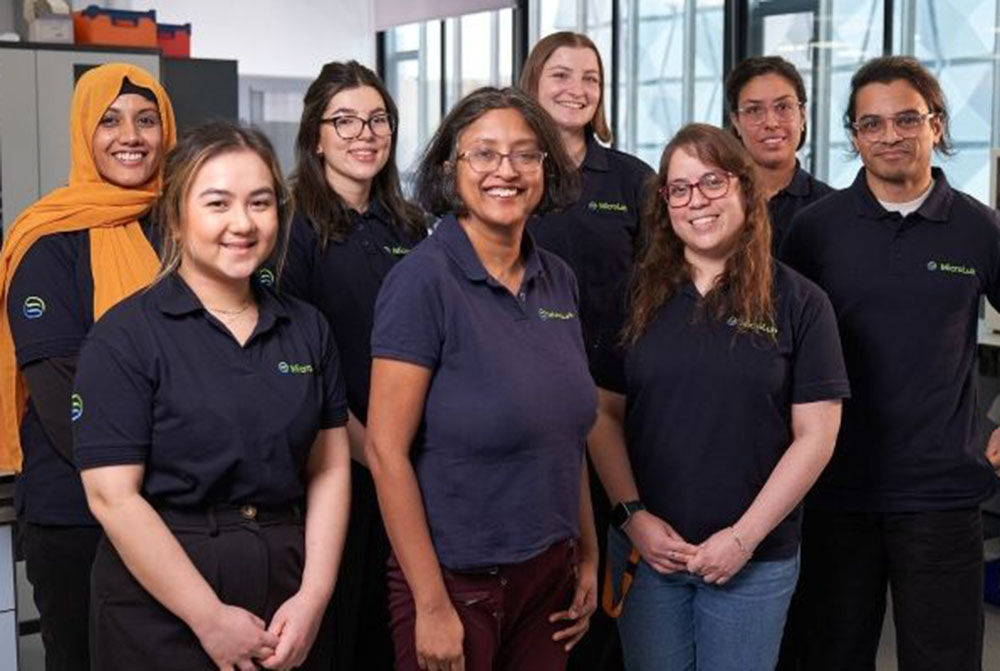
Founded by Professor Anwesha Sarkar from the university’s School of Food Science and Nutrition, MicroLub has developed patented technology that uses protein and water to replicate some of the functions normally performed by fat in food.
The new investment was led by Northern Gritstone, with all existing investors participating, including PXN Group. MicroLub plans to use the funding to accelerate its expansion into the US and Asian markets and more than double its headcount over the next 18 months.
• MicroLub has secured £7.5 million (US$10.2 million) in new investment led by Northern Gritstone.
• Its protein-based technology can cut fat and calories by up to 75% in some food applications.
• The Leeds spinout plans to more than double its workforce and accelerate expansion into US and Asian markets.
The funding comes as food manufacturers look for ways to improve nutritional profiles while retaining the sensory characteristics consumers expect from familiar products. MicroLub is targeting applications where reducing fat, or replacing conventional ingredients with plant-based alternatives, can otherwise affect mouthfeel and texture.
Its approach uses protein and water to reproduce the lubrication properties associated with fat. Depending on the application, the company says its technology can reduce fat and calorie content by as much as 75%, while simultaneously increasing protein levels.
MicroLub also says the technology can reduce the need for emulsifiers and thickeners, potentially giving manufacturers another route to shorter ingredient lists alongside nutritional reformulation.
“For too long, consumers have had to choose between food products that taste great, but are unhealthy, and those that are nutritious but compromise on the eating experience. With MicroLub’s technology that’s no longer the case - they can now literally have their cake and eat it!” said David Peters, CEO of MicroLub.
“Our technology enables manufacturers to reduce fat, increase protein and simplify ingredient lists while delivering the indulgent mouthfeel and texture consumers expect.”
The company has already moved beyond pilot production into industrial-scale manufacturing and is working with some of the world’s largest food and ingredient companies, according to the University of Leeds.
The investment will now support the next stage of commercialization, including growing the team and helping customers bring products incorporating the technology to market.
“This investment allows us to scale our technology internationally, grow our team and enable our customers to put products made with MicroLub’s technology on shelves very soon,” Peters said.
MicroLub continues to maintain close links with the University of Leeds, where it uses research facilities, while also operating its own food innovation laboratory at Nexus, the university’s innovation community.
Professor Nick Plant, Pro-Vice-Chancellor: Research and Innovation at the University of Leeds, said the company’s progress demonstrated the potential for university research to move into commercial applications.
“MicroLub’s impressive growth reflects the strength of University research and our commitment to turning academic discoveries into real-world impact,” he said.
“Thanks to the team’s collective experience and research excellence, the business is set to play a pivotal role in the evolution of food ingredients. We are proud to continue supporting MicroLub’s development through shared facilities and expertise.”
Northern Gritstone, which invests in science and technology businesses in the North of England, led the latest round.
Duncan Johnson, CEO of Northern Gritstone, said MicroLub was tackling a significant formulation challenge for food manufacturers seeking to respond to changing nutritional expectations without losing the sensory properties that influence purchasing decisions.
“Its proprietary technology enables manufacturers to reformulate products in response to changing consumer expectations without compromising the sensory experience that drives purchasing decisions,” he said.
“Since emerging from the University of Leeds, the company has made exceptional progress, scaling its technology and attracting interest from global food manufacturers.”
Johnson added: “This is exactly the kind of world-class university spinout Northern Gritstone was created to support, and we're excited to back the team as they build what we believe can become a globally significant ingredient technology company.”
The investment will see MicroLub build on its transition from university research to industrial manufacturing, with international growth now the company's immediate focus.
If you liked this, check these out...
• Replacing fat is rarely a one-for-one exercise, food scientists warn
• Nature's own fat factory: How Botaneco believes oleosomes could reshape the future of plant-based foods
• Low-fat vegan diet cut emissions and energy use in controlled trial, BMJ study reports

Join Us At One Of Our Upcoming Events

If you have any questions or would like to get in touch with us, please email info@futureofproteinproduction.com

More News