

Metrosert breaks ground on €2 million synthetic biology pilot plant to accelerate biotech scale-up in Estonia

Estonia's applied research center and national metrology authority Metrosert has started construction of a nearly €2 million (US$2.34 million) synthetic biology pilot plant designed to help biotechnology companies scale production processes before committing to commercial manufacturing.
• Metrosert began construction of a nearly €2 million (US$2.34 million) synthetic biology pilot plant in Estonia following the signing of a construction contract with Savekate OÜ.
• The shared facility will enable companies to develop and validate larger-scale production processes for proteins, enzymes, yeasts, plant-based fats and other bio-based ingredients.
• The pilot plant is expected to be completed by the end of 2026 and will comply with international food safety requirements for novel food development.
Metrosert signed the construction contract with Savekate OÜ for the new facility, which will provide infrastructure that has not previously been available in Estonia for companies developing products and ingredients from biological and renewable raw materials.
The pilot plant will support the development and testing of larger-scale manufacturing processes for proteins, enzymes, yeasts, plant-based fats and other bio-based substances used across the food, chemical, materials and pharmaceutical sectors. According to Metrosert, these technologies have the potential to replace fossil-based raw materials while improving resource efficiency.
Kaupo Reede, Head of Biorefining at Metrosert's Applied Research Centre, said the facility would address a longstanding gap in Estonia's biotechnology ecosystem.
"Estonia has companies and researchers with strong expertise and solutions that have already been developed at laboratory scale. However, taking the next major step requires a facility where these technologies can be tested at an industrially relevant scale. Until now, this capability has not existed in Estonia, forcing companies to look for opportunities abroad. The new pilot plant will help close this gap," Reede said.
He added that the lack of pilot-scale infrastructure had become a major obstacle for biotechnology companies across the region.
"Biotechnology is a capital-intensive and highly regulated field. Before starting mass production, companies must demonstrate that their processes work, assess their reliability and produce the first batches for customers and business partners. For most companies, building their own pilot plant is neither financially feasible nor practical. Metrosert's shared pilot infrastructure will help reduce development risks and accelerate the transition of technologies to industrial production," Reede explained.
Alongside access to the pilot plant itself, Metrosert said it will provide support for companies planning research and development projects, identifying international partners and preparing collaborative initiatives.
Because the facility will also be used for food industry applications and novel food development, it will be constructed to meet international food safety standards. Metrosert said this will allow companies to develop production processes and manufacture prototype batches in an environment designed to support later industrial-scale manufacturing and international commercialization.
Construction is scheduled to be completed by the end of 2026.
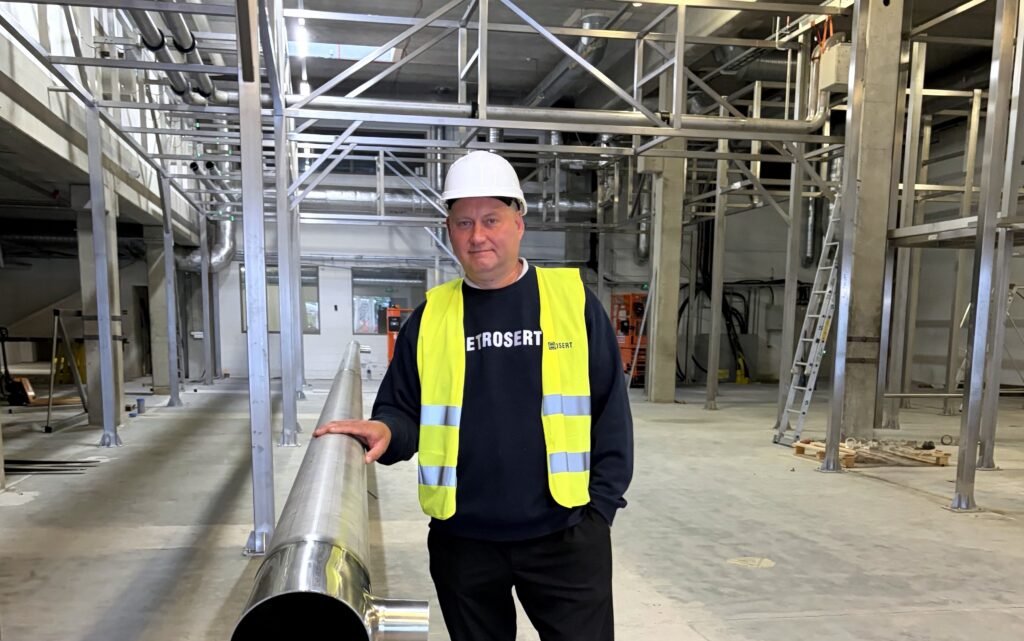
(Main picture shows Kaupo Reede, Head of Biorefining at Metrosert’s Applied Research Centre, in the premises of the soon-to-be-completed synthetic biology pilot plant)

Join Us At One Of Our Upcoming Events

If you have any questions or would like to get in touch with us, please email info@futureofproteinproduction.com


%20-%20Photo%20Credit%20Matt%20Qu%C3%A9r%C3%A9e.jpg)

