

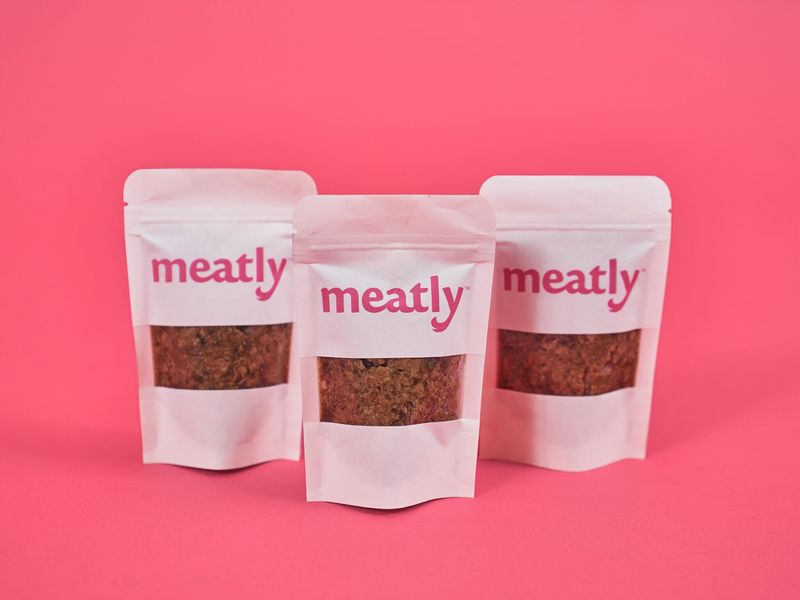
Meatly raises £10.4 million to build Europe’s largest cultivated meat facility in London

London-based cultivated meat company Meatly has raised £10.4 million (US$14.0 million) in Series A funding to build what it described as Europe’s largest cultivated meat production facility, as the UK company moved further toward commercial-scale production for the pet food market.
The funding round brought in three new European venture capital investors - Oyster Bay Venture Capital, Clean Growth Fund and JamJar Investments - and marked one of the largest recent infrastructure-focused investments in the European cultivated meat sector.
• Meatly raises £10.4 million (US$14.0 million) in Series A funding from Oyster Bay Venture Capital, Clean Growth Fund and JamJar Investments.
• The company plans to build a 20,000-liter cultivated meat production facility in London, with product releases expected in 2027.
• Meatly has raised £17.4 million (US$23.5 million) to date, including previous backing from Agronomics and Pets at Home.
The new financing followed £7 million (US$9.5 million) in seed funding previously provided by Agronomics and Pets at Home, bringing Meatly’s total funding to date to £17.4 million (US$23.5 million).
The company planned to use the investment to build a 20,000-liter bioreactor facility in London, with fit-out work beginning immediately. Product launches from the site were expected to follow in 2027.

The announcement represented another milestone for Meatly, which became Europe’s first company authorized to sell cultivated meat after receiving UK regulatory clearance for cultivated pet food in 2024. In 2025, the company announced sales of what it described as the world’s first cultivated pet food product.
Owen Ensor, CEO of Meatly, said the latest funding reflected growing confidence in both the company and the wider UK biotechnology ecosystem.
“This investment marks a powerful endorsement - not just of Meatly, but of Britain's foodtech and biotech sectors,” he said. “Meatly has one focus - to make commercially viable cultivated meat a reality.”
“Over the last four years, Meatly’s pioneering team has systematically focused on reducing key costs and building the strongest possible technical foundation for growth. Now we have our own industry-leading technology, and we are ready to scale.”
The focus on technical execution and cost reduction has been a consistent theme for the company since its early commercialization efforts.
Speaking to Protein Production Technology International shortly after securing regulatory clearance in 2024, Ensor stressed that cultivated meat companies would ultimately be judged on scientific rigor and manufacturing discipline rather than headline-making announcements.
“Through my experience, I’ve learned quickly that producing high-quality cultivated meat is no simple task and it requires rigorous attention to detail at every stage of development,” he said at the time.
“There’s no room for shortcuts in the cultivated meat industry as getting the science right is absolutely critical.”
Those comments have become increasingly relevant as the cultivated meat industry shifts away from small-scale demonstration projects toward the far more difficult challenge of industrial production and unit economics.
Across the sector, many companies have spent recent years focusing on lowering the cost of culture media, improving cell density, developing scalable bioreactor systems and reducing reliance on pharmaceutical-grade inputs. While regulatory approvals and pilot launches generated early momentum, investors have increasingly focused on whether cultivated meat companies can manufacture products consistently and affordably at larger scale.

Meatly has repeatedly highlighted its progress on production economics as part of that transition.
In 2024, the company announced that it had reduced the cost of its chemically defined protein-free medium to £0.22/l (US$0.30/l), a figure it described as industry-leading at the time. In 2025, it also reported reducing bioreactor costs by around 10x.
Ensor said the new London facility would now allow the company to demonstrate continuous production at significantly larger scale.
“This step will allow us to prove commercial viability at scale and start to continually produce Meatly Chicken for the UK pet food market,” he said.

The decision to focus initially on pet food has distinguished Meatly from several cultivated meat companies pursuing human food applications first. Pet food has increasingly been viewed within the sector as a commercially attractive entry point because of its regulatory flexibility, growing sustainability concerns and consumer openness to alternative ingredients.
Ensor previously said that consumer trust would remain essential as cultivated products entered the market.
“Our feeding trials have provided invaluable feedback from pet owners and their four-legged companions, underscoring the importance of consumer trust,” he said in 2024.
“As people’s relationships with their pets become increasingly more personal and meaningful, many are seeking pet food that aligns with their own ethical values.”
The latest funding round also signaled continued investor appetite for cultivated meat infrastructure despite a more cautious funding environment across the broader alternative protein sector.
Connor Duffy, Investment Manager at Clean Growth Fund, said the firm viewed protein production as a critical climate issue.
“Rethinking how we produce protein is an essential part of tackling the climate crisis,” he said. “We’ve invested in Meatly because they are showing it’s possible to produce real meat cost-competitively and with a fraction of the environmental impact.”
“The team is focused on building a commercially viable path to scale, which will ultimately determine whether solutions like this can deliver meaningful change. We’re delighted to be backing Meatly as they set out to build Europe’s largest cultivated meat production facility.”
Elise Schumacher, Investor at Oyster Bay Venture Capital, said the company had demonstrated an ability to move beyond scientific development toward early commercialization.
“Meatly is not just building a new product - it’s laying the foundations for an entirely new protein category,” she said.
“From advancing the science to early retail sales for pets, Meatly has shown a clear ability to move from concept to real-world application, with the foundations to scale across Europe and globally.”
Jim Mellon, Executive Chairman at Agronomics and Chairman and Founding Investor at Meatly, said the company’s long-term focus on production costs had helped attract new investors.
“The market opportunity for sustainable and high-quality protein is enormous, but success in this category ultimately comes down to one thing: bringing down the cost of production,” Mellon said.
“The team at Meatly has consistently cracked this challenge, reducing costs by building their own bioreactors, developing their own culture medium, and staying focused on what it takes to scale.”
He added that the company’s approach combined “technical rigour and financial discipline,” which he described as essential for building a resilient and scalable protein supply chain in the UK and Europe.

Join Us At One Of Our Upcoming Events

If you have any questions or would like to get in touch with us, please email info@futureofproteinproduction.com


