

Juicy Marbles broadens UK retail push with whole-food Umami Burger launch at Tesco

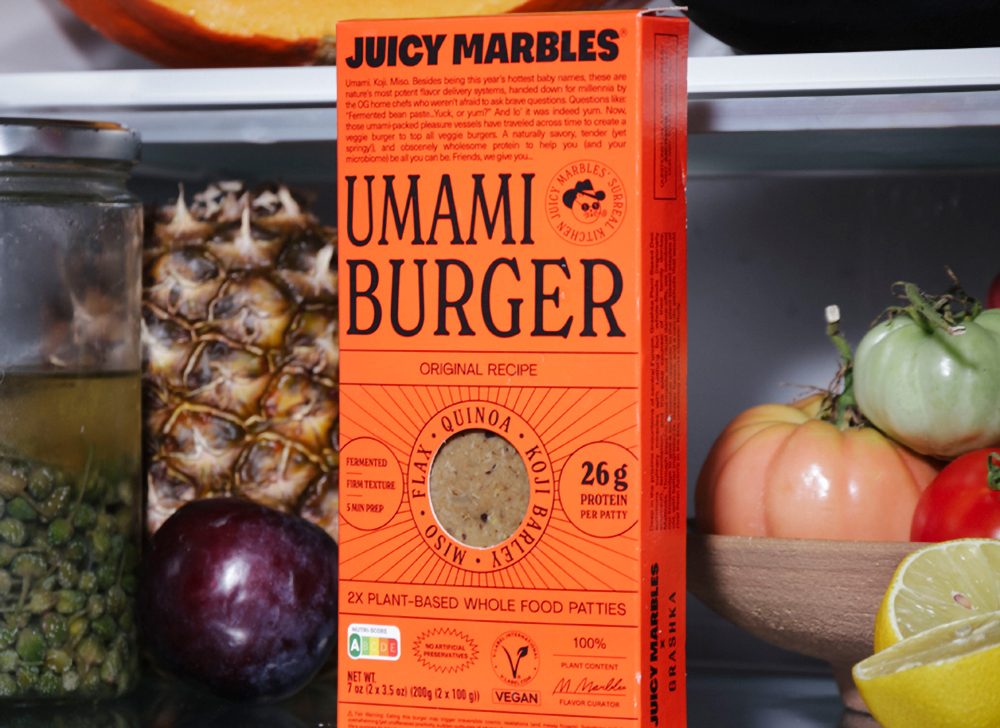
Juicy Marbles has expanded its UK retail presence with the launch of Umami Burger, a new whole-food-forward, high-protein plant-based patty that rolled out to 225 Tesco stores nationwide.
The product marked a strategic shift for the company, which built its reputation on hyper-realistic plant-based whole cuts designed to replicate the structure and eating experience of conventional meat. With Umami Burger, Juicy Marbles said it was targeting a different, more everyday use case, aiming to sit between traditional veggie burgers and highly meat-like plant-based proteins.
The launch followed growing demand for plant-based options that balanced nutrition, familiarity, and simplicity, particularly among consumers looking for flexible proteins that could be used across multiple meals without heavy preparation. Juicy Marbles positioned Umami Burger as a product intended for regular rotation, rather than occasional novelty.
According to the company, Umami Burger was developed with a more transparent and recognizable ingredient list, featuring components such as quinoa, flax, miso, fermented koji barley, and seitan. The focus was on delivering natural savory flavor, a satisfying bite, and strong nutritional credentials, while avoiding overly complex formulations.
Tilen Travnik, Chief Executive Officer of Juicy Marbles, said the new product was designed to meet the same internal standards the company applied to its whole-cut range, while offering greater versatility. He said Umami Burger delivered the nutrition the company expected from its products, paired well with a wide range of cuisines, and was quick and easy to prepare.
Juicy Marbles said the product was intended to address a gap it had observed in the plant-based category, where options often fell at one extreme or the other. On one end were traditional veggie burgers that leaned heavily into vegetables and grains but could lack texture or require additional preparation. On the other were highly engineered meat analogs designed to closely mimic animal products, which some consumers did not always want for everyday meals.
Luka Sinček, Co-Founder of Juicy Marbles, said the idea behind Umami Burger emerged from the recognition that even committed plant-based consumers did not always want products that tried to replicate meat as closely as possible. He said there were times when a more vegetable-forward option made sense, but that many existing alternatives struggled to deliver satisfying texture or ease of use.
He said Umami Burger aimed to solve that problem by offering a patty with a firm, springy bite that worked across a wide range of dishes with minimal preparation. According to Sinček, the product was designed to appeal both to consumers who enjoyed Juicy Marbles’ more meat-like offerings and to those who preferred simpler, whole-food-style products.
From a nutritional standpoint, Juicy Marbles emphasized the patty’s protein density. A single 100 g serving delivered 22 g of plant protein, alongside 5 g of fat and 179 calories. The company described this profile as supporting everyday nutrition without creating a heavy or overly indulgent eating experience.
Maj Hrovat, Co-Founder and Head of Research and Development at Juicy Marbles, said the development goal was to create a patty built around easy-to-understand ingredients that could realistically be eaten every day. He said the product needed to be filling without being heavy, nutritionally robust, and straightforward to cook, describing it as an attempt to create what the company saw as an ideal veggie patty.
Juicy Marbles said Umami Burger could be prepared in around five minutes and used across a variety of applications, including burgers, sandwiches, salads, wraps, and bowls. The company positioned the flavor as rich but balanced, designed to complement different cuisines rather than dominate a dish.
The Tesco launch built on Juicy Marbles’ recent momentum in UK retail. Earlier product introductions, including its Thick-Cut Filet steak, performed strongly with British consumers. The company previously reported that the Thick-Cut Filet sold through 86% of its initial stock at Waitrose within four days of launch and later became the fastest-selling plant-based meat product in Tesco’s history.
In addition to commercial traction, Juicy Marbles received industry recognition in 2025, when Vegan Food and Living Magazine named the company Best New Product for its Meaty Meat Pork-ish whole cut, Best Meat Alternative for the Thick-Cut Filet steak, and Editor’s Choice at its annual product awards.
By introducing Umami Burger, Juicy Marbles appeared to be broadening its addressable market, moving beyond premium whole cuts toward products designed for more frequent, routine consumption. The launch also reflected a wider shift within the plant-based sector toward products that emphasized usability and nutrition alongside taste and texture.
The UK remained a key market for Juicy Marbles’ retail strategy, with Tesco providing national scale and access to a broad consumer base. The company said Umami Burger was available in the plant-based aisle at participating Tesco stores, as well as through the retailer’s online platform.
Founded as a collective operating at the intersection of food, science, and design, Juicy Marbles built its brand around creating distinctive plant-based products with a strong culinary focus. While its early growth was driven by visually striking whole-cut products, the Umami Burger launch suggested a more pragmatic phase of expansion, centered on everyday formats and repeat purchase potential.
As competition in the plant-based category continued to intensify, Juicy Marbles’ move into a more accessible patty format signaled an effort to capture consumers seeking nutritious, familiar options without sacrificing quality or versatility. With Umami Burger now on shelves across much of the UK, the company said it was continuing to refine its portfolio to meet evolving expectations around plant-based eating, convenience, and nutrition.

Join Us At One Of Our Upcoming Events

If you have any questions or would like to get in touch with us, please email info@futureofproteinproduction.com


