


Joanne Tunna: Australia cannot afford to lose food biomanufacturing at the scale-up stage

Australia has the science, companies and resources. The challenge now is capturing more of the economic value they create
When Joanne Tunna joined Cellular Agriculture Australia as its first employee, it was a volunteer-run organization working largely on small project grants and trying to explain what cellular agriculture was, why Australia should be interested and how people could get involved.
• CAA has expanded from a volunteer-led cellular agriculture group into a broader organization spanning food biomanufacturing and plant protein ingredients.
• Joanne Tunna sees regional agriculture, existing infrastructure and feedstocks as important building blocks for Australia's emerging biomanufacturing industry.
• CAA is seeking national coordination and public investment to help retain more manufacturing, jobs and industrial capability in Australia.
This week, she takes over as CEO of an organization that looks very different. CAA now has a paid team, multi-year funding and dedicated policy, regulatory and advocacy capabilities. Its remit has also expanded following its merger with Food Frontier earlier this year. Tunna succeeds Sam Perkins, who has led CAA since 2022 and will remain involved through the end of this year before continuing as a strategic adviser into 2027.
The change at the top comes as CAA increasingly turns its attention to a problem that has become difficult to ignore: Australia is producing food biomanufacturing research, intellectual property and startups, but does not yet have enough infrastructure to keep all of them at home when they need to scale.
"To be frank, we're already seeing companies, such as All G and Nourish Ingredients, go offshore to access scale-up infrastructure," Tunna tells Protein Production Technology International.
"Australia is very good at generating research, IP and early-stage companies, but we still have a significant 'missing middle' between early-stage R&D and commercial-scale manufacturing. In the absence of that capability here, going offshore becomes a necessity."

It is a very different challenge from the one CAA faced when Tunna first arrived. The organization was founded by cell biologist Dr Bianca Lê, who wanted to connect the researchers and startup pioneers beginning to work on cellular agriculture in Australia. Much of its early activity centered on awareness, science communication and career pathways.
Tunna joined during that period and Perkins arrived a few months later. The pair went on to author Australia's first white paper on the opportunity presented by cellular agriculture and began talking more closely with industry about what was holding it back.
"We've always tried to respond to what the sector needs at each stage of its development," Tunna says. "The conversation has shifted from asking what these technologies are and whether they can work, to understanding what needs to change at the systems level for them to scale – things like policy, regulation, infrastructure and investment."
That change is reflected in CAA itself. Government engagement now occupies far more of its work, while the Food Frontier merger has added the development of Australia's domestic plant protein ingredient supply chains to its brief.
It has also left the organization with a name that no longer quite describes it.
"Naturally, the name Cellular Agriculture Australia now no longer covers the full scope of our work," Tunna acknowledges.
CAA is working with stakeholders on a refreshed organizational identity, planned for early 2027.
A strong start, but nowhere to scale
Tunna believes Australia already has many of the ingredients needed for a competitive food biomanufacturing industry.
Its universities and research institutions are internationally recognized, while Nourish Ingredients, Vow and Cauldron Ferm are among the Australian companies developing technologies and products for global markets. There is a large agricultural sector capable of supplying feedstocks, access to renewable energy, established trade links with Asia and an international reputation for high-quality food and protein production.
Regulation, she argues, is another strength. "Australia has a highly regarded food standards agency in FSANZ, and, importantly, fit-for-purpose approval pathways for these emerging technologies, including a bespoke framework for cultivated meat. That gives companies a level of clarity and precedent that many markets still don't have."
The gap appears further down the road.
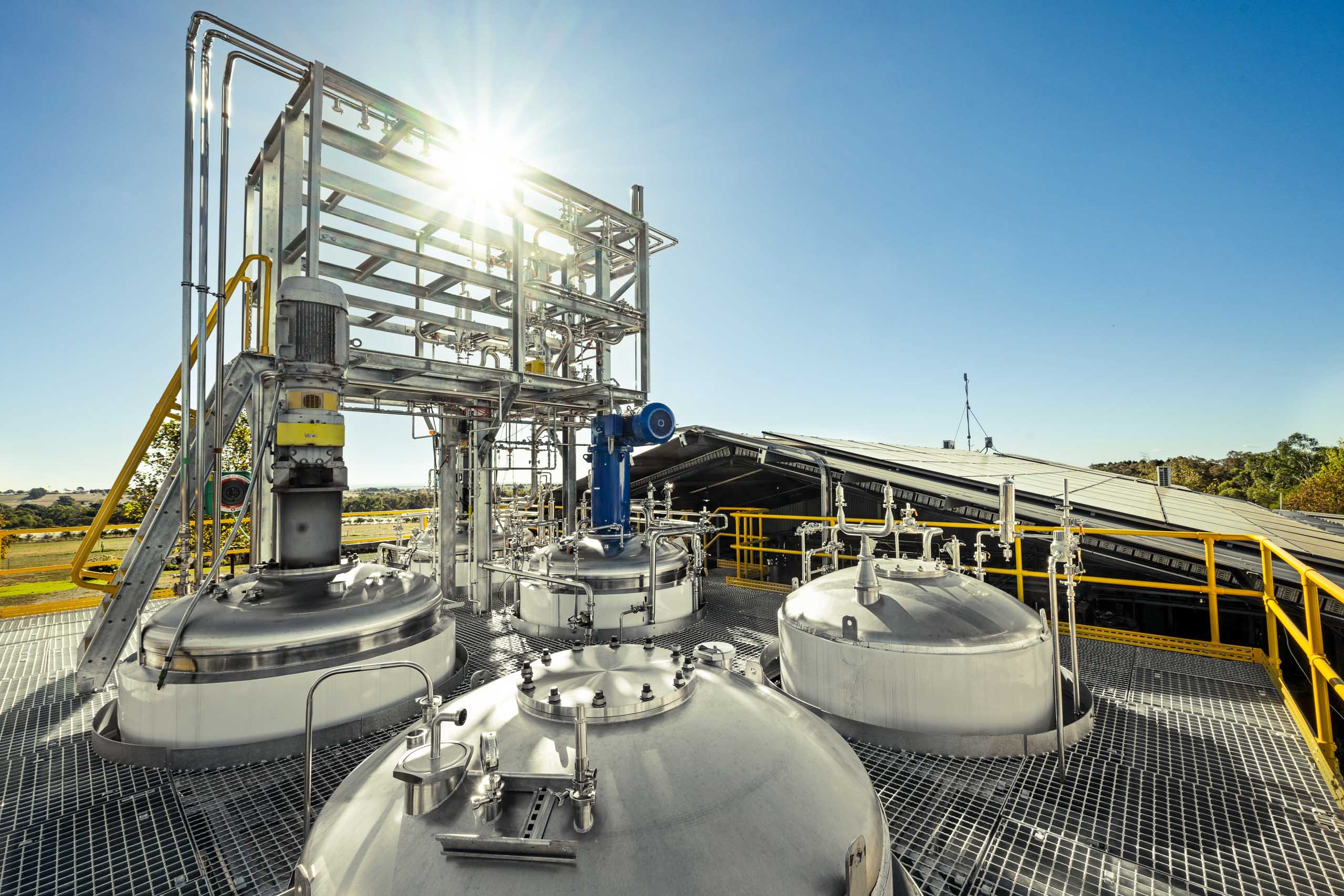
"Where we're still falling short is converting those strengths into commercial-scale production," she says. "We need more accessible scale-up infrastructure, stronger pathways to finance first-of-a-kind facilities, and clear national prioritisation."
The consequence can be seen when Australian companies reach the point at which laboratory and pilot work needs to become industrial production.
Tunna accepts that manufacturing everything domestically would neither be realistic nor desirable. China, for example, has considerable advantages in existing fermentation capacity, supply chains and cost.
"Australia can't and shouldn't try to compete everywhere."

What CAA wants is a clearer decision about where it should compete – and enough domestic capability for companies operating in those areas to have a genuine choice about where they scale.
"The risk is that we do the difficult early work here, but lose much of the subsequent investment, jobs, skills, sovereign capability and food security benefits offshore."
For Tunna, part of the answer could lie much closer to Australia's existing food and agricultural industries.
QUT's Pioneer BioPilot in Mackay is co-located with an operating sugar mill, giving it direct access to sugar feedstocks as well as established logistics and industrial infrastructure. The forthcoming Industry Biotechnology Centre in Toowoomba will add another scale-up facility in a region already shaped by agriculture and manufacturing.
"I think one of the most exciting opportunities is strategic co-location – building new biomanufacturing activity around existing agricultural supply chains, feedstocks and industrial infrastructure in regional Australia."
Australia's sugar industry is one example of where the economics could become interesting. It is facing higher production costs, volatile international markets and increasing competition. Biomanufacturing could provide additional demand for sugarcane while opening higher-value markets for some of its output.
"Biomanufacturing creates an opportunity to help strengthen the industry's long-term viability by creating new sources of demand and higher-value uses for sugarcane, while supporting regional jobs, processing capability and industrial infrastructure."
CAA's appointment of Ashley Mackinnon as Director, Policy & Advocacy fits with that approach. Mackinnon brings experience from Australian Dairy Farmers, the Victorian Farmers Federation and the Australian Livestock and Rural Transporters Association.
Tunna says conventional agriculture and emerging food production are more closely connected than is sometimes assumed, particularly through feedstocks, infrastructure, regional supply chains and processing capability.
His arrival also comes as Australia's forthcoming Feeding Australia national food security strategy puts greater political attention on resilience and the country's future food supply.
What CAA wants from Canberra
Tunna has three immediate asks of government. The first is recognition of biomanufacturing as a national resilience and security priority. CAA believes a Future Made in Australia sector assessment could provide a formal route for assessing its economic and security value.
The second is a National Biomanufacturing Security Strategy. Responsibility currently stretches across food, agriculture, industry, energy and other government portfolios, with no single national approach determining where Australia should concentrate its resources.
"We need a clear whole-of-government approach that identifies where Australia can genuinely compete and coordinates investment around those strengths," Tunna says.
The third is infrastructure. CAA is calling for government investment in shared biomanufacturing production hubs, connected with existing mechanisms including the Investor Front Door and the A$16 billion National Reconstruction Fund.

For Tunna, evidence of progress will ultimately be fairly easy to see. There should be Australian companies scaling in Australia. There should be more products progressing through regulatory approval and reaching the domestic market. And there should be commercial-scale facilities being built rather than simply discussed.
"I'd love to be able to say that food biomanufacturing is no longer seen as a niche or speculative sector in Australia," she says. "That there is broader recognition across government, industry and the food system of the role it can play in both our food system and economy."
Three years from now, she hopes that recognition will have turned into public investment and projects on the ground.
For someone who joined CAA when it had no paid team and spent part of its time explaining what cellular agriculture actually was, that would represent another fairly substantial change.
"And if we get that right, Australia won't just be a place where great food innovation begins – it'll be a place where it's built."
"Australia is very good at generating research, IP and early-stage companies, but we still have a significant 'missing middle' between early-stage R&D and commercial-scale manufacturing."
(Main photo shows Joanne Tunna speaking at the 2025 Aotearoa New Zealand Cellular Agriculture Symposium. As CAA's new CEO, she wants Australia to turn more of its food biomanufacturing research and IP into domestic production)
If you liked this, check these out...
• Green Choice Proteins targets US market with Australian-made plant protein range
• PARIMA clears key Australia-New Zealand regulatory hurdle for cultivated meat
• Food Frontier and Cellular Agriculture Australia unite to reshape Australia’s alternative protein landscape

Join Us At One Of Our Upcoming Events

If you have any questions or would like to get in touch with us, please email info@futureofproteinproduction.com


