Is the protein transition still on track? Pia Meinlschmidt says the destination is changing

As the alternative protein industry enters a more commercially demanding phase, Planteneers’ Pia Meinlschmidt argues that progress will increasingly be measured not by imitation or protein claims, but by products consumers genuinely want to buy again
“A few years ago, the conversation was mainly about replacing animal proteins or simply increasing protein content, and that's not enough anymore today,” says Dr.-Ing. Pia Meinlschmidt, Head of Product Management at Planteneers.
That observation says a great deal about where the protein transition finds itself in 2026.
Investment has become harder to secure, companies have disappeared or consolidated, and some of the exuberance that characterized the alternative protein industry several years ago has faded. At the same time, the market itself has become less forgiving. New products are competing for consumers who expect more, while manufacturers face greater pressure on taste, nutrition, price and production economics.
One thing we have clearly seen over the last few years is that consumers have become much more informed and sophisticated, but at the same time also much more demanding
“One thing we have clearly seen over the last few years is that consumers have become much more informed and sophisticated, but at the same time also much more demanding,” Meinlschmidt says.
It makes the title of the panel she will join at The Future of Protein Production Amsterdam on November 5 particularly timely: Is the Protein Transition Still on Track?
Meinlschmidt will be joined by Emilia Nordlund of VTT, Citizen Kind founder Emma Osborne, SPECTRUM Scaling founding partner Ferry Kamp, Impact Brussels CEO Adam Adamek and GIRA consultant Laurène Bajard. Together, they will examine what funding pressures, geopolitics, regulation and changing market realities mean for the next phase of the industry.
The answer to the question they have been set may depend on what we now consider the destination to be.
A tougher consumer test
Planteneers, part of the Stern-Wywiol Gruppe in Germany, develops functional ingredient systems, blends and application concepts for food manufacturers. That gives Meinlschmidt a view of the transition from the point where ideas have to become foods capable of succeeding in the market.
“Of course, they still care about protein content. I mean, we see a lot of high-protein products out there, but they also ask: Does it taste great? Does it feel natural? Is it nutritious? Does it fit into my daily lifestyle? And ultimately, is it worth buying again?”
That final question cuts through much of the debate about the progress of alternative proteins.
Novelty can persuade someone to try a product once. Sustainability claims may provide another reason. A high-protein label can catch attention on shelf. Repeat purchase is a considerably harder test.
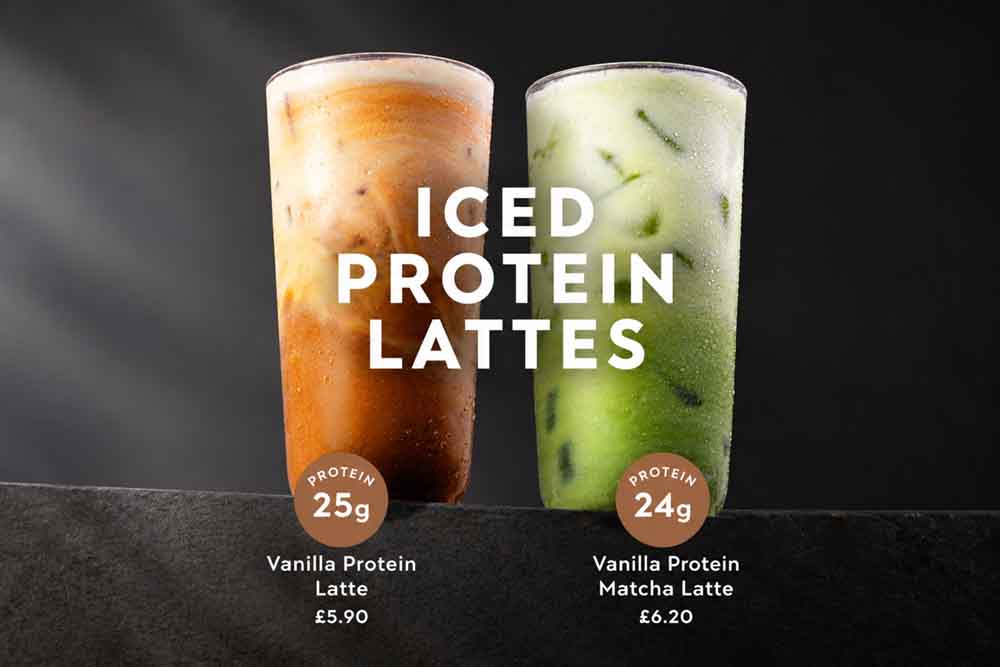
In my opinion, protein quantity, so high-protein claims, may get consumers to pick up the product from the shelf, but protein quality, overall nutrition, and the entire eating experience are what make them buy the products again and again
Meanwhile, protein itself has escaped the confines of sports nutrition.
“High-protein products are definitely here to stay, so they are not just a fitness trend. I mean, over the last few years, protein has evolved from a fitness, gym-bro ingredient to a mainstream nutrient.”
That creates opportunities well outside the traditional alternative meat category. Healthy aging, active nutrition, metabolic health and the growth of GLP-1 medications are all influencing what consumers expect protein-containing foods to deliver.
“They are no longer just asking, how much protein does this product contain? I mean, some do, but they are increasingly asking, okay, what does this protein actually do for me?”
Amino acid profile, digestibility, bioavailability, satiety and muscle health consequently enter the conversation alongside the headline protein number. And once consumers begin judging food in those terms, protein has to work as part of the complete nutritional and sensory proposition.
“The most successful products combine high-quality proteins with, for instance, dietary fibers, micronutrients, and, most importantly, excellent sensory quality. So taste is still number one.”
For all the changing language around nutrition, however, the commercial test remains strikingly straightforward.
“In my opinion, protein quantity, so high-protein claims, may get consumers to pick up the product from the shelf, but protein quality, overall nutrition, and the entire eating experience are what make them buy the products again and again. So these are the most important factors, besides price, of course.”

Designing for the factory
Delivering that combination becomes considerably more difficult once a formulation leaves the development kitchen.
The industry's greater emphasis on commercial viability is therefore changing not only which products are developed, but how they are developed. Meinlschmidt sees manufacturing considerations moving much closer to the beginning of the process.
“Today, formulation and processing can no longer be separated, as mentioned before.”
It is a lesson the alternative protein sector has sometimes learned expensively. A recipe can perform impressively during development yet become too complicated, inconsistent or costly when transferred to an industrial production line.
“A few years ago, to be honest, product development started with creating the idea, the perfect recipe, and only later asking whether it could be manufactured efficiently at scale. Today, this approach is not viable anymore.”
The change is significant. Instead of developing the ideal product and subsequently working out how to manufacture it, the realities of production increasingly shape the product from the outset.
“So commercial success mainly depends on designing products with manufacturing in mind, starting from day one, definitely. And that's what we do at Planteneers.”
That means considering processing behavior, consistency, equipment, throughput and cost alongside taste, texture and nutrition. In a market where capital is scarcer and manufacturers have less appetite for expensive experimentation, a product that cannot make the journey into efficient production has limited commercial value.
“Overall, successful innovation isn't just about creating a great product. I mean, that's really important, but it's about creating a great, outstanding product that can be manufactured efficiently at scale at a fair price. So, having everything in just one product as well.”
Processing under scrutiny
Yet manufacturing efficiently is only part of the equation. The methods used to create modern foods are themselves attracting increasing attention.
The debate around ultra-processed foods is particularly relevant to plant-based and other novel protein products, where processing may be used to deliver texture, functionality, nutrition, safety or shelf life. For Meinlschmidt, the industry needs to engage with that debate rather than wave it away.
“Consumers are absolutely right to ask for greater transparency, and in my opinion, that's a really positive development. But we shouldn't confuse processing with poor nutrition.”
Overall, successful innovation isn't just about creating a great product. I mean, that's really important, but it's about creating a great, outstanding product that can be manufactured efficiently at scale at a fair price
The difficulty is that ‘processed’ covers an enormous range of foods and techniques, making it a crude measure of nutritional value on its own.
“I mean, bread is processed, yogurt is processed, even tofu is processed. So processing itself isn't naturally good or bad. It depends on why it's used and what the final product delivers.”
That shifts attention from the existence of processing to its purpose and the qualities of the finished food.
“Rather than asking how processed a product is, I believe the more important question is: does this product provide real value for consumers? And I think food should be judged by its overall nutritional quality, safety, and consumer benefits, not simply by the number of processing steps. I mean, there is no correlation at all.”
It also leaves the food industry with a communication problem. Consumers do not necessarily need a lesson in process engineering, but they do need reasons to understand and trust what manufacturers are doing.
“And in my opinion, we as an industry also have the responsibility to explain this more clearly and in a transparent way that consumers can understand and trust. I mean, that's really important, and it's our responsibility as industry leaders as well, right?”
Beyond the imitation game
Trust, affordability, nutrition and manufacturability all point toward a protein transition that looks rather different from the one envisaged during the industry's investment boom.
There may be another change ahead, too.
For much of the past decade, success in plant-based food has frequently been measured by resemblance. Burgers were judged against beef, alternative cheese against dairy cheese and plant-based chicken against chicken. Closing the sensory gap became one of the industry's defining technical challenges.
Meinlschmidt hopes that will not remain the ultimate measure of progress.
“I hope that in five years we'll spend much less time talking about technologies and much more time talking about products that consumers love.”
The real opportunity, in my opinion, lies in creating products with their own identity. So, standalone products, moving beyond imitation, that consumers actively choose because they are delicious, nutritious, affordable, and fit naturally into their everyday lives
It is an important distinction. If consumers increasingly care about nutrition, taste, convenience, value and what a product does for them, there is less reason for every innovation to justify itself primarily through its similarity to an animal-derived equivalent.
“And I also hope - and that's really important from our perspective - that we'll move beyond measuring success by how closely we imitate an animal product. The real opportunity, in my opinion, lies in creating products with their own identity. So, standalone products, moving beyond imitation, that consumers actively choose because they are delicious, nutritious, affordable, and fit naturally into their everyday lives.”
That brings the discussion back to Amsterdam and the question Meinlschmidt and her fellow panelists will confront.
The protein transition has unquestionably entered a tougher period. Capital is more selective, manufacturing economics are receiving greater scrutiny, regulation remains challenging and consumers are harder to impress. But measuring progress against the expectations of the industry's earlier years may miss what is happening underneath.
A sector that once concentrated heavily on proving technologies and replicating familiar foods is being forced to think much harder about what people actually want to eat, how those foods can be produced economically and what will persuade somebody to come back and buy them again.
For Meinlschmidt, that is ultimately the test that counts.
“And if we can create more products that people enjoy, trust, and buy again, then I believe we have done an amazing job and achieved exactly what this industry set out to do. Right?”
Pia Meinlschmidt will join the Is the Protein Transition Still on Track? panel at The Future of Protein Production Amsterdam on Thursday, November 5, from 9:10-9:50am at the RAI Amsterdam. Book your delegate ticket or register for a free expo pass here.

Join Us At One Of Our Upcoming Events

If you have any questions or would like to get in touch with us, please email info@futureofproteinproduction.com