Imperial opens Bezos Centre labs to advance sustainable protein research in London

Imperial College London has formally opened the new laboratories for the Bezos Centre for Sustainable Protein at its White City Campus, marking a significant expansion of Europe’s research infrastructure for alternative proteins.
• Imperial opened dedicated laboratories for the Bezos Centre for Sustainable Protein at White City Campus.
• The Centre has launched more than 100 research projects and convened over 350 companies and stakeholders.
• The labs support research across fermentation, cultivated meat, plant-based foods, AI, nutrition and bioprocessing.
The Centre, which serves as the European hub for the Bezos Earth Fund’s Future of Food program, brings together researchers, startups, investors, regulators and policymakers to support the development and scale-up of sustainable protein technologies.
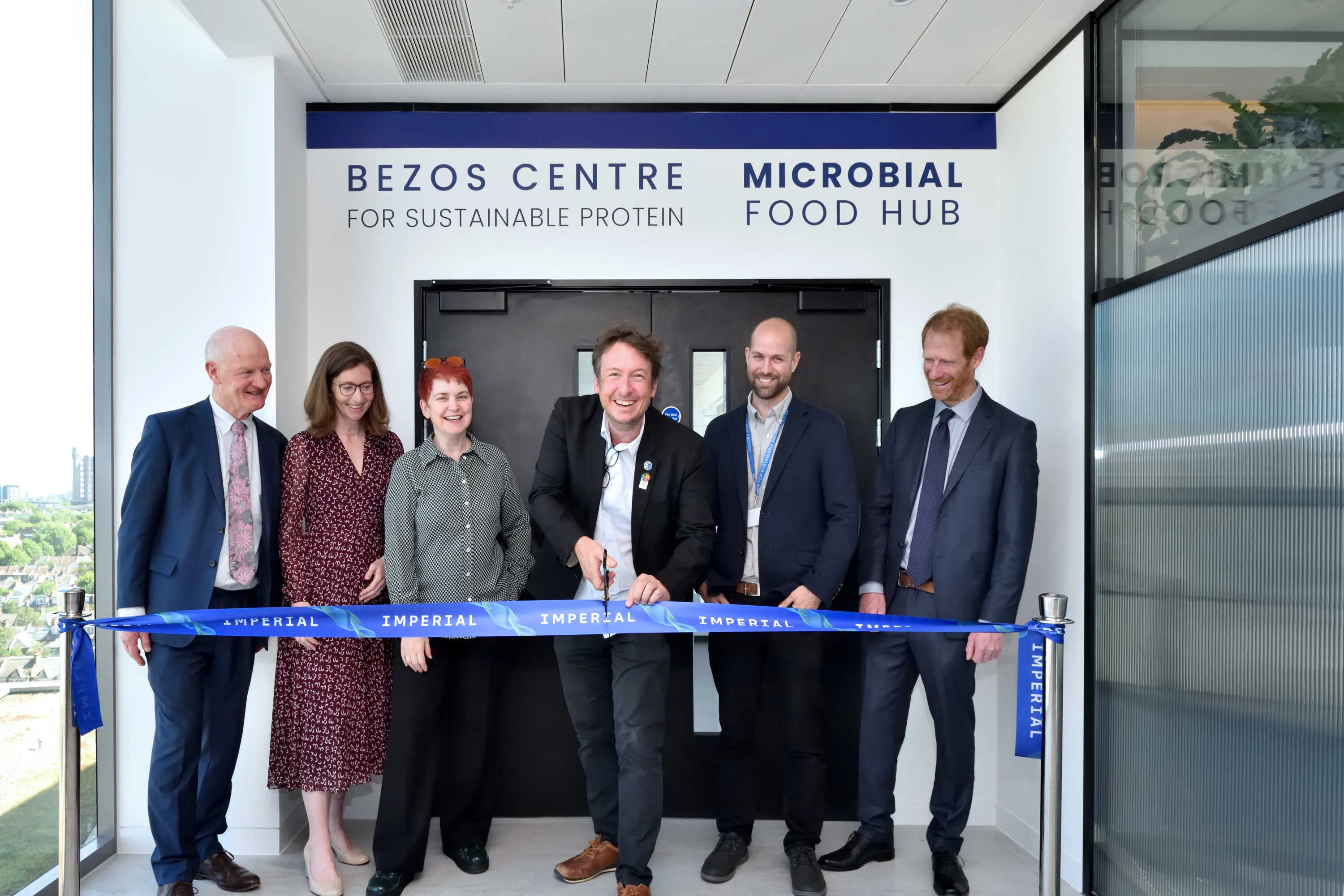
The new laboratories provide dedicated infrastructure for applied research across sustainable foods, with facilities designed to support work from cell banking and strain selection through to scale-up, quality analysis and commercialization. The space also houses the Microbial Food Hub, strengthening Imperial’s work on microbial and fermentation-based food systems.
Professor Rodrigo Ledesma Amaro, Director of the Bezos Centre for Sustainable Protein, said, “The greatest challenge we face in disrupting the food system is making sustainable food cheap enough and good enough that consumers will want to eat it. Consumers are not going to select food just because it is more sustainable. It also needs to be tasty, healthy, and affordable, and it needs to be included in our culinary practices.”
“With that in mind, we are focusing our efforts on bringing engineering biology and AI technology to food science, working with microbial food, fermentation, cultivated meat, and plant-based food to create benefit for people and for the planet.”
The formal opening was marked by a ribbon-cutting event attended by Imperial researchers, UK government representatives, regulatory leaders and sustainable food startups supporting the Centre’s work. Speakers included Food Standards Agency Chief Executive Katie Pettifer, Deputy Chief Scientific Advisor for the Department for Environment, Food and Rural Affairs Dan McGonigle, and Lord David Willetts, Chair of the Regulatory Innovation Office.
Professor Mary Ryan, Imperial’s Vice-Provost for Research and Enterprise, said, “At Imperial, we try hard to make integration and collaboration across disciplines as easy as possible, because we believe that’s where transformation can happen. The Bezos Centre for Sustainable Protein has been supported by the Bezos Earth Fund and built to accelerate that work here in White City.”
“The Centre is already home to more than 160 researchers, and we now have over £60m in research funding in the sustainable protein space - all of which comes with a very clear focus on making sure that we translate this work into real-world applications.”
The Bezos Centre for Sustainable Protein was first announced in 2024 as part of a US$100 million commitment from the Bezos Earth Fund to develop sustainable protein alternatives and expand consumer choice in the food industry. Since then, the Centre has convened a network of more than 350 companies and stakeholders, launched more than 100 research projects and recruited 11 venture capital firms to support its work.
Spanning seven Imperial academic departments, the Centre was established to advance research into precision fermentation, cultivated meat, bioprocessing and automation, nutrition, and AI and machine learning. It will also train future sustainable food professionals through new PhD and Masters programs.
Dr Andy Jarvis, Director of Future of Food at the Bezos Earth Fund, said, “There is no chance that we can feed 10 billion people, avoid dangerous climate change and protect biodiversity, unless we look at protein - addressing the growth in demand for protein is absolutely critical for the future of planet Earth.”
He added, “We need to give consumers a range of choice, wherever they go to get their food, and for that choice to be sustainable. How do we make alternative proteins tastier, cheaper and healthier? That is what we're looking for this lab to do.”
The Centre’s research has already received support from food industry partners including THIS, Algenuity and Fermtech, as well as sustainable food companies working within Imperial’s entrepreneurial ecosystem, such as Arborea and Meatly.
Arborea, based at the I-HUB at White City Campus, was founded by Imperial alumnus Julian Melchorri. The company’s technology captures and converts carbon dioxide into net-zero protein and other ingredients for food, animal feed, pet care, cosmetics and agriculture.
Meatly, a cultivated meat company, began selling the world’s first cultivated pet food in 2025. The company recently raised more than £10m, around US$13m, to build what it described as Europe’s largest cultivated meat bioreactor facility at Imperial’s Graphite Works industrial hub in West London.

Join Us At One Of Our Upcoming Events

If you have any questions or would like to get in touch with us, please email info@futureofproteinproduction.com

More News