

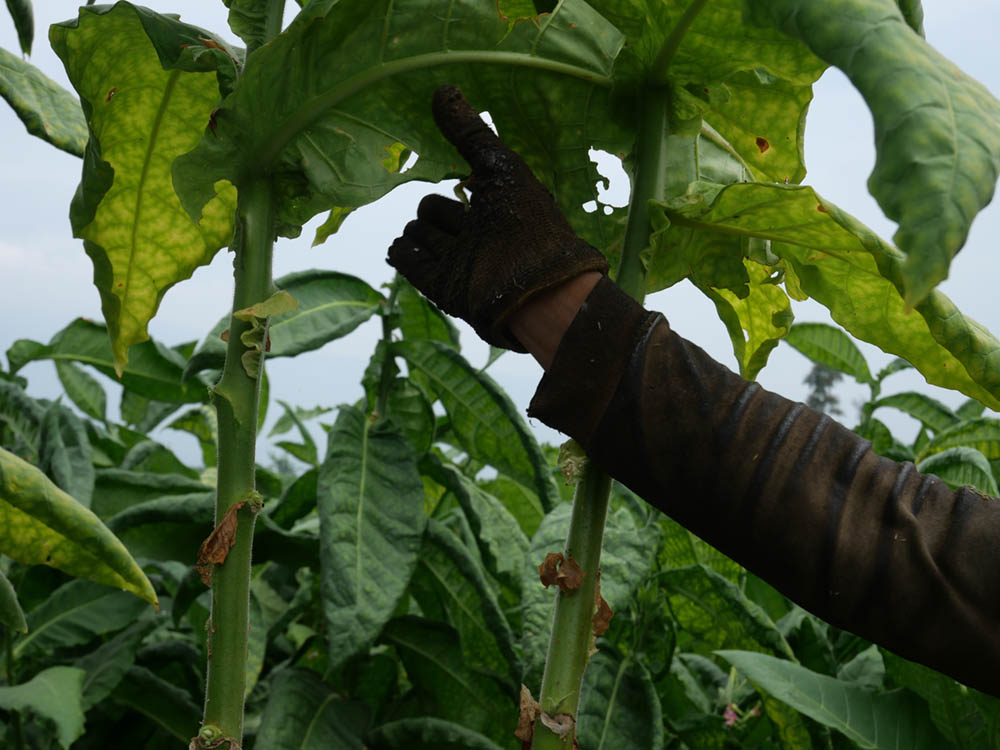
Imperial College researchers produce animal myoglobin in plant chloroplasts, opening new route to sustainable meat proteins

Researchers at Imperial College London have successfully produced the animal meat protein myoglobin in the chloroplasts of higher plants for the first time, demonstrating a potential new platform for manufacturing ingredients that give meat alternatives their characteristic color, flavor, and nutritional properties. The study, published in Frontiers in Plant Science, also marked the first reported stable expression of a heterologous hemoprotein in edible lettuce.
• Researchers at Imperial College London and the Bezos Centre for Sustainable Protein successfully produced porcine myoglobin in tobacco and lettuce chloroplasts, with stable expression achieved in both higher plants.
• Tobacco accumulated myoglobin at approximately 2.7% of total soluble protein and lettuce at 1.5%, outperforming both nuclear plant expression and algal chloroplast production.
• The authors concluded that further improvements in protein expression and heme incorporation could strengthen the commercial potential of plant-based production systems for meat proteins.
The research, led by Alexia Groff and colleagues from Imperial College London's Department of Life Sciences and the Bezos Centre for Sustainable Protein, explored whether plants could provide a scalable alternative to microbial fermentation for producing myoglobin, an oxygen-binding protein naturally found in animal muscle.
Myoglobin plays an important role in determining meat's appearance and flavor. It is responsible for the familiar red color of fresh meat and contributes metallic and umami notes while also providing a highly bioavailable source of iron. These properties have made it an attractive target for alternative protein developers seeking to improve plant-based products.
While myoglobin has previously been produced in microorganisms such as Escherichia coli and yeast, and transiently expressed in tobacco leaves, the researchers noted that stable production in higher plants had not previously been reported.
Using chloroplast transformation technology, the team engineered tobacco, a well-established model crop, and lettuce, an edible host, to produce porcine myoglobin. They also produced bovine myoglobin in the green alga Chlamydomonas reinhardtii for comparison.
The higher plants significantly outperformed the algal system. Tobacco accumulated myoglobin at around 2.7% of total soluble protein, while lettuce reached approximately 1.5%. By comparison, the algal platform accumulated less than 0.25%.
The researchers also compared chloroplast expression with conventional nuclear transformation in tobacco. They found chloroplast engineering consistently generated substantially higher levels of the protein, reinforcing one of the technology's key advantages for recombinant protein production.
Beyond simply producing the protein, the team investigated whether the plant-made myoglobin functioned as expected.
After purifying myoglobin from tobacco leaves, they confirmed it was correctly folded and contained the expected heme prosthetic group, although only around 35% of the protein carried bound heme compared with approximately 80% for myoglobin produced in E. coli. The authors suggested that heme availability within the chloroplast could represent a bottleneck limiting production of fully functional protein.
Importantly, producing myoglobin did not appear to significantly disrupt photosynthesis. Although myoglobin-producing tobacco plants contained around twice the total heme levels of control plants, key measures of photosynthetic performance remained largely unchanged.
The researchers estimated fresh-weight myoglobin yields of approximately 94 mg/kg in tobacco and 48 mg/kg in lettuce, equivalent to roughly 800 mg/kg and 810 mg/kg on a dry-weight basis respectively. While still around ten times lower than concentrations found in beef muscle, they argued that plants' far greater resource efficiency could still make the approach attractive when considered on a land-use basis.
The study also highlighted the potential advantages of edible crops such as lettuce. Unlike tobacco, lettuce biomass could potentially be incorporated directly into food products with minimal downstream purification, reducing manufacturing complexity and cost.
The authors acknowledged that several technical hurdles remain before commercial deployment. Improving heme incorporation will likely be essential, as the protein's color, taste and nutritional characteristics depend heavily on successful heme binding. They suggested future work could include engineering plants to produce more heme, optimizing regulatory elements that control protein expression, or using inducible expression systems.
They also noted that although microbial fermentation currently benefits from mature industrial infrastructure and well-established regulatory pathways, chloroplast-based production systems offer advantages in scalability, sustainability and the absence of human pathogens.
The work formed part of a growing body of research investigating plants as biofactories for producing high-value proteins beyond traditional crop applications.
In their conclusion, Groff and her co-authors wrote that the research "provides a foundation for future plant-made animal proteins for food applications" and demonstrated that chloroplast transformation offered higher expression than nuclear transformation for myoglobin production, while identifying several opportunities for further optimization.
The paper, Sustainable production of myoglobin meat protein in plant chloroplasts, was authored by Alexia Groff, Yuhan Lu, Mistianne Feeney, Julian P. Whitelegge, Shengxi Shao, Kyoko Morimoto and Peter Julian Nixon, and was published in Frontiers in Plant Science.
If you liked this, check these out...
• Aleph Farms wins Singapore approval for cultivated beef as second market opens
• FSA publishes new guidance to help cell-cultivated food companies navigate UK approval process
• PluriCells founder Ramiro Alberio highlights how academic partnerships drove cultivated meat commercialization

Join Us At One Of Our Upcoming Events

If you have any questions or would like to get in touch with us, please email info@futureofproteinproduction.com


