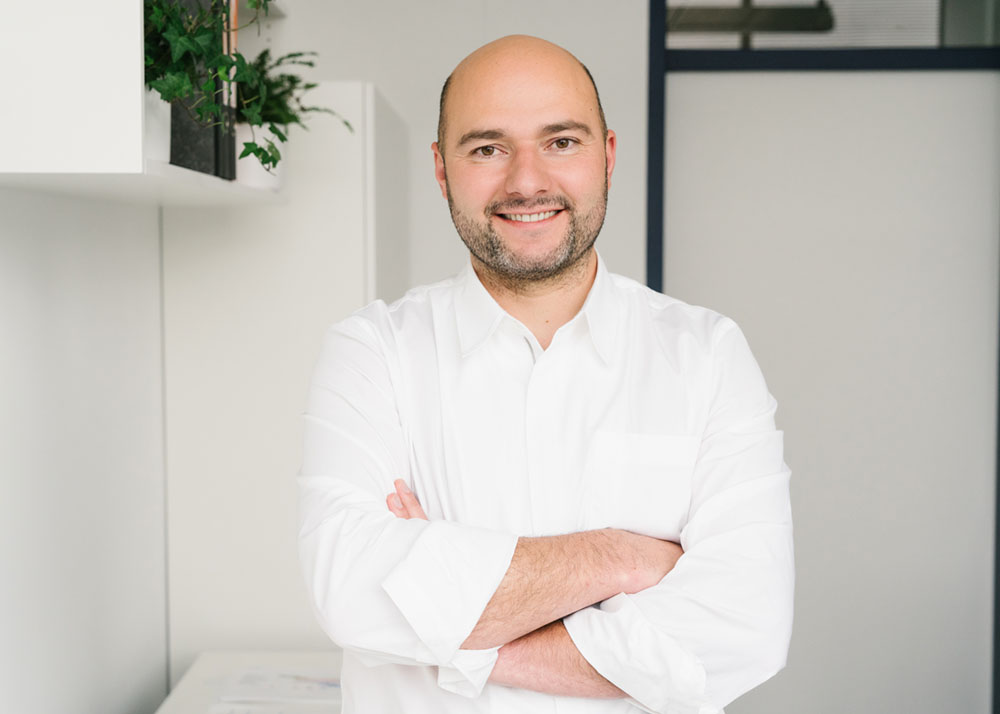
SMEY's Viktor Sartakov-Korzhov: Has the alternative protein industry been solving the wrong problem?

For a decade, biotechnology companies have competed to produce better proteins. SMEY has taken a different path. Viktor Sartakov-Korzhov, Founder & CEO, believes the bigger opportunity lies in fats – and in discovering entirely new lipids rather than simply replacing familiar ones
Protein has become the defining molecule of the alternative protein industry. Companies have spent years improving amino acid profiles, increasing fermentation yields and driving down production costs. Yet proteins rarely determine whether chocolate snaps cleanly, a pastry delivers the right texture or a plant-based burger feels satisfying to eat. That is the job of fat.
Lipids shape texture, mouthfeel, melting behavior and flavor release. They are just as important outside food, where they influence the performance of products ranging from moisturizers to shampoos. Despite that, fats have attracted only a fraction of the attention devoted to proteins.
Viktor Sartakov-Korzhov, Founder & CEO of SMEY, believes that has left one of biotechnology's most promising areas largely unexplored. "We chose to focus on lipids because they are critical not only in food, but also across industries such as beauty and personal care, where they play a key role in product performance and consumer experience," he says. "At the same time, many conventional lipid sources face growing pressure from climate change, supply volatility, and regulatory challenges."
Palm oil has become a focal point for environmental debate. Cocoa butter prices have surged following poor harvests in major producing regions. Other specialty oils face similar questions around long-term availability and supply security. Rather than viewing fermentation simply as another manufacturing route, Sartakov-Korzhov sees it as a way to widen the range of lipids available to manufacturers.
We believe one of the industry's biggest overlooked opportunities is the enormous diversity of natural lipids that exist in microorganisms
"We believe one of the industry's biggest overlooked opportunities is the enormous diversity of natural lipids that exist in microorganisms," he says. "By exploring this biodiversity with AI and fermentation, it becomes possible to discover entirely new fat solutions that can match or even outperform conventional ingredients while improving sustainability and supply resilience."
That philosophy runs through the company's entire approach. Instead of deciding which oil it wants to produce before development begins, SMEY starts by asking what nature has already created.
Starting with nature
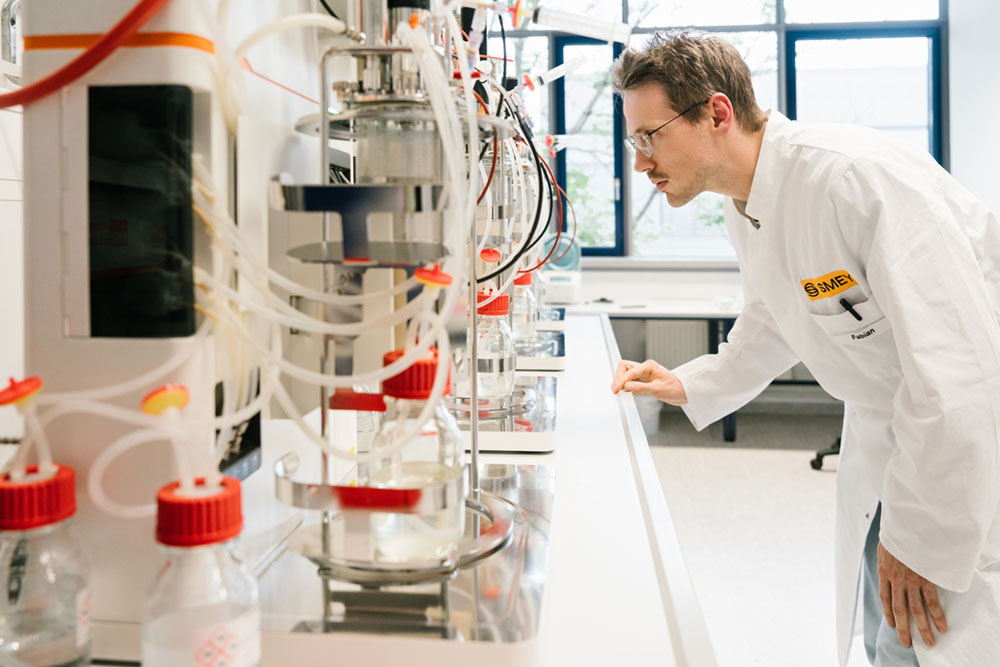
Many fermentation companies engineer microorganisms to produce a specific ingredient. SMEY chose to search first and engineer nothing.
"From the very beginning, we wanted to give nature a chance," Sartakov-Korzhov says. "Rather than engineering organisms, we focused on exploring the vast natural diversity of yeasts and identifying strains with desirable lipid profiles."
Finding those strains would once have required years of painstaking screening. SMEY instead combines genomics, large-scale screening and artificial intelligence to narrow the search far more quickly.
"By combining large-scale screening, genomics, and AI, we can rapidly identify naturally occurring strains with desirable fatty acid profiles, reducing the time and cost of ingredient development," he says. "In just one year, we have identified more than 350 distinct oil profiles and built the Lipid Atlas, a discovery platform that helps R&D teams match existing oils or get new lipid profiles, reducing development timelines from years to months."
The platform has already led to ingredients including Noyl Palm, Noyl Cocoa and Noyl Silk. Development is also underway on Noyl Avocado, Noyl Argan and Noyl Omega-7.
Those products illustrate the breadth of the search. Matching existing oils is one objective. Discovering lipid profiles that manufacturers have never previously had access to is another.
Faster discovery changes the equation
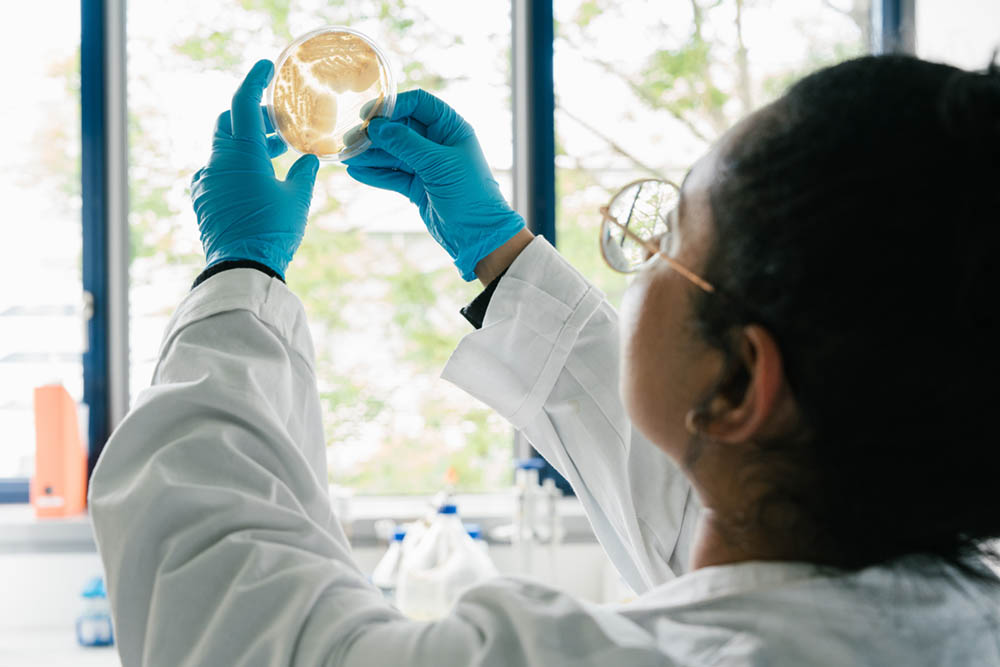
Artificial intelligence has become part of almost every biotechnology conversation, but Sartakov-Korzhov sees its greatest value before fermentation even begins. "AI will become an increasingly important tool in ingredient development because it can significantly reduce the time, cost, and uncertainty associated with traditional R&D," he says. "Instead of relying on extensive trial-and-error experiments, AI helps identify the most promising candidates early, allowing teams to focus resources on the highest-potential strains and formulations."
Reducing years of exploratory work to months does more than accelerate research. It also allows companies to investigate ideas that may once have been considered too slow, too expensive or too uncertain to justify. "The biggest opportunity lies in accelerating discovery and reducing development costs, enabling companies to bring innovative ingredients to market faster and more efficiently."
Finding promising strains, however, is only part of the challenge. Manufacturers also want greater certainty over where their ingredients come from.
From the very beginning, we wanted to give nature a chance. Rather than engineering organisms, we focused on exploring the vast natural diversity of yeasts
Rethinking where oils are produced
Few food ingredients illustrate supply-chain risk more clearly than tropical fats. Palm oil depends on large-scale agricultural production concentrated in specific regions of the world. Cocoa butter is vulnerable to weather, crop disease and fluctuating harvests. When supplies tighten, manufacturers have few alternatives.
Sartakov-Korzhov believes fermentation can provide another source of production. "We believe biotechnology and AI will play a key role in the upcoming years," he says. "AI can dramatically accelerate the discovery of natural lipid-producing organisms, while biotechnology platforms such as fermentation can produce oils locally and more predictably, reducing dependence on climate-sensitive agricultural commodities."
SMEY's model is designed around regional production rather than global shipping. "Our model is local by design, enabling production closer to where ingredients are needed, which strengthens supply-chain resilience while reducing transportation and sourcing risks," he says. "It also offers a more ethical and sustainable alternative to commodities often associated with environmental and social challenges."
The objective is not necessarily to replace conventional agriculture. For manufacturers managing increasingly complex supply chains, additional sources of strategically important ingredients may prove just as valuable.
That approach also reflects another decision the company made early in its development.
Choosing non-GMO
Rather than modifying yeast, SMEY has built its platform around naturally occurring strains. "Nature has been extremely generous with us: in just one year, we have identified more than 350 distinct oil profiles within our Neobank of Yeasts," Sartakov-Korzhov says.
Working with natural biodiversity, he believes, also offers commercial advantages. "This approach allows us to develop innovative ingredients while avoiding some of the regulatory and market barriers associated with GMOs, creating a potentially faster path to commercialization and broader market acceptance."
Novel ingredients will still need regulatory approval before entering many food markets. Removing genetic modification from the equation does not eliminate that process, but it may simplify part of the commercialization pathway.
Food manufacturers need fats and oils that deliver the right functionality while ensuring a reliable supply
Performance before sustainability
Sustainability often dominates public discussion around alternative ingredients. Sartakov-Korzhov says manufacturers usually begin somewhere else. "The conversation is primarily about supply security and performance," he says. "Food manufacturers need fats and oils that deliver the right functionality while ensuring a reliable supply."
Only once those requirements have been met does sustainability become a deciding factor. "Sustainability remains important, but adoption ultimately depends on whether an ingredient can match the performance and consistency of existing solutions."
Those priorities also explain where SMEY expects commercial adoption to begin. "Today, we see the beauty sector as the most promising market for fermentation-derived lipid alternatives," Sartakov-Korzhov says. "Cosmetic brands are actively looking for sustainable, traceable, and deforestation-free ingredients, and the sector has a strong history of adopting biotechnology-enabled innovations early."
Food remains a major target, but higher-value markets have often provided biotechnology companies with an earlier route to commercial production. "At the same time, we see significant long-term potential in food applications, where sustainable and resilient alternatives to tropical fats are becoming increasingly important."

More choice, not wholesale replacement
The next few years are likely to be shaped less by scientific breakthroughs than by commercial realities. "One of the biggest barriers to wider adoption over the next five years is likely to be regulation," Sartakov-Korzhov says. "While fermentation is a well-established technology, novel fats and oils often require regulatory approval before they can enter food markets, and these processes can be lengthy, complex, and vary significantly across regions."
Cost will remain equally important. "In five years, I don't expect a dramatic transformation of the fats and oils industry," he says. "The biggest challenge for alternative fats will still be achieving price parity through process optimization and scaling production efficiently."
His long-term outlook is measured. Fermentation-derived lipids are unlikely to displace conventional fats overnight. Instead, he expects manufacturers to gain access to a much broader palette of ingredients.
"What I do expect is the emergence of a new category of ingredients enabled by biotechnology and AI. Platforms such as Lipid Atlas will accelerate the discovery and development of novel lipid profiles, helping manufacturers identify alternatives faster and more efficiently. As production scales and costs decrease, fermentation-derived lipids will become increasingly competitive, offering new options that combine performance, supply security, and sustainability."
For years, industrial biotechnology has largely been judged by how effectively it could reproduce ingredients the world already knew. SMEY is making a different argument. Nature has spent millions of years creating an extraordinary diversity of lipids. The real challenge, Sartakov-Korzhov suggests, may not be inventing better fats, but discovering the ones that have been there all along.
This is an extended version of an exclusive interview conducted for the oils and fats edition of Protein Production Technology International. To receive the magazine free of charge, along with weekly news, exclusive interviews and technical analysis from across the future protein industry, subscribe here

Join Us At One Of Our Upcoming Events

If you have any questions or would like to get in touch with us, please email info@futureofproteinproduction.com

More News