

Germinal’s flavorless pea protein marks key step toward UK-grown soy alternative

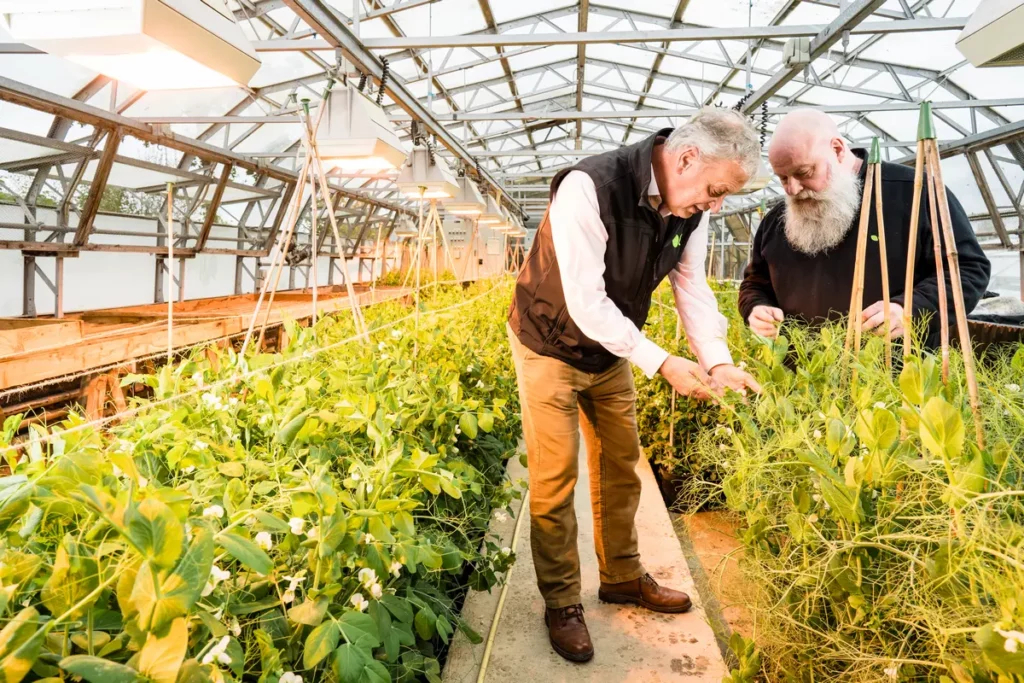
A research project led by plant breeder Germinal reached a significant milestone after successfully developing pea crops with improved nutritional qualities and without the characteristic pea flavor that has long limited their use in food manufacturing.
The Defra and Innovate UK co-funded initiative set out to create a viable UK-grown alternative to imported soy, while also meeting food manufacturers’ requirements for taste, functionality, and consistency. The project partners confirmed that the new pea lines showed enhanced protein quality, reduced allergenic properties, and crucially, lacked the distinctive pea taste that has historically restricted their application in a wide range of products.
The collaboration brought together Germinal, the John Innes Centre, the Institute of Biological, Environmental and Rural Sciences at Aberystwyth University, and the Processors and Growers Research Organisation. The consortium received a £1 million research grant in 2023, equivalent to around US$1.27 million, through Defra’s Farming Innovation Pathways program delivered via Innovate UK.
Clean taste remains one of the most persistent technical challenges across plant-based proteins. While peas are widely used due to their relatively high protein content, favorable amino acid profile, and suitability for European cropping systems, they are also known for grassy, earthy, and sometimes bitter notes that can carry through into finished products. These off-flavors often require additional processing steps, masking agents, or formulation work, adding cost and complexity for manufacturers.
As a result, pea protein has more commonly been used in heavily flavored products or blended with other ingredients, rather than serving as a neutral base protein. This has limited its adoption in applications such as dairy alternatives, nutrition products, and more delicately flavored foods, where clean taste and functional performance are critical. Addressing flavor at the crop level, rather than through downstream processing, has therefore been a long-standing goal for both breeders and food producers.
At the heart of the project were scientific discoveries developed at the John Innes Centre that suppress the compounds responsible for pea flavor while also enhancing protein quality. The first phase focused on transferring those traits into commercially viable pea plants using traditional plant breeding methods, rather than genetic modification.
That work was carried out by Germinal Horizon, the company’s research division embedded at Aberystwyth University, and was completed ahead of schedule. According to the project partners, this marked a key step in translating years of fundamental plant science into crops suitable for commercial farming and food production.
The project was designed around three core objectives: to provide a UK-grown alternative to imported soy, to meet market expectations around taste and functionality, and to deliver a protein crop that could be produced sustainably within existing arable systems. Peas were selected not only for their protein content but also for their agronomic benefits, including nitrogen fixation and their contribution to soil health and crop rotations.

Paul Billings, Chief Executive of Germinal UK and Ireland, said pea crops provided a rich source of protein and boosted soil health by fixing free atmospheric nitrogen, leaving nutrients behind for subsequent crops in rotation. He said the potential to reduce the UK’s reliance on imported soy, which could amount to between three and four million tons per year, was substantial, but depended on broadening the role of peas as a sustainably produced, locally grown protein source for food manufacturing. He added that the project had cleared a further hurdle by improving protein quality while removing the flavor that had held back wider use, achieved entirely through traditional breeding methods.
With the initial breeding phase complete, the project moved into its next stage. The focus now shifted to developing elite pea varieties and multiplying seed stocks so that the new lines could be grown on farms and assessed under practical conditions. This phase would examine agronomic performance, including yield and resilience, alongside processing characteristics relevant to food manufacturers.
Roger Vickers, Chief Executive of the Processors and Growers Research Organisation, said the next phase would allow the crops to be tested under real farm conditions. He said the project had the potential to introduce a protein crop with a wide range of food manufacturing applications that would be commercially attractive to farmers, while also contributing nutrients, soil health benefits, and disease control within arable rotations.
From a research perspective, the project represented a long-awaited translation of primary science into applied outcomes. Professor Claire Domoney, Emeritus Fellow at the John Innes Centre, said the novel traits identified and studied in pea plants over many years were now being incorporated into arable crops expected to deliver lasting value for farming and food production. She said the work would provide a sustainable, UK-grown alternative option to soy and highlighted the long-term value of primary scientific research in underpinning practical solutions.
The project also carried implications for the UK’s alternative protein sector, which has faced ongoing challenges around taste, functionality, and supply chain resilience. Dr Ana Winters, Team Leader at IBERS, Aberystwyth University, said the team was excited to explore the opportunities for plant-based protein foods offered by the new pea cultivars, adding that the crops represented a significant advancement for the UK’s alternative protein industry.
As the project progressed into field trials and processing assessments, the partners aimed to demonstrate that the new pea varieties could perform at scale, both on farms and in food manufacturing settings. If successful, the work could support greater domestic protein production, reduce dependence on imported soy, and help overcome one of the most enduring barriers to wider pea protein adoption: clean, neutral taste.

Join Us At One Of Our Upcoming Events

If you have any questions or would like to get in touch with us, please email info@futureofproteinproduction.com


