GEA expands biotech scale-up capabilities with new Sarstedt technology center

GEA has expanded its support for food biotechnology companies with the opening of a new Application and Technology Center (ATC) in Sarstedt, Germany, investing €4 million (US$4.7 million) to help businesses bridge one of the industry's biggest challenges: scaling promising laboratory processes into commercially viable production.
• GEA has invested €4 million (US$4.7 million) in a new biotechnology Application and Technology Center in Sarstedt, Germany.
• The facility enables companies to pilot precision fermentation, cell cultivation and other biomanufacturing processes before commercial scale-up.
• The center brings together pilot infrastructure and engineering expertise, with around 240 employees now based at the Sarstedt site.
The facility relocates GEA's existing ATC from Hildesheim, where it has operated since 2023, to the company's long-established engineering site in Sarstedt, Lower Saxony. The move combines three years of pilot project experience with decades of expertise in beverage, dairy and food processing engineering, allowing customers to work with the same teams from early process development through to industrial plant design.
Around 240 employees will now work at the Sarstedt site following the relocation, including approximately 40 specialists joining the existing engineering, automation, sales and service teams.
The center focuses on precision fermentation, cell cultivation and other biomanufacturing technologies that are increasingly being used to produce alternative proteins alongside enzymes, amino acids, vitamins, flavors and other functional ingredients for the food, feed and healthcare sectors.
Speaking at the opening, Sarstedt mayor Heike Brennecke said: "This this new technology center strengthens Sarstedt as a place for engineering, technology and skilled jobs. It sends a clear signal that biotechnology is being developed here and put to work."
Klaus Stojentin, CEO of GEA's Nutrition Plant Engineering Division, added: "New Food and biotechnology need places where you can find out whether a promising process can actually become a viable industrial application.
"In Sarstedt, we bring pilot infrastructure and engineering expertise under one roof. That gives our customers a stronger basis for their next decision."
A major focus of the new center is helping companies navigate the difficult transition between successful laboratory experiments and commercially scalable production. According to GEA, while organisms may perform well in laboratory conditions, economic viability often only becomes clear when processes are tested at larger, integrated scales.
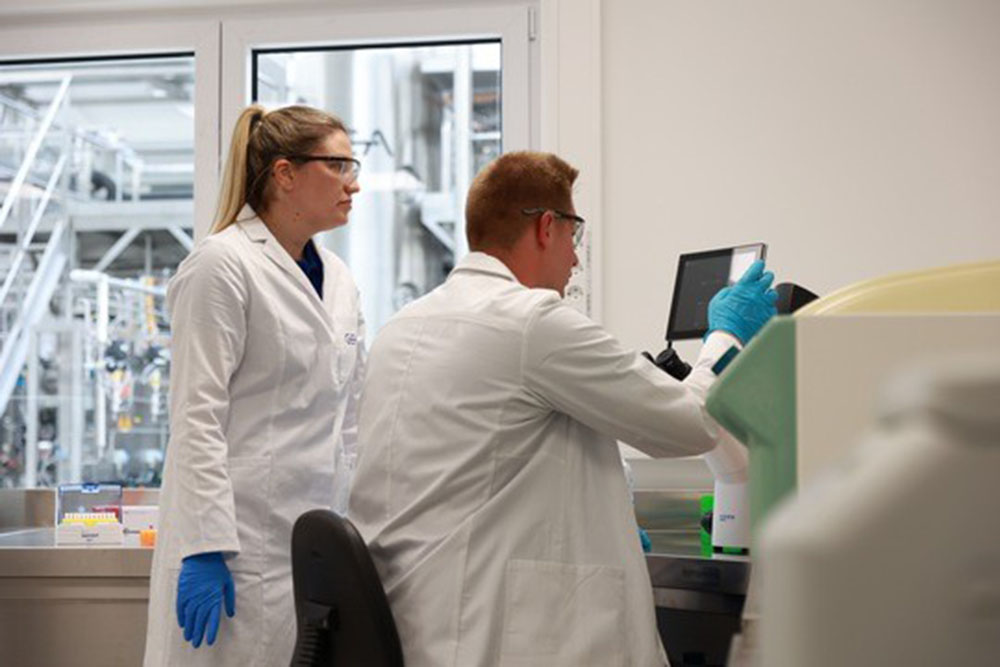
The ATC allows customers to evaluate whether processes can be operated consistently, achieve the required product quality and support future investment decisions. Its pilot infrastructure includes bioreactors ranging from 50 to 500 liters, alongside media preparation, separation, filtration, hygienic process design and automation systems that replicate industrial production conditions.
Frederieke Reiners, Vice President New Food & Biotech at GEA, said the facility is designed to provide clarity as much as technical validation. "A good lab result creates interest. A solid process creates confidence. And sometimes the most valuable outcome of a test run is a clear no – because a process isn't stable enough yet, or the cost structure simply doesn't hold up. Learning that early can save a company a lot of time and capital."
While precision fermentation and cultivated meat often dominate public discussion around food biotechnology, GEA emphasized that the underlying technologies have much broader industrial applications. Similar production platforms can be used to manufacture proteins, enzymes, amino acids, vitamins and flavors, although process design must be tailored to each organism and end product.
The company also acknowledged that commercialization of New Food technologies has progressed more slowly than many early forecasts suggested, with financing, regulation, production costs and scale-up continuing to influence market adoption. Rather than replacing conventional agriculture, GEA sees biotechnology creating additional production pathways for specific ingredients where supply chains face pressure from climate risks, animal health challenges or raw material shortages.
GEA also positioned the new center within Germany's wider industrial strategy. The federal government has identified precision fermentation and industrial biotechnology as priority technologies, and the company believes stronger pilot infrastructure will be essential if research can be translated into commercial manufacturing.
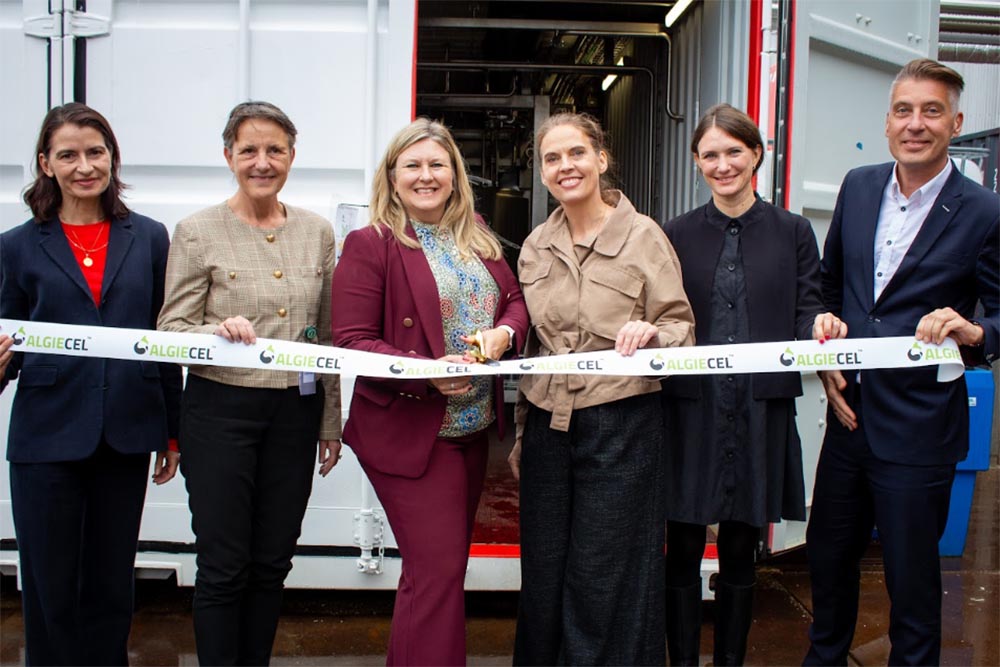
Representatives from across the biotechnology ecosystem attended the opening, including partners from the Biotechnology Fermentation Factory in the Netherlands and Finnish protein producer Solar Foods, reflecting the growing emphasis on building European scale-up infrastructure for food biotechnology.

Join Us At One Of Our Upcoming Events

If you have any questions or would like to get in touch with us, please email info@futureofproteinproduction.com

More News