Finding the molecules that matter: Why Nourish Ingredients stopped trying to replace all animal fat

Replacing every molecule of animal fat was never going to be economical. James Petrie explains how Nourish Ingredients found a more practical route to better taste, better economics, and broader commercial adoption
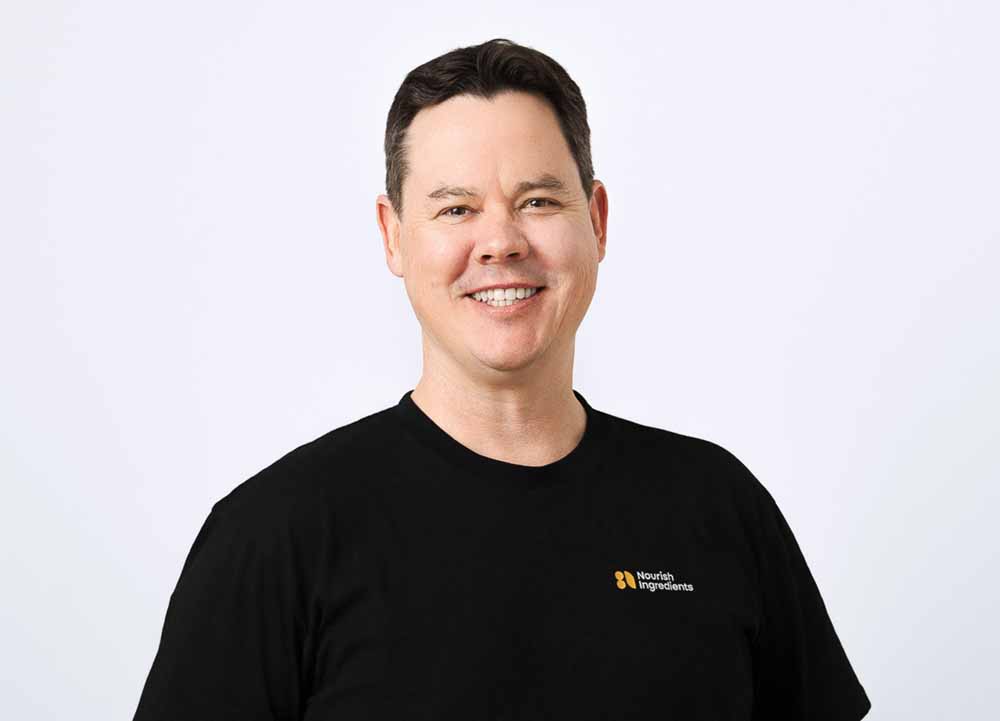
If you ask James Petrie what Nourish Ingredients set out to build, the answer comes surprisingly quickly. “We actually started out a little naively,” he says. It is not the sort of admission startup founders often volunteer. Yet it neatly captures how the Australian company has evolved over the past six years.
When Petrie and his colleagues founded Nourish Ingredients in Canberra in 2019, the objective seemed obvious. Animal fats are fundamental to the flavor, aroma and mouthfeel of meat and dairy products, so why not produce animal-free versions through precision fermentation? If manufacturers needed alternatives to beef tallow, pork lard or milk fat, Nourish Ingredients would make them.
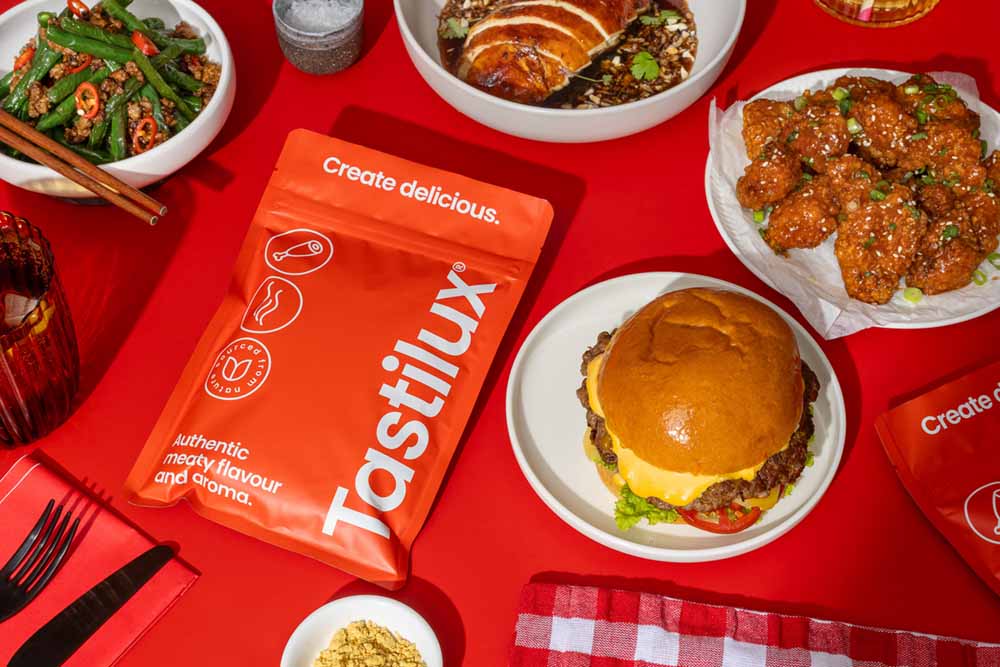
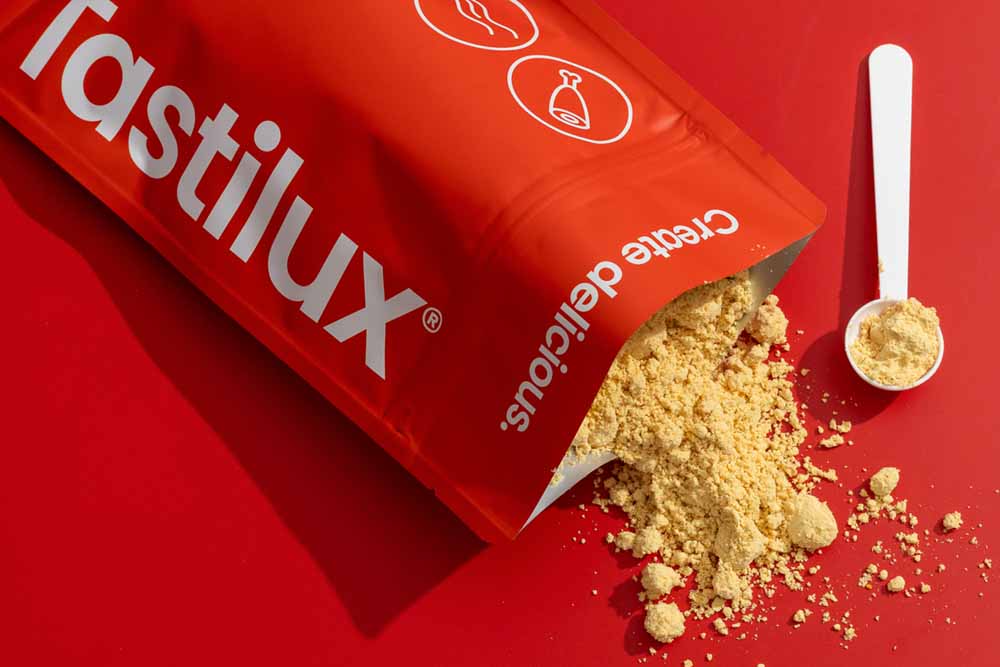
Today, the company occupies a rather different position. Tastilux, its flagship ingredient, has secured FEMA GRAS recognition in the USA, opening the door to commercial sales. Collaborations and partnerships with companies including Fonterra and CABIO Biotech have expanded both product development and manufacturing, while a new commercial hub in Leiden has placed Nourish Ingredients at the center of Europe’s food innovation ecosystem. Most recently, the company was selected for Mondelēz International’s CoLab Tech 2026 accelerator, giving it direct access to one of the world’s largest food manufacturers.
Those developments suggest a business entering a new phase. Spend half an hour talking to Petrie, however, and another story emerges. It is less about scaling fermentation than about changing the question the company was trying to answer.
More than just fat
Unlike many founders working in alternative proteins, Petrie did not arrive in the sector through concerns about meat production or environmental sustainability. His career had always revolved around lipids.
“Well, I’d like to say it was some deep insight,” he says with a laugh. “But actually I’ve always been in the fat space. My background is in lipid engineering R&D, so we were already very familiar with oils and fats.”
That background shaped how he viewed food from the outset. “Having that insight into how these products work, we knew how important they are for taste and mouthfeel, and how critical it is to get the right types of animal fats into a food if you want it to appeal to the end consumer.”
When Nourish Ingredients was founded, much of the industry’s attention was elsewhere. Protein dominated investment, headlines and product launches, while fats were often treated as supporting ingredients.
Initially, Petrie says, convincing people that fats deserved equal attention proved harder than developing the technology itself.
“It was really just a matter of convincing other people of that, although I think that’s changed a lot.”
These days, customers rarely need persuading. “They come to us because they’ve already identified fats as a missing piece of the puzzle. But the broader problem they’re trying to solve is taste.”
That answer comes up repeatedly during the conversation. Nourish Ingredients is not selling a replacement fat because manufacturers want another fat ingredient. It is trying to help food companies solve a much more familiar commercial problem: giving consumers products they want to buy a second time.
They know they need to solve the bigger challenge of creating products that consumers will keep coming back for, and they also know that fats are a key part of that challenge
“They know they need to solve the bigger challenge of creating products that consumers will keep coming back for, and they also know that fats are a key part of that challenge.”
Petrie is equally quick to dismiss any suggestion that proteins have somehow become less important. “I don’t want to downplay the importance of protein, because if you don’t have a good protein, you don’t have a good food. It just doesn’t work.”
Then comes the qualification. “But having a good protein isn’t enough.”
The point helps explain why fats have become one of the food industry’s fastest-growing areas of innovation. Protein may define the structure of a burger or sausage, yet much of the eating experience depends on everything wrapped around it.

When the economics changed
The biggest shift in Nourish Ingredients’ thinking did not come from a scientific breakthrough. It came from recognizing that its original business model simply was not going to work.
The company had set out to manufacture complete replacements for conventional animal fats. On paper it made perfect sense. In practice, fermentation had to compete against ingredients that had been produced at enormous agricultural scale for generations.
“Our approach, using fermentation or enzymatic engineering, means the production costs are relatively high compared with what you're competing against, whether that’s vegetable fats or animal fats, which are typically available at just a few dollars per kilogram.”
Petrie explains the problem using a chemistry lesson rather than a balance sheet. “If you think about a molecule of sugar – and don’t worry if you don't remember your chemistry – it contains around a dozen carbon atoms. A single fat molecule contains three or four times that number. So, from a simple mass balance perspective, you already need three or four sugar molecules for every fat molecule you produce.”
That calculation comes before energy, labor, capital equipment, depreciation and every other cost associated with manufacturing. “Even on carbon alone, you’re looking at around US$2 per kilogram before you’ve even considered capital costs, operating costs, depreciation, and everything else that goes into manufacturing.”
The conclusion was difficult to ignore. “Once we’d done those calculations, we realized we had two choices. Either charge a very significant premium and hope customers would pay it, or rethink the strategy entirely.”
Instead of asking how to reproduce an entire animal fat, the team stepped back and asked something much more fundamental. “What is it about milk fat or meat fat that’s genuinely different from plant-based alternatives?”
Finding the answer required a detailed look inside the fats themselves.
Looking for the important molecules
Nourish Ingredients began analyzing fats from beef, pork, lamb, duck and other animal species, cataloguing the lipid molecules that made up each one. The expectation had been that replacing animal fat meant reproducing all of them. The data suggested otherwise.
“What we found was that we could confidently eliminate 80-90% of those fat species as being relatively uninteresting because they were already well represented in inexpensive vegetable fats.”
That left a surprisingly small group of compounds. “That allowed us to focus on the remaining 10-20%: the molecules that are unique to animal fats and are really responsible for the distinctive eating experience.”
It changed almost everything. Rather than manufacturing large volumes of commodity fat, Nourish Ingredients began concentrating on highly potent lipids that could be blended with conventional vegetable oils. Food manufacturers could continue using inexpensive plant fats for most of their formulations while adding only the molecules that conventional ingredients could not provide.
The strategy solved more than one problem. “I think it became obvious that we weren’t going to be able to produce a true drop-in replacement using the original fermentation approach we’d set out with,” Petrie says.
“So, we started looking sideways at different ways of solving the same problem while making the economics work."
Customers quickly saw the attraction. “As we spoke with them, it became clear that this approach – where they buy only a small part of the solution from us while sourcing the bulk of the formulation from the lowest-cost ingredients, such as vegetable fats – was actually very appealing.”
Alongside taste, there’s always cost. If you can solve the customer’s taste challenge without increasing the price – or, even better, reduce their overall cost – that’s a much more compelling proposition
The conversation always returned to the same balance. “Alongside taste, there’s always cost. If you can solve the customer’s taste challenge without increasing the price – or, even better, reduce their overall cost – that’s a much more compelling proposition.”
Focusing on those highly potent molecules also transformed the manufacturing challenge. “If you can produce something at much lower volumes, you eliminate a lot of the logistics, handling and manufacturing challenges. You also reduce the sheer number of liters or kilograms you need to produce at scale.”
He pauses for a moment before adding what sounds, in hindsight, like an understatement. “So it’s worked out very well for us to focus on the highly potent end of the spectrum.”
The science had changed. So had the business model. Yet Petrie believes the biggest change may have happened elsewhere.
For years, alternative proteins asked consumers to compromise, asking them to accept products that were better for the planet, even if they were not quite as enjoyable to eat.
Nourish Ingredients is betting on a different proposition altogether. If consumers notice anything at all, it should simply be that the food tastes better.
From research startup to commercial business
Finding the right molecules solved one problem. Selling them created another.
For much of its early life, Nourish Ingredients looked like many deep-tech startups. Its strengths lay in research, strain development and product innovation. Building a commercial ingredients company demanded a very different set of skills.
“You’re moving from being an R&D- and innovation-focused startup, where you’re in your comfort zone – science, technology, product development – to actually having to sell that product and get customers to pay for it,” Petrie says. “That requires a very different set of skills.”
Looking back, he says the contrast between scientific progress and commercial progress was striking. “Some parts of the business developed incredibly quickly. Once we had a clear idea of where we needed to go with product development, the initial R&D and innovation moved at a remarkable pace.”
Commercial adoption followed a different timetable. “Once we had that proof of concept, the journey from having a prototype that worked to actually selling it and generating revenue took much longer than we expected.”
It is a frustration familiar to many biotechnology companies. Developing an ingredient is only the beginning. It must then fit into existing manufacturing processes, satisfy regulatory requirements, meet commercial expectations and prove itself repeatedly in customer formulations.
For Nourish Ingredients, that transition has been reflected in a steady stream of announcements over the past two years.
In 2024, the company began working with Fonterra to explore how its Creamilux ingredient could enhance dairy products ranging from cheese and cream to butter, while also opening opportunities beyond traditional dairy applications. Later that year, it announced a manufacturing partnership with China’s CABIO Biotech, giving it access to large-scale fermentation capacity and strengthening its supply chain across Asia-Pacific.
The pace accelerated again in 2025. FEMA GRAS recognition for Tastilux in the USA cleared the way for commercial sales as a flavoring ingredient, while the company also announced plans for a European commercial hub in Leiden, bringing application development, sensory testing and customer support closer to many of the world's largest food manufacturers.
Most recently came selection for Mondelēz International’s CoLab Tech 2026 accelerator, placing Nourish Ingredients alongside a small group of companies working directly with one of the world’s largest snacking businesses on next-generation ingredients.
Taken together, the milestones suggest a company that has moved beyond proving its science. Petrie, however, is reluctant to portray commercialization as a finish line. Instead, he sees it as another discipline that has to be learned.
Why Europe mattered
Few decisions illustrate that shift better than the company’s move into Europe. Nourish Ingredients was founded in Canberra, and relocating much of the business halfway around the world was never going to be straightforward.
“Painfully, honestly,” Petrie says when asked how the transition unfolded. “It’s a hell of an endeavour shifting half the company halfway around the world.”
The decision was driven by something remarkably simple. Customers. “We have two products: Tastilux for meat and Creamilux for dairy, and the majority of our dairy customers are in Europe.”
He reaches for an analogy. “If you think about a bucket of milk, it’s a bit like a barrel of crude oil. It gets separated, fractionated, and sent off in different directions, with countless end uses for the different dairy fats we’ve developed.”
That diversity makes dairy development fundamentally different from meat. “Testing those applications with customers takes time, so we really needed to be co-located with them.”
Working from Australia had become increasingly impractical. “We’d spent several years developing our first two products and getting them to the point where customers were interested enough to start working with them. But then comes the really difficult part: iterating with customers in their own formulations, and in some cases even in their own R&D facilities.”
For meat applications, the process was relatively straightforward. Dairy proved far more complex. “With dairy, we found ourselves working across everything from ice cream and yogurt to milk and countless other applications.”
It’s been interesting to see that many of the conversations we’re now having with investors, funding bodies, grant organizations, and even some customers simply weren’t possible before we had a presence in Europe
Being present in Europe changed more than geography. “It’s been interesting to see that many of the conversations we’re now having with investors, funding bodies, grant organizations, and even some customers simply weren’t possible before we had a presence in Europe.”
He stops himself from overstating the point. “It sounds a bit trite, but being part of the ecosystem really does make a difference.”
Australia had offered many of the same advantages during Nourish Ingredients’ early years, he adds. The lesson was not that one ecosystem was better than another, but that companies need to immerse themselves in the places where their customers, partners and talent are concentrated.

The next generation
Petrie believes the wider food industry has also entered a different phase. Asked whether the market is finally ready to move faster, he does not hesitate. “I think they are.”
His reasoning has little to do with technology. “In large part, that’s because food producers have reached the point where they’ve realized many of the products launched during the first wave of enthusiasm around plant-based foods simply weren't good enough. They now recognize that changes need to be made.”
He argues that companies like Nourish Ingredients have spent those intervening years solving problems that were largely overlooked during the sector’s rapid expansion. “They’re small components, but they’re critically important to how consumers experience a product and, ultimately, how much they enjoy eating it.”
That perspective also shapes how he views the investment landscape.
The cooling of enthusiasm around food technology has undoubtedly made fundraising harder, but Petrie believes some correction was inevitable.
“We’ve seen first the exceptional growth, the very frothy enthusiasm around the sector, and the enormous valuations, followed by what was, in many ways, a necessary correction. I actually think that's healthy overall.”
Investors, he says, have become more demanding for good reason. Their confidence ultimately depends less on impressive demonstrations than on commercial evidence.
“When I sit down with a growth-stage investor, I can show them products that taste fantastic. They can try them for themselves. We can tell them that customers X, Y, and Z are impressed with the technology. But none of that really matters until the investor hears there’s an offtake agreement, a purchase order, or some other tangible commercial commitment.”
Large food companies, he believes, have an important role to play. “Their involvement is crucial because it’s what gives investors the confidence to support the companies developing the technologies those same corporates hope to benefit from in the future.”
Looking beyond plant-based
Perhaps the biggest surprise from the conversation comes right at the end. For years, most people assumed companies like Nourish Ingredients were building ingredients for fully plant-based foods. Petrie no longer sees the future quite so neatly.
“I think one assumption that has surprised me is the idea that the primary application for animal-free fats like ours would necessarily be in fully animal-free food products.”
Instead, he points towards a category gathering momentum across the industry. “The hybrid space is actually growing very quickly.”
His reasoning returns to the same theme that has run throughout our conversation. Not every component of a conventional food needs replacing. Some simply need augmenting. “If you think about a bucket of milk, it gets divided up in countless different ways. Some of those fractions are absolutely critical to specific food applications. They’re the small components you need to make certain products genuinely compelling.”
Nourish Ingredients’ technology, he believes, allows manufacturers to replace only those components that genuinely matter. “Our technology – and the industry’s technology more broadly – has now reached the point where we can identify those key ingredients and produce them.”
We’re able to help more people enjoy products that deliver the eating experience they expect, whether those products are plant-based, hybrid, or animal-derived
That creates opportunities across plant-based, hybrid and even conventional foods. “By filling those gaps, we’re able to help more people enjoy products that deliver the eating experience they expect, whether those products are plant-based, hybrid, or animal-derived, without having to pay through the nose for them.”
For Petrie, that is a far more realistic ambition than replacing every ingredient simply because biotechnology makes it possible. “I think everyone would prefer to have 100% natural products straight from the source if cost and supply weren’t factors,” he says. “But as more people around the world want access to these foods, that simply becomes more difficult and more expensive.”
Finding the right balance, he argues, will define the next chapter of food innovation.
Six years ago, Nourish Ingredients set out to replace commodity animal fat. Today, the company is pursuing something more nuanced. It is identifying the handful of high-impact-fat molecules that really make food memorable, producing them without animals, and leaving the rest of the formulation to ingredients that already do their job perfectly well.
It is a reminder that innovation does not always come from making more. Sometimes it comes from discovering how much less you actually need.
Nourish Ingredients will be exhibiting at The Future of Protein Production Amsterdam on November 4-5, where co-founder and Chief Technology Officer Dr Anna El Tahchy will also be speaking. For more information or to register, click here

Join Us At One Of Our Upcoming Events

If you have any questions or would like to get in touch with us, please email info@futureofproteinproduction.com

More News