

Dutch coalition calls for €65 million annual fund to accelerate plant-based food

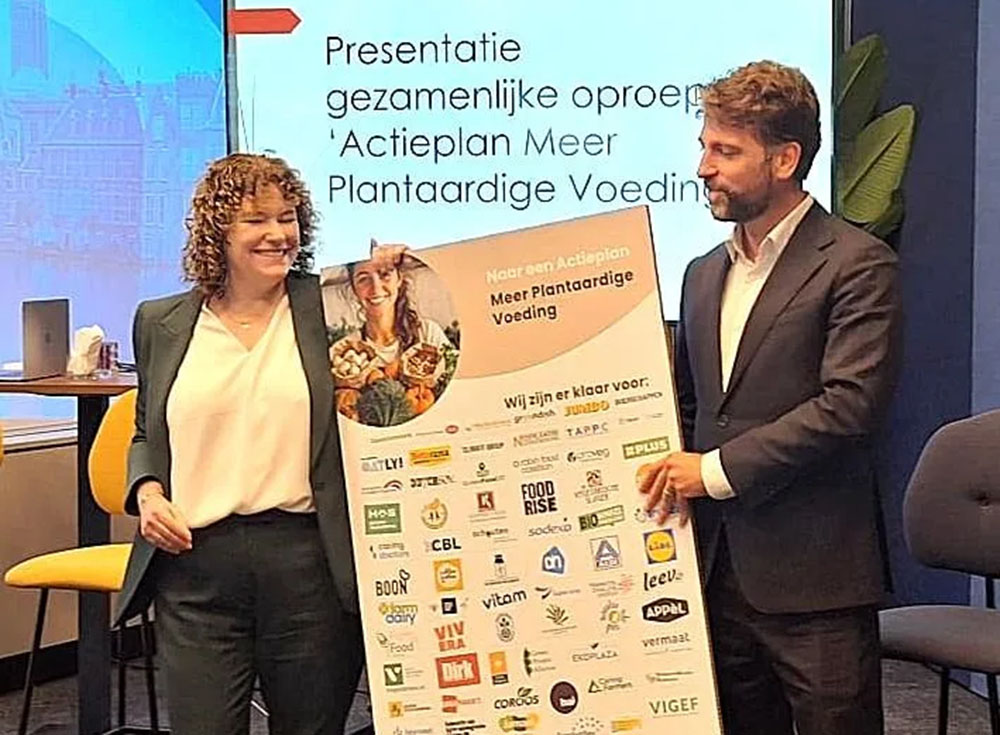
A coalition of 60 organizations in the Netherlands is calling on the Dutch government to establish a €65 million (US$75 million) annual fund to accelerate the production and consumption of plant-based food.
The proposal forms part of the new Action Plan for More Plant-Based Food, which has been presented to members of the Dutch House of Representatives. Its supporters include companies, supermarkets, producer organizations, industry associations, NGOs, educational institutions and foodservice businesses.
Inspired by Denmark’s national approach to plant-based foods, the Dutch initiative seeks coordinated government action across the food chain, including agriculture, food innovation, public procurement and exports.
• 60 organizations are backing the Dutch plant-based action plan
• Coalition proposes a €65 million (US$75 million) annual government fund
• Five priorities span demand, farming, public procurement, innovation and exports
The proposed Plant-Based Acceleration Fund would provide public funding across the value chain, from agricultural production and food technology development to demand creation and international expansion. One-third of the fund would be reserved specifically for organic plant-based production.
The coalition said the plan could also help the Netherlands meet its existing target for at least 50% of protein consumption to come from plant sources by 2030.
Jeroom Remmers, director of TAPP Coalition, said the Netherlands already had a strong foundation from which to expand its plant-based food sector.
“Netherlands is already among the world leaders in agriculture, food innovation and the development of plant-based proteins,” Remmers said. “With a public investment of €65 million per year, we can further build on this strong starting position, capitalize on new economic opportunities and get the entire chain moving. In this way, we strengthen our international competitiveness while simultaneously contributing to a healthier population, lower healthcare costs, greater food security and a more sustainable agricultural and food system.”
The coalition has organized its proposals around five pillars. The first focuses on stimulating consumer demand and improving the food environment, while the second seeks to strengthen crop production through support for farmers and greater collaboration across supply chains.
Public procurement forms the third pillar, with the coalition proposing greater use of plant-based meals in canteens and institutions. Research and innovation is the fourth, including development of new products and work to overcome technical and commercial bottlenecks.
The fifth covers exports, branding and internationalization, with the aim of strengthening the position of Dutch plant-based food companies in overseas markets.
Supporters argue that stronger domestic plant-based supply chains could contribute to food security while creating opportunities for Dutch agriculture, food manufacturing and technology companies.
The initiative comes as the Dutch Ministry of Agriculture, Fisheries, Food Security and Nature and members of parliament consider further policies covering the protein transition and plant-based consumption. The coalition also pointed to the Netherlands’ Strategic Food Security Agenda and the European Protein Action Plan as part of the wider policy context.
Denmark has provided much of the inspiration. Hanne Winter of the Vegetarian Society of Denmark and EU Plant Based Diplomacy and Rasmus Prehn, CEO of Organic Denmark and former Danish Minister for Food, Agriculture and Fisheries, traveled to The Hague for the launch.
Denmark has combined its Action Plan for Plant-Based Foods with a €170 million (US$196 million) Plant-Based Food Grant supporting projects across farming, food development, education and catering.
“I am both proud and pleased to see such strong interest in the Danish Action Plan for Plant-Based Foods,” Prehn said. “Combined with the €170 million Plant-Based Food Grant, it is driving change across the food system, from field to plate.”
Prehn said the Danish grant supports education for kitchen professionals and agricultural students, greater use of legumes and organic food in public and private catering, field trials and development of new plant-based products.
“A key part of our success has been the close cooperation with a broad range of stakeholders, including civil society,” he added.
TAPP Coalition has spent more than a year helping to assemble support for the Dutch proposal. An earlier concept went further, proposing measures to reduce consumer prices for fruit, vegetables and other plant-based foods, including zero VAT or alternative measures and free healthy lunches in primary schools.
Those proposals were estimated to require around €900 million (US$1.04 billion) annually and are not part of the €65 million fund now being requested.
If you liked this, check these out...
• Plant-based alternatives now cheaper in 53% of Dutch supermarket comparisons
• Dutch go west: Cellular agriculture delegation crosses the North Sea for London talks
• Industry coalition presses EU to include novel foods in Biotech Act sandboxes

Join Us At One Of Our Upcoming Events

If you have any questions or would like to get in touch with us, please email info@futureofproteinproduction.com


