

DTU researchers identify bumblebee-derived bacterium that boosts vitamin B2 in soy drinks

Researchers at the Technical University of Denmark (DTU) have developed a new screening method that rapidly identifies bacteria capable of improving the nutritional profile of plant-based dairy alternatives, including a strain that produces vitamin B2 during soy fermentation.
• DTU researchers develop a droplet-based screening method that identifies vitamin B2-producing bacteria from bumblebee microbiomes in hours rather than months.
• A Lactococcus lactis strain demonstrates strong vitamin B2 production and fermentation performance in soy drinks under real food conditions.
• The approach enables faster discovery of microbial strains for plant-based fermentation, addressing nutrient gaps in dairy alternatives such as riboflavin deficiency.
The research, published in LWT – Food Science and Technology, focuses on a persistent challenge in plant-based dairy alternatives: lower levels of key micronutrients compared with cow’s milk. One such nutrient is vitamin B2, or riboflavin, which plays a role in energy metabolism and cellular function.
To address this, the DTU team explored whether naturally occurring bacteria could both ferment plant-based beverages and enhance their nutritional content. Their approach centered on screening microbial communities from bumblebee guts, which are rich in bacteria adapted to plant-based environments.
“Our research shows that it is possible to screen entire microbial communities directly and rapidly, and that promising bacteria can be identified from environmental samples without prior isolation and analysis of individual bacteria,” said Associate Professor Claus Heiner Bang-Berthelsen from the DTU National Food Institute. “This can make the development of new starter cultures faster and more targeted.”
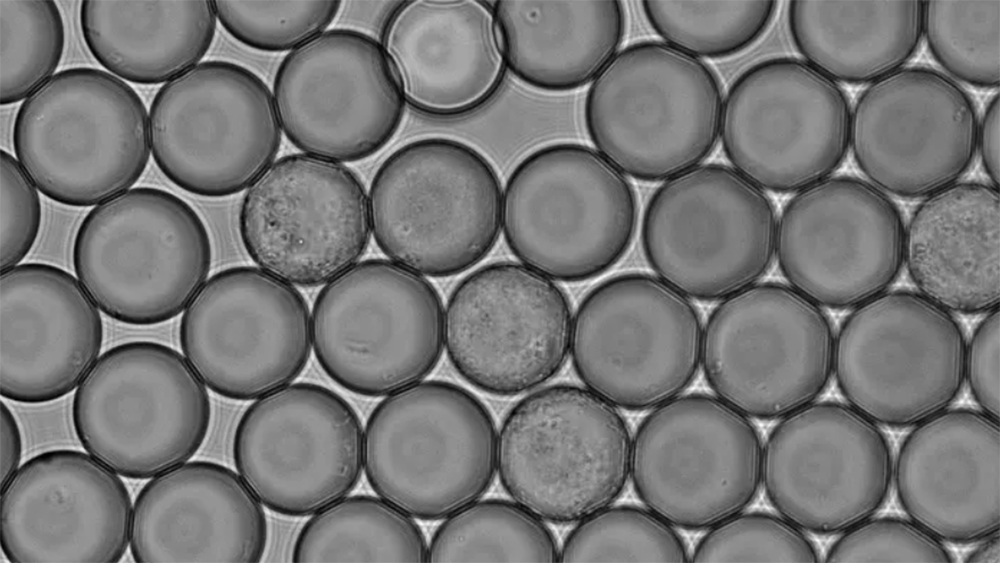
The method builds on droplet microfluidics, a technique that allows individual bacterial cells to be isolated and analyzed in microscopic droplets. Each droplet acts as a miniature culture chamber, enabling researchers to observe how single cells grow and behave under controlled conditions.
“Unlike conventional agar plate-based methods for microbial cultivation and screening, we encapsulated the bee gut bacteria in microscopic droplets so that each droplet contained only one bacterium and acted as an enclosed culture chamber,” said Postdoc Hang Xiao. “In this way, the individual bacterium could be analyzed at ultra-high speed by using our microfluidics screening platform, enabling us to screen millions of bacterial cells within just a few hours.”
To adapt the method for use with soy-based beverages, the researchers developed a transparent soy medium. Traditional soy drinks are typically opaque and contain particles that interfere with measurement, making them unsuitable for optical screening techniques.
“By making the soya liquid transparent, we were able to both screen the bacteria in an environment resembling their future application and, at the same time, obtain more stable droplets and more precise measurements,” said Bang-Berthelsen.
The screening process involved exposing bacterial samples to roseoflavin, a compound structurally similar to riboflavin. This helped promote the growth of strains capable of producing vitamin B2. The researchers then identified high-performing candidates by selecting droplets that exhibited the strongest fluorescence, which indicated higher riboflavin production.
“This droplet-based microbial screening approach saved months of work and significantly reduced the resource use compared with conventional screening methods,” said Bang-Berthelsen.
Among the strains identified, a particular Lactococcus lactis bacterium stood out. When tested in real food systems, the strain demonstrated strong performance in soy drinks, continuing to produce vitamin B2 even in conditions where additional riboflavin had been added.
“The results suggest that the bacterium works not only under laboratory conditions, but also in actual foods containing a significant amount of protein,” said Xiao.
The strain also showed the ability to metabolize a range of sugars, making it a flexible candidate for use in fermentation processes beyond a single substrate. This adaptability could support broader application in plant-based product development.
However, the researchers observed that the bacterium performed less effectively in rice, oat and some almond drinks, which they attributed to lower protein content in those matrices. The findings suggest that a certain level of fermentable protein may be required for optimal bacterial growth and vitamin production.
Beyond vitamin B2, the team indicated that the screening approach could be adapted to identify microorganisms capable of producing other functional compounds, provided these can be detected through fluorescence-based methods.
“The exciting thing about the method is that it can not only identify vitamin B2-producing bacteria in soya drinks. It can also be adapted to identify other interesting substances, provided they can be detected using fluorescence,” said Xiao. “However, the method only works if the medium is transparent and has a low fluorescence background.”
By reducing the time and resources required to identify functional microbial strains, the DTU researchers have demonstrated a pathway to accelerate innovation in plant-based fermentation. The approach offers a potential route to address nutritional gaps in alternative dairy products while supporting the development of more efficient and targeted starter cultures.

Join Us At One Of Our Upcoming Events

If you have any questions or would like to get in touch with us, please email info@futureofproteinproduction.com


